
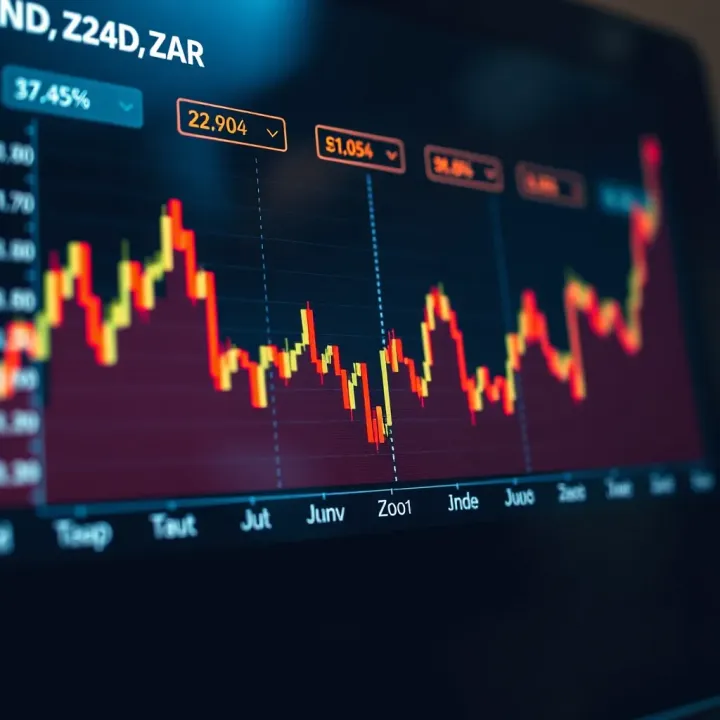
NZD to ZAR Exchange Rate Forecast
Explore key factors and economic trends shaping the NZD/ZAR exchange rate 📊. Get practical forecasting tips for investors and businesses in South Africa.
Edited By
Sophie Reed
The Australian Dollar (AUD) to South African Rand (ZAR) exchange rate often reflects a mix of economic factors from both countries, making it a key focus for traders, investors, and anyone dealing with cross-border transactions between Australia and South Africa. Understanding the forces at play can help you make better decisions whether you’re planning business operations, investing, or heading on holiday.
Recent trends show the AUD/ZAR rate reacting to shifts in commodity prices, interest rate changes from central banks, and global risk sentiment. For instance, the Reserve Bank of Australia’s moves on monetary policy and South Africa's inflation outlook continue to influence this pair. The AUD, sensitive to commodities like iron ore and coal, tends to strengthen when global demand from China picks up, while the ZAR is often impacted by Eskom's loadshedding schedule and domestic political developments.
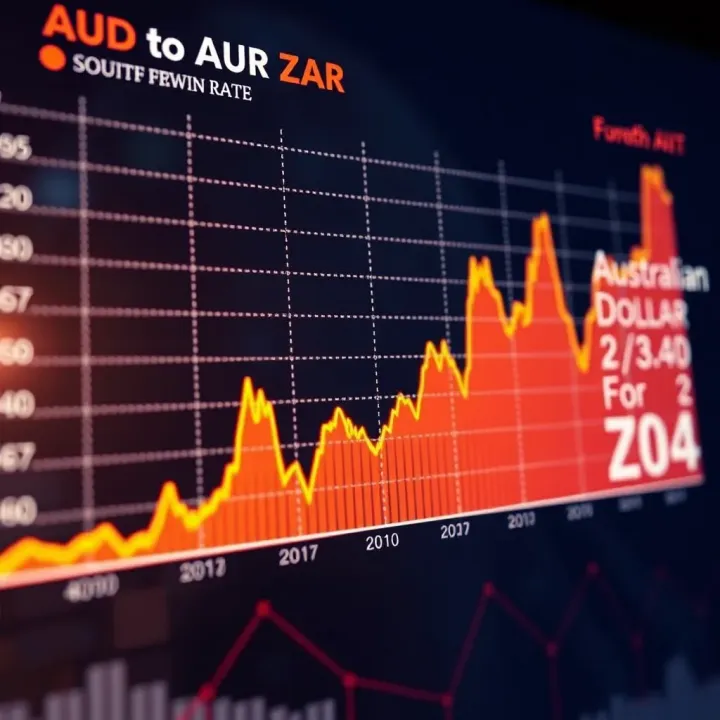
Exchange rates don't move in isolation — they mirror both macroeconomic signals and specific country events, so staying updated on these factors is key to forecasting with any certainty.
Key influences to watch include:
Commodity prices: South Africa’s mining sector and Australia’s vast mineral exports mean shifts in metals like gold, platinum, and iron ore ripple through the exchange rate.
Central bank policies: Interest rate decisions by the Reserve Bank of Australia (RBA) and the South African Reserve Bank (SARB) affect investor appetite for these currencies.
Political stability and domestic issues: Eskom’s loadshedding stages and government policy announcements can shake the Rand unexpectedly.
Global risk appetite: The Rand often reacts strongly to changes in risk sentiment; during global uncertainties, it tends to underperform versus the AUD.
Tracking these factors offers practical foresight into the AUD/ZAR exchange dynamics. Next, we’ll explore how recent movements and economic forecasts shape what you might expect from the pair in the coming months.
Understanding current trends in the AUD/ZAR exchange rate is key for traders, investors, and analysts aiming to navigate this currency pair effectively. These trends offer insight into recent movements, underlying drivers, and emerging pressures that hint at how the rate may behave next. By tracking the Australian Dollar and South African Rand’s recent performance, one gains practical knowledge to time trades, manage risks, and anticipate market shifts.
The Australian Dollar remains closely linked to commodity prices, especially iron ore, coal, and gold. For instance, a rise in iron ore prices tends to boost the AUD because Australia is a major exporter. When demand from China surges, pushing iron ore above US$120 per tonne, the AUD often appreciates against the Rand. This relationship matters because traders monitoring commodity price trends can better predict AUD strength or weakness, adjusting positions accordingly.
However, downturns in global commodity cycles or unexpected supply chain disruptions can weigh heavily on the AUD. When coal exports faltered in 2023 due to logistical issues in Queensland, the AUD weakened. For investors handling AUD/ZAR exposure, keeping an eye on commodity indexes offers a practical way to catch these shifts early.
The Reserve Bank of Australia (RBA) sets the tone for the AUD through interest rate decisions and monetary guidance. Recently, the RBA's cautious approach to rate hikes—balancing inflation pressures with slowing economic growth—has introduced some uncertainty. For example, when the RBA paused interest rate increases in early 2024, the AUD dipped slightly as traders recalibrated expectations.
Such policy moves affect how attractive Australian assets are compared to South African ones. Higher rates usually mean a stronger AUD, as investors chase better yields. In contrast, dovish signals from the RBA can deter inflows, weakening the currency. Understanding these policy shifts helps analysts prepare for volatility in AUD/ZAR fluctuations.
Eskom's loadshedding remains a significant drag on the Rand’s performance. Frequent power outages disrupt South African businesses, reducing productivity and investor confidence. For instance, during stage 6 loadshedding in mid-2023, the Rand weakened noticeably against most major currencies, including the AUD.
The practical impact is clear: prolonged loadshedding raises the cost of doing business and heightens economic uncertainty. This risk perception causes capital flight and dampens demand for the Rand. Traders watching AUD/ZAR should weigh Eskom’s schedule and government responses, as improvements or deteriorations can quickly affect the Rand’s value.
Economic releases like GDP growth, inflation figures, and unemployment rates heavily influence the Rand's movement. In early 2024, a surprisingly strong GDP print, driven by mining and agriculture, helped the Rand recover some ground versus the AUD.
Political dynamics also play a major role. Uncertainty around policy implementation or governance issues can unsettle markets. For example, debates over land reform and questions about fiscal discipline often trigger Rand volatility. Investors should track South African political developments alongside economic data to anticipate sudden Rand shifts against the AUD.
Keeping a close eye on these current trends enables smarter decisions when trading AUD/ZAR. Commodity prices, central bank policies, Eskom loadshedding, and local economic indicators all provide tangible signals guiding the pair’s near-term outlook.
Understanding the key factors behind the AUD to ZAR exchange rate is essential for traders and investors trying to navigate this often volatile currency pair. Both currencies are commodity-driven, but the specific local and global conditions affecting each can push their exchange rate in different directions. Being aware of these drivers helps you anticipate shifts and make better-informed decisions.

Gold and platinum are vital export earnings for South Africa. When their prices rise on global markets, the Rand tends to strengthen as foreign buyers need more ZAR to purchase these metals. Conversely, weaker metal prices have an adverse effect on the Rand's value. For example, during periods of heightened geopolitical tensions or economic uncertainty, investors often flock to gold, boosting demand and providing a lift to the ZAR.
The Australian Dollar, on the other hand, is heavily influenced by iron ore and coal prices—Australia's key commodity exports. Increases in these commodities attract foreign capital into Australia, strengthening the AUD. For instance, a surge in demand for iron ore from China can prompt AUD gains, given the close trade ties. Traders watching commodity prices like these can often get early signals of potential currency movement.
The South African Reserve Bank's (SARB) approach to interest rates impacts the Rand significantly. A hike typically draws short-term capital flows as investors seek higher yields, supporting the ZAR. On the flip side, unexpected rate cuts or dovish statements can weaken the Rand. In early 2024, SARB's cautious stance amid inflation pressures and political uncertainties has caused elevated volatility in the currency.
Meanwhile, the Reserve Bank of Australia (RBA) sets rates with a focus on domestic employment and inflation goals. When the RBA tightens monetary policy, it tends to boost the AUD as investors anticipate higher returns. However, given Australia's economic exposure to China, any slowdown south of the border can influence the RBA's decisions and, subsequently, the AUD's strength. Watching both central banks' cues is critical for understanding possible AUD/ZAR shifts.
South Africa's political environment remains a wildcard for the Rand. Policy uncertainty—whether regarding state-owned enterprises, land reform, or fiscal discipline—often spooks investors, causing the ZAR to weaken. A recent example would be delays in Eskom's restructuring plans causing doubts about economic growth, leading to Rand depreciation. Traders need to factor in these domestic risks when assessing the South African currency.
In contrast, Australia's economic outlook tends to be steadier, but risks still exist. Factors such as global trade tensions, commodity demand shifts, or internal housing market vulnerabilities can alter investor sentiment towards the AUD. For example, warnings about slowing Chinese growth regularly prompt weak AUD responses due to export exposure. Assessing Australia’s economic forecasts alongside South Africa's political climate helps in building a balanced expectation for the AUD/ZAR rate.
Being mindful of these overlapping factors—commodities, rates, and political stability—gives traders a clearer picture of what moves the AUD/ZAR rate and how to position themselves accordingly.
Understanding the forecast scenarios for the AUD/ZAR exchange rate helps traders, investors, and financial analysts prepare for market shifts that affect profitability and risk management. These projections draw from economic data, commodity prices, political developments, and global trends. For those dealing with cross-border transactions or investments, knowing these scenarios allows smarter timing and strategy adjustments.
Central banks in Australia and South Africa influence exchange rates mainly through interest rate decisions and monetary policy shifts. For example, if the Reserve Bank of Australia (RBA) unexpectedly raises rates, the AUD often strengthens, making Australian exports more expensive but attracting foreign investment. Conversely, a dovish stance from the South African Reserve Bank (SARB) could weaken the ZAR, especially if inflation remains low.
Traders should watch scheduled announcements closely—like the next RBA meeting or SARB's inflation reports—as markets may react sharply. Even subtle changes in tone or forecasts can cause daily fluctuations in the AUD/ZAR rate.
Seasonal factors, such as the end-of-year holiday spending in Australia or mining ramp-ups in South Africa, can shift currency demand. For instance, demand for the ZAR might rise during mining seasons due to increased foreign investment.
External shocks—think geopolitical tensions, unexpected commodity price swings, or global economic slowdowns—can unsettle both currencies. The recent unexpected surge in gold prices, a key commodity for South Africa, temporarily strengthened the ZAR. Traders must remain alert to such events, especially given how intertwined South Africa’s economy is with global commodity markets.
Commodity prices weigh heavily on AUD/ZAR forecasts over the medium to long term. Australia’s economy relies on iron ore and coal exports, while South Africa depends on precious metals like gold and platinum. A sustained rise in iron ore prices, for instance, usually bolsters the AUD.
Similarly, if global demand favours South African minerals, the Rand can gain ground. However, price volatility presents risks. Take 2018: a slump in platinum prices contributed to ZAR weakness. Analysts often monitor futures markets for these commodities to gauge currency movements.
Political stability heavily shapes the Rand’s strength. Moves by the government affecting regulatory certainty, investment climate, or state-owned enterprises like Eskom can trigger currency swings. For example, policy announcements on land reform or changes in mining regulation often cause jitteriness in the market.
Forthcoming elections and intra-party disputes can also unsettle sentiment. For medium and long-term forecasts, weighing these political risks is essential. Investors tend to demand higher risk premiums during uncertain periods, which pushes the Rand lower.
Currency forecasts blend economic indicators, commodity trends, and political factors. Staying informed on these fronts is vital for anyone exposed to AUD/ZAR fluctuations.
By keeping an eye on these forecast scenarios, you can gauge where the AUD/ZAR might head and plan your activities accordingly. Whether hedging exposures or timing remittances, practical understanding of these trends helps reduce surprises and protect your interests.
Managing currency exposure between the Australian Dollar (AUD) and the South African Rand (ZAR) is vital for businesses and individuals alike, given the inherent volatility and economic unpredictability involved. Taking practical steps can reduce financial risks and improve budgeting accuracy, especially when dealing with international trade, travel, or remittances.
Hedging serves as a financial shield against currency fluctuations that can unexpectedly inflate import costs or erode export profits. Currency forwards are common hedging tools allowing businesses to lock in an exchange rate for a future date. For instance, a South African company importing electronics from Australia can agree on a forward contract with its bank to purchase AUD at a fixed rate months ahead. This approach safeguards the business from sudden AUD appreciation, making costs more predictable and protecting profit margins.
While forward contracts are straightforward, other options include foreign currency options, which offer more flexibility but at a premium. Importers and exporters need to evaluate which instruments fit their cash flow and risk appetite best.
Choosing when to buy or sell foreign currency directly affects financial outcomes. Importers often benefit from buying AUD during periods of ZAR strength, whereas exporters might aim to convert earnings back to ZAR when the Rand is weaker relative to the AUD. Timing currency transactions in response to economic announcements, commodity price shifts, or known South African political events can be advantageous.
However, market timing isn’t foolproof, especially amidst unpredictable news or Eskom loadshedding impacts on economic performance. Staying informed with regular rate checks and consulting financial advisors can improve timing decisions.
Travellers and those sending money across borders can also gain from watching AUD/ZAR trends closely. Exchanging currency during Rand strength means getting more value for your money, which can significantly reduce travel costs or increase remittance amounts.
Because exchange rates can shift quickly due to global events or local policy changes, monitoring rates together with comparing fees from various banks or forex bureaus helps identify the best moments to convert.
Prepaid travel cards offer convenience and security, allowing travellers to load funds in advance at favourable rates to avoid carrying cash. These cards often lock in exchange rates at purchase, shielding users from rate swings while abroad.
Online platforms—many available via mobile apps—simplify transferring money internationally and can offer competitive exchange rates compared to traditional banks. Services like these often provide real-time rates with low transaction fees, making them practical for both frequent travellers and casual senders.
Taking even simple steps, like using forward contracts or prepaid travel cards, can save businesses and individuals serious rand in volatile AUD/ZAR markets.
Balancing risk management with cost-effectiveness in currency exchange ensures you’re not caught on the back foot when dealing with international money matters related to Australia and South Africa.
Accurate and timely exchange rate information is a must for traders, investors, and financial analysts monitoring the AUD/ZAR pair. Knowing where to find dependable data helps you respond quickly to market moves and make informed decisions. Poor sources can lead to wrong timing, missed opportunities, or unexpected losses.
Sources offering real-time rates are vital for tracking the AUD to ZAR exchange rate as it fluctuates throughout the trading day. Platforms such as Bloomberg, Reuters, and XE provide live quotes that reflect immediate market conditions, including volatility from commodity prices or central bank announcements. Having access to this updated data lets you gauge entry or exit points for trades more accurately and adjust strategies based on prevailing trends.
Beyond just the current rate, useful analytics and historical data access allow for a broader understanding of the currency pair’s behaviour over time. Websites with charting tools and downloadable data, such as Investing.com or TradingView, enable detailed analysis of past fluctuations, moving averages, and support/resistance levels. This historical perspective is key to identifying patterns or trends that might repeat and helps you build forecasts grounded in actual market behaviour.
For South African traders, the local context adds a layer of consideration. Banks and foreign exchange bureaus like FNB, Standard Bank, and Bidvest Bank provide exchange rates tailored for consumer and business transactions. These institutions also offer insights into pricing influenced by local events, such as Eskom loadshedding or political shifts that affect the Rand. Using their rates can help you plan cross-border payments, remittances, or hedging activities more realistically.
When keeping a finger on the pulse of the Rand, financial news platforms focusing on Rand outlook — such as Business Day, Moneyweb, and MyBroadband — offer timely commentary and updates on factors impacting the exchange rate. These sources keep you informed about policy changes, commodity trends, and political developments that specifically influence South Africa's currency. Their analyses complement raw data by giving context that’s often missing from pure numbers.
Reliable exchange rate information blends real-time data with local insights and historical trends, providing a solid foundation for making sound financial decisions involving the AUD/ZAR pair.
In short, combining international tools for live updates and analytics with South African banking rates and financial news helps you build a comprehensive view of the AUD/ZAR exchange rate landscape. This layered approach equips you to spot opportunities and manage risks effectively.
Explore key factors and economic trends shaping the NZD/ZAR exchange rate 📊. Get practical forecasting tips for investors and businesses in South Africa.

📉 Explore NZD to ZAR forecasts with insights into economic trends, market shifts, and geopolitics shaping the New Zealand Dollar to South African Rand exchange.

Explore the Rand to INR exchange rate forecast 📉 with insights on economic trends, geopolitical shifts 🌍, and tips to manage currency risks effectively 💹.

🔍 Explore key trends affecting the Pound to Rand exchange rate, including economic factors and geopolitics, to better plan your trades, trips, and investments 💷💰
Based on 5 reviews