
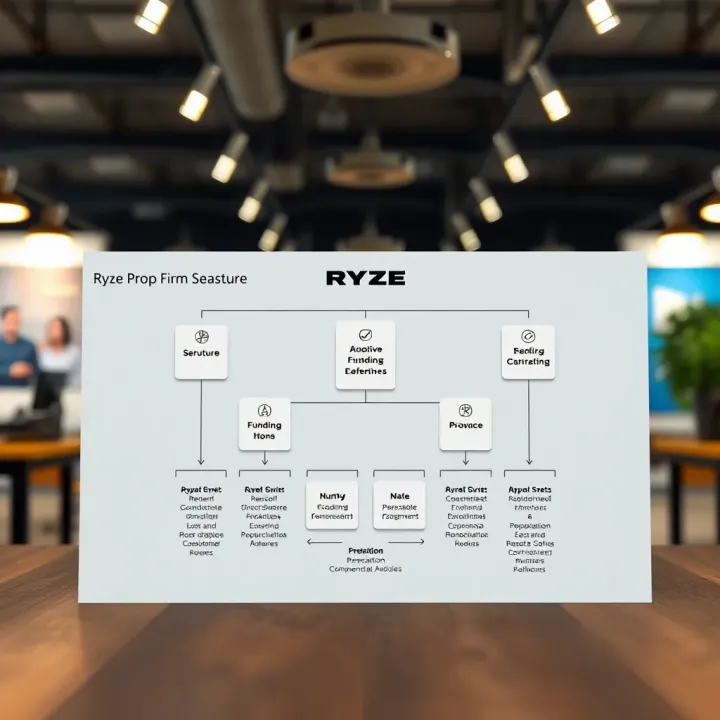
Understanding Ryze Prop Firm for South African Traders
Explore Ryze Prop Firm’s trading setup 🏦, funding options 💼, and risk rules ⚖️ tailored for South African traders 🇿🇦 to trade smarter and grow profits.
Edited By
Amelia Brooks
Proprietary trading firms, or prop firms, have become a real option for South African traders looking to trade with bigger capital and reduced personal risk. These firms provide a platform where you can access funding to trade stocks, forex, or derivatives without using your own money. But choosing the right prop firm isn't straightforward — especially when you consider the unique challenges of our market, like exchange controls, loadshedding interruptions, and local regulatory conditions.
Before diving into the world of prop firms, it’s important to understand what sets them apart. Prop firms typically offer traders capital to trade, sharing profits while limiting downside exposure. This means you focus on your skills without worrying about blowing your entire trading account. However, not every prop firm works the same; some expect a fee upfront, others enroll you on a profit split, and a few might have strict trading style requirements.
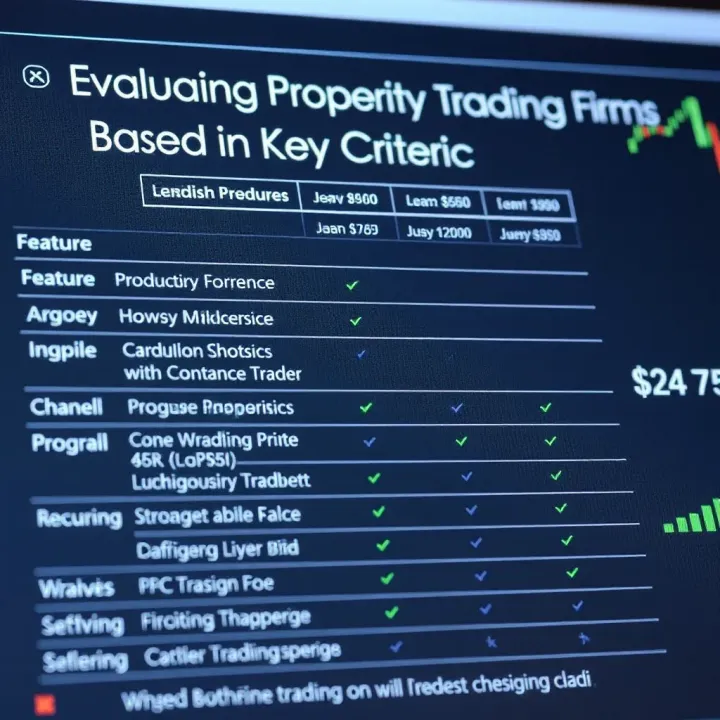
South African traders should pay particular attention to the firm's funding models and risk management strategies. For instance, some firms might set daily loss limits that are tight — reducing your flexibility if markets are volatile. Additionally, currency fluctuations and access to international brokerages can impact your trading performance and costs.
Transparency is key: look for prop firms that clearly communicate rules, payout terms, and trading restrictions. A reputable firm will offer detailed education resources and support tailored to your local context.
When evaluating options, check if a prop firm:
Has experience working with South African clients and understands local market conditions
Provides funding without upfront enrolment fees, or at least a clear refund policy
Offers flexible withdrawal terms and reasonable profit splits
Utilises established global brokers with reliable execution
Maintains clear risk limits that suit your trading style
Supports multiple asset classes if you prefer diversified trading
Understanding these practical points first will help you shortlist prop firms that align with your needs. Down the line, you’ll want to consider reviews from fellow South African traders and test demo accounts if available.
Trading with a prop firm can be a way to expand your trading horizon without risking your personal savings heavily. The choice, however, should be based on informed decisions — not just flashy adverts or promises.
This guide will walk you through what to look out for in prop firms accessible to South African traders, helping you navigate funding, risk, and operational factors.
Let’s get started.
South African traders looking to step up their game should first get a solid grasp of what proprietary trading firms, or prop firms, actually do. These firms provide traders with access to larger pools of capital, letting them trade markets with funds beyond their personal savings. This is a game-changer for many who want to trade seriously but lack the upfront capital. Understanding the prop firm model is crucial because it shapes how you'll work, your potential earnings, and the risks involved.
A prop firm employs traders to use its own money for trading instead of clients' funds. The firm shoulders the financial risk, while traders focus solely on making profitable trades. Think of it like the firm backing a boxer, providing the funding and facilities so the fighter can focus on the match.
Traders do not trade their own accounts but operate under the firm's capital. The firm profits by taking a cut of the traders' gains, while the trader earns a share of profits without risking their personal capital. For example, a trader might use R1 million from the firm to trade forex or equities, seeking consistent returns.
Unlike trading with your own money or a standard brokerage account, prop trading removes the burden of risk from your shoulders. You have no direct financial loss, but the firm expects consistent returns according to agreed rules. This means you’re accountable to the firm’s risk controls and profit targets.
Traditional accounts often require managing your own capital and risk, which limits how much you can trade. Prop firms, however, allow leverage through their provided funds, often with stricter risk limits but greater opportunity to amplify profits.
The biggest draw of prop firms is the capital they provide. Many promising traders in South Africa hit a wall because their own savings are too low to trade meaningfully. Prop firms let you break through this barrier by granting access to tens or hundreds of thousands of rands for trading.
For instance, a trader with R10,000 personal funds may be given R500,000 by a prop firm to trade. This not only ups potential profits but also broadens the range of strategies you can use.
Working with a prop firm immerses you in a disciplined, structured setup. You get access to better trading tools, software, and data feeds. Plus, you often join a team or community of like-minded traders, which can be great for sharing ideas and learning.
In South Africa, where access to cutting-edge trading platforms may be limited for retail traders, prop firms can bridge this gap, offering professional-grade setups that individual traders might not afford on their own.

Most prop firms operate on a profit split basis. Traders keep a significant percentage of profits—this can range widely but typically sits between 50% and 80%. For example, if you earn R10,000 profit trading the firm's account, and your split is 70%, you take home R7,000.
This structure means you don't just get paid a salary or commission; your earnings directly reflect your performance. It motivates disciplined, consistent trading.
To join a prop firm, you usually must pass a rigorous evaluation, hitting certain profit targets while respecting risk limits. South African traders should be ready for this challenge since failing these tests can mean losing access to funding or requiring re-testing.
The firm’s rules often include limits on daily losses or maximum drawdowns, so consistency is key. This isn't about hitting one big win but steady profitability.
If you breach the risk limits — for example, losing more than an allowed amount in a day — penalties kick in. These might include losing your funded account or needing to repay fees.
South African traders must be vigilant because overtrading or emotional decisions during volatile periods (think Eskom loadshedding days) can trigger these penalties, setting you back financially and psychologically.
Trading with a funded account brings pressure beyond just market risk. Knowing you represent the firm and that poor performance impacts your earnings can weigh heavily on mental health.
Staying calm and sticking to your strategy even under pressure is vital to succeed. Traders often report that this stress is one of the toughest parts to manage, so developing emotional resilience is just as important as honing trading skills.
Prop trading offers a great opportunity to level up as a trader, but it requires discipline, consistency, and thick skin. Understanding these realities helps you make a sound decision before committing.
Through understanding these elements, South African traders are better positioned to find firms that match their style and goals, avoiding common pitfalls and maximising opportunities.
Choosing a proprietary trading firm isn't just about signing up for capital and getting started. You need to weigh a number of critical factors that can make or break your trading experience, especially for South African traders facing unique challenges like forex restrictions or exchange rates. These factors affect how you trade, your potential earnings, and your ability to grow within the firm.
Initial capital provided is a key starting point. Prop firms usually offer traders access to funds larger than their own, but the amount can vary widely. Some firms might start you off with R100,000, while others might offer several million rand depending on your experience and evaluation results. It’s crucial to check not just the starting capital but also what’s considered your own risk versus the firm’s. For example, if the initial capital is small, you might be limited in your trading strategies or asset choices, which affects your potential returns.
Scaling options for successful traders are equally important. Top prop firms don’t just provide an initial lump sum; they reward consistent profitability by increasing your trading limits. This scaling can be stepwise, like doubling your account size after meeting specific monthly targets, or automatic based on your overall performance. South African traders aiming to build a long-term career want firms with clear, transparent scaling policies, rather than vague promises. Without proper scaling, your earning potential can stall early, regardless of your skill.
Daily and overall loss limits act as guardrails to protect both the trader and the firm's capital. Most prop firms enforce strict limits on how much you can lose in a day or over a period. For instance, a daily loss limit might be 2% of your allocated capital, and breaking it could mean immediate suspension. Knowing these limits beforehand helps you tailor your risk management plans and avoid sudden disqualification. It's worth noting that some firms provide a buffer for beginners, while others are strict from the get-go.
Trading instruments and restrictions also shape your strategy. Some firms limit traders to forex pairs or major indices, while others allow a broader range, including commodities or cryptocurrencies. If you prefer trading local assets, confirm whether those are allowed. Restrictions may also include prohibited trading styles like scalping or holding positions over weekends. For South African traders, it's vital to ensure the firm's instrument choices align with your expertise and regulatory compliance.
Upfront fees versus subscription models differ from firm to firm. Some require a one-off evaluation fee, which you pay to gain access to their capital if you pass. Others work on monthly subscriptions regardless of performance. If you only want to trade when confident, upfront fees might be less risky. But if your trading improves steadily, a subscription could be more cost-effective. Always run the numbers based on your expected trading frequency.
Typical profit-sharing ratios vary, often between 50/50 to 80/20 in favour of the trader. This split determines how much of your returns you actually take home. A firm offering 70% might sound attractive, but if their fees or restrictions are high, you might end up with less. Conversely, a 50% split with generous scaling and low fees could yield better overall profits. Look beyond just the split ratio — consider how often profits are paid out and any hidden costs.
Supported software and tools directly impact your trading efficiency. Leading firms often back platforms like MetaTrader 4, MetaTrader 5, or cTrader, all popular with South African traders. Others might offer proprietary platforms with unique features, such as integrated risk management or advanced analytics. Make sure the platform supports your trading style, offers sufficient charting capabilities, and works well on your devices.
Execution speed and reliability can’t be overlooked. A delay of even a few milliseconds may cost you dearly in volatile markets. Prop firms typically use robust servers and low-latency connections to global exchanges. Before committing, test the demo accounts or trading conditions to gauge execution quality. In South Africa, where internet connectivity can sometimes be patchy, pick firms with fast, reliable platforms and mobile friendly apps to stay connected even on the move.
Choosing the right prop firm involves balancing these factors carefully — capital access, clear rules, fair fees, and tech reliability. Each plays a role in shaping your real-world trading success.
Making an informed choice here sets a solid foundation for your trading career.
When exploring proprietary trading firms, the challenge for South African traders is to find reputable options that align with their unique needs and regulatory environment. Choosing well-established prop firms reduces the risk of encountering fraudulent schemes or poor trading conditions, which can seriously affect your capital and confidence. Moreover, accessing firms that cater to South African clients ensures smoother account setup processes, payment options suited to local currency or transfer methods, and clearer regulatory compliance.
Several global prop firms have extended their services to South African traders, offering well-known platforms such as FTMO, The 5%ers, and TopstepTrader. These firms usually provide structured evaluation programmes where traders prove their skills through simulations or live trading accounts before gaining access to firm capital. For South Africans, participating in these firms can open doors to significant leverage and funding that might otherwise be unattainable locally.
Opening accounts with these international prop firms generally involves an online application process and a fee to enter their evaluation phase. Funding options often include international bank transfers, electronic wallets, or card payments. Some firms accept payments in South African Rand via partner services, easing currency conversion worries. It’s important to verify the specifics since forex transfer fees and exchange rates can add unexpected costs.
Some South African brokers now offer proprietary trading accounts or partnerships that mimic prop firm models, giving local traders more accessible opportunities without the need to engage internationally. Brokers like FXTM and IG provide trading accounts that support higher leverage and even customised mentoring programmes, which can be alternatives to traditional prop firm structures. This reduces downtime from currency conversions and regulatory hurdles.
South African regulation, primarily governed by the Financial Sector Conduct Authority (FSCA), influences how prop trading can operate locally. Traders must be aware that some prop firms or brokerages need registration or authorisation to operate within the country legally. Likewise, adherence to the Financial Intelligence Centre Act (FICA) means thorough identity verification during onboarding. Additionally, tax implications from profit sharing must be managed prudently for these arrangements to remain viable.
When choosing a prop firm, focus not only on the reputation and capital but also on ease of access, regulatory compliance, and how well the funding methods fit your needs. This ensures a smoother trading journey without unexpected snags.
By carefully weighing international and local options against your trading style and practical constraints, you can pick a prop firm that truly supports your growth and shields you from common pitfalls.
Thriving in a proprietary trading firm environment takes more than just a decent strategy — it demands discipline, attention to detail, and emotional grit. For South African traders stepping into prop trading, understanding what prop firms expect is half the battle. These firms typically set strict evaluation criteria and risk rules, so adopting certain habits early on can boost your chances of success.
Prop firms don't reward guesswork or impulsive moves. They look for traders who stick to a well-tested strategy and resist the urge to deviate on a whim. Let’s say you trade forex using a technical breakout method — consistently applying your entry, exit, and stop-loss rules shows the firm you can handle their capital responsibly. Randomly switching to a momentum or news-driven trade style mid-evaluation usually raises red flags.
Consistency also means managing your trading hours deliberately. For example, if you find the London session suits your approach best, focus there rather than hopping between markets just to rack up trades. This steadiness lets prop firms gauge your actual skill rather than luck.
Good record keeping is often overlooked but vital. Document all trades with details like entry/exit points, reasons for the trade, and outcomes. Many prop firms require detailed logs during evaluation to verify genuine trading skill.
Using tools like Excel, or specialised journal software, helps track metrics such as win rate, average risk-reward, and maximum drawdown. For instance, if you spot a pattern where you lose bigger trades late in the session, you can adjust behaviour or strategy accordingly. This level of self-awareness impresses firms and supports continuous improvement.
Most prop firms enforce strict risk limits, like daily loss caps or maximum drawdowns. Respecting these limits isn’t just ticking boxes; it’s about protecting your funded account and reputation. Breaching them can result in termination or losing funded status.
Imagine you have a R10,000 daily loss limit — once hit, you must stop trading for the day. Trying to 'get it back' by making riskier trades often leads to bigger losses. Acceptance of risk guards helps you stay solvent and shows the firm you’re reliable.
Drawdowns are part and parcel of trading but managing the accompanying stress is key. A common mistake is letting frustration push you toward revenge trading. For example, after losing a few trades, some traders try to recoup losses immediately, often ignoring their rules.
Building emotional resilience means recognising drawdowns calmly and adjusting your mindset rather than reacting impulsively. Techniques like taking short breaks, focusing on breathing, or even sticking to a pre-set maximum number of trades per day can help. Prop firms notice when traders maintain composure under pressure — a trait that often distinguishes long-term winners from quitters.
Discipline, clear records, and risk control aren’t just nice to have — they’re essential for securing and growing your role within a prop firm. For South African traders, weaving these habits into your routine will greatly improve your chances in this demanding arena.
Explore Ryze Prop Firm’s trading setup 🏦, funding options 💼, and risk rules ⚖️ tailored for South African traders 🇿🇦 to trade smarter and grow profits.

📊 Explore Quotex for South African traders: Learn how to set up accounts, use trading tools, and stay secure. Make smarter trading choices with our clear guide!
Explore how prop firms in South Africa work, their benefits, risks, and tips for traders looking to join these local trading hubs. 📈🇿🇦

Explore PocketOption 📱 tailored for South African traders 🇿🇦: learn setup, trading tips, payment options 💳, and understand platform risks for smarter choices.
Based on 11 reviews