

Understanding the Role and Path of a Skilled Funded Trader
Discover how skilled funded traders manage firm capital 💰, master strategies, handle risks, and navigate the funding process for consistent trading success 📈.
Edited By
James Clark
Elite trader funding has become an accessible option for skilled traders wanting to operate with larger capital without risking their own money. This funding often comes from proprietary trading firms that back traders who demonstrate consistent, profitable strategies. Instead of trading personal savings, traders receive an allocation of capital—sometimes up to several hundred thousand rand—to trade financial markets such as equities, forex, or commodities.
This arrangement offers a pathway to grow your trading skills and income potential with limited personal exposure. However, funding providers usually require traders to pass evaluation phases, proving their ability to manage risk and generate returns under real or simulated conditions.
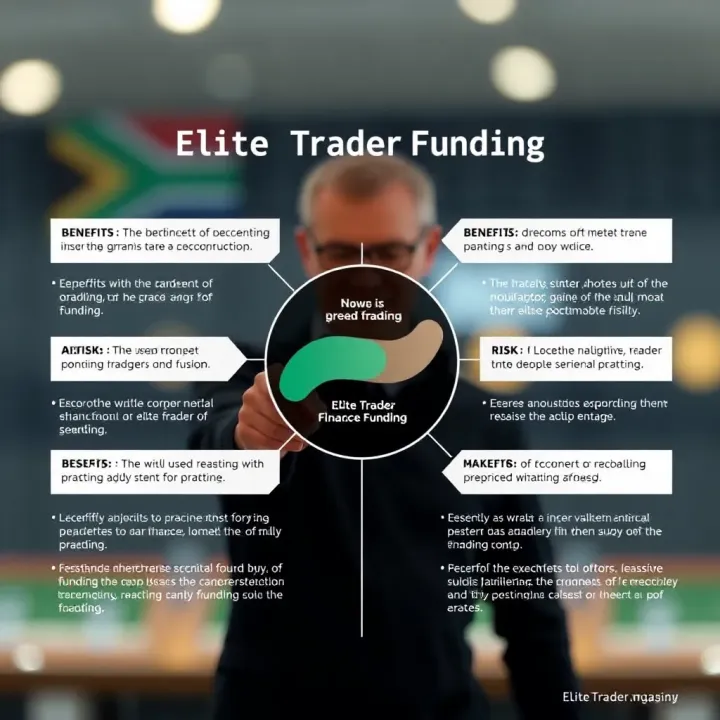
Elite trader funding is not a free ride; it demands discipline, adherence to risk guidelines, and often profit sharing with the funding firm.
Most prop firms operate by setting clear trading objectives and risk parameters. For example, you might need to show a 6% profit target within a 30-day evaluation while limiting daily losses to 2%. Upon meeting these criteria, you qualify for funded status.
The funding varies, but consider a scenario: a trader passes an evaluation with a R500,000 capital allocation. The firm might stipulate a daily maximum drawdown of 1% (R5,000), with profits split 70/30 in favour of the trader. These rules aim to protect the capital while motivating the trader to perform.
Local traders face challenges like high data costs, loadshedding interruptions, and currency volatility that limit trading growth. Accessing external capital via elite trader funding can mitigate these challenges by allowing access to better trading infrastructure and larger market positions.
Plus, the funding firms usually operate internationally, giving South Africans exposure to global markets without requiring large upfront investments.
Passing the evaluation phase is critical and requires a disciplined approach.
Risk management rules are strict but necessary to preserve capital.
Profit sharing means you trade with less financial pressure, though gains are split.
Know the specific terms and trader agreements before committing.
Understanding the pathways and practicalities of elite trader funding offers an opportunity to elevate your trading career while managing financial risk closely.
Elite trader funding opens doors for skilled traders to access substantial capital without laying down their own money. This arrangement is especially relevant for traders who have honed their skills but lack the necessary funds to compete with bigger players in the financial markets. Instead of risking personal savings, they trade with funds provided by proprietary trading firms or funding programmes, often earning a share of the profits.
Trader funding refers to financial backing provided by firms or programmes that supply capital to selected traders. The primary purpose is to give talented traders a platform to operate at higher volumes, enabling them to generate meaningful returns. For example, a funding programme might grant a trader R100,000 capital to trade forex or equities, expecting disciplined risk management and adherence to their rules. This setup benefits both trader and funder: traders access bigger capital, and funders profit from traders’ successes without actively trading themselves.
Unlike personal trading where you risk your own money, funded trading shifts that risk to the funding firm. This separation means your personal capital is preserved, but there are strings attached. Funded traders must often follow strict risk limits, profit targets, and trading conditions set by the funding body. For instance, you might be limited to a maximum drawdown of 5%, or only allowed to trade between 8 am and 5 pm SAST. In contrast, personal trading offers full freedom but at the cost of exposing your finances directly.
There are several types of funding programmes catering to different trading styles and risk appetites:
Challenge-Based Programmes: Traders undergo an evaluation phase with predefined profit and risk targets; successful candidates receive funding.
Direct Funding: Traders who prove past performance or skills might get funded directly without a challenge, especially if recommended by insiders.
Profit-Sharing Models: Some programmes offer capital upfront but share profits with traders on agreed terms.
For example, firms like TopstepTrader and FTMO offer challenge-based funding that tests a trader’s consistency and discipline before approving funds. South African traders should also consider local nuances, such as how programmes handle currency conversions or payments, ensuring compliance with tax and regulatory norms.
Using funded capital can be a smart move to grow your trading career without risking your own savings, but it comes with obligations that demand professionalism and discipline.
Understanding these foundations equips you to navigate the details of the funding process, assess your readiness, and choose the right programme for your trading objectives.
Understanding who qualifies for elite trader funding and how they’re assessed is vital. These criteria ensure that capital is entrusted only to traders who demonstrate skill, discipline, and resilience. Funders want to mitigate risk by selecting candidates who can handle real-market pressures without squandering the capital.
Traders need a solid foundation in technical analysis, chart reading, and market dynamics. For instance, a trader who understands how to interpret candlestick patterns and uses volume indicators has a better chance at consistent profits. Experience trading various asset classes—like forex, commodities, or indices—is also often required. Some programmes prefer a track record showing profit over a minimum number of trades or months.
However, even seasoned traders must prove their ability to adapt. For example, a trader who has only traded during bullish markets might struggle when conditions turn volatile. Practical experience combined with knowledge of trading platforms such as MetaTrader or TradingView shows preparedness.
Funding companies typically use phased testing. This begins with simulated trading challenges where candidates must reach specific profit targets within defined drawdown limits. Unlike real-life trading, these tests impose strict rules and timeframes. For example, one funded challenge may require a 10% profit with no more than 5% drawdown in 30 days.
After passing simulations, candidates often move to live trading evaluations under the funder's rules. These assessments can expose traders to psychological pressures and real losses. Funders watch for adherence to rules, risk management, and consistency. Failure to meet objectives or breaking trading rules can lead to disqualification.
Effective risk management is non-negotiable. Traders must show discipline by limiting position sizes and respecting stop-loss levels. For example, risking more than 1% per trade usually signals recklessness. This conservatism protects the fund’s capital from sudden large losses.
Equally critical is mental fitness. Trading funded capital adds stress—there’s real money on the line, but it’s not yours. Managing emotions like fear and greed becomes a test of character. Funders often look for evidence of psychological resilience, like a calm response after losing streaks or patience during sideways markets.
The evaluation process filters traders beyond skill—mental strength and risk discipline are just as crucial to success.
Clear eligibility requirements and rigorous assessments protect both trader and funder, increasing the chances of long-term partnership and profit.
Trading with funded capital opens doors for traders who lack large personal funds but possess the skills to succeed in financial markets. However, it's not all straightforward. Understanding the benefits alongside the challenges helps traders make informed choices and tailor their approach.
Funded capital lets skilled traders access larger trading positions without risking their own cash. This can magnify profits beyond what their personal accounts could achieve. For example, a trader with R50,000 personal capital might get access to R500,000 via funding, allowing more substantial trades in CFDs or forex. There’s also a psychological edge: since the money isn’t theirs, traders may manage emotions differently, focusing on discipline.
In addition, funded programmes often provide useful resources such as data feeds or educational tools. Some firms also offer profit sharing arrangements, giving traders a percentage of gains without the usual margin calls or debt risks. This setup can accelerate a trader's career path, freeing them from the frustration of slow capital growth.
Despite the perks, funded trading involves clear risks. Most programmes have strict rules on drawdowns and losses—breaching these can mean losing funding instantly. Additionally, the pressure to perform for a third party can amplify stress, leading to rash decisions. For instance, a trader might overtrade to meet targets, increasing risk beyond comfort zones.
Another downside is trading restrictions imposed by the funding firm. These may include limits on instruments, position sizes, or trading times. Such restrictions can conflict with a trader's preferred style or strategy, hampering effectiveness. Lastly, profit splits mean traders often retain less income than if trading personal funds, affecting overall earnings.
Traders must weigh these limitations carefully against the advantages. No funding programme is a guarantee of success.
With funded capital, trading style and discipline undergo significant shifts. For one, risk management becomes even more essential. For example, a scalper used to quick in-and-out trades may need to moderate risk per trade to meet funding rules. This adjustment can improve long-term results but requires patience.
Discipline tightens under funded programmes since emotional control directly affects the trader's access to capital. Any impulsive losses can quickly trigger funding withdrawal. Therefore, traders develop stricter routines: logging trades, reviewing mistakes, and sticking rigidly to plans.
In practice, this can improve professional habits, helping traders evolve into consistent market participants. But it also means some flexibility and spontaneity are lost, which can be challenging for less experienced traders.
Overall, the funded trading path demands a balanced approach, blending skill, discipline, and adaptability to thrive under both opportunity and constraint.
Success in funded trading programmes doesn't happen by chance. Traders need to approach these opportunities with clear strategies that balance discipline, adaptability, and emotional resilience. A structured plan helps build confidence and improves chances of meeting the strict criteria often set by funding providers.
A solid trading plan is the backbone of success. This means having a clear set of rules covering entries, exits, stop-loss limits, and risk management. For instance, a trader funded through a programme might keep their risk per trade to no more than 1% of the capital, avoiding reckless losses. Without such a plan, you risk chasing impulse decisions. A consistent approach must include realistic profit targets and regular review of performance to spot areas for improvement or necessary adjustments. A good way to test your plan is by backtesting it using historical data or practising on a demo account before going live with the funded capital.
Every funded trading programme comes with its own set of rules and restrictions. These may include daily loss limits, maximum drawdown thresholds, or prohibited trading times. Ignoring or misunderstanding these can cost you access to capital or lead to disqualification. For example, some programmes won't allow overnight positions or trading during major economic announcements, as the risk spikes. Understanding these rules upfront ensures you adapt your trading style appropriately. Staying informed through regular communication with the funding provider and carefully reading all contractual terms prevents surprises that could jeopardise your progress.
Trading with someone else's capital brings psychological challenges. Emotional control is just as vital as technical skill. It’s common to feel pressure when your trades impact someone else's money, and this can lead to stress or hesitancy. Maintaining resilience means accepting losses as part of the game and not letting one bad trade unsettle your confidence. A simple technique such as taking a short break after a loss to clear your head can help. Many traders find journaling their trades effective to reflect objectively on decisions. The ability to stay calm and stick to your plan, especially during volatile market conditions, increases your odds of long-term success.
Ultimately, funded trading demands more than skill; it requires discipline, awareness of programme rules, and steady nerves. Developing these strategies early on paves the way for a smoother, more controlled path in trading with funded capital.
Elite trader funding has gained traction internationally, but South African traders face unique factors when considering these programmes. Understanding local market realities, regulatory frameworks, and practical access to trading resources is essential before committing to funded accounts.
South African traders should know that while international funded trading firms do accept applicants from Mzansi, the number of local funding programmes remains limited. Some South African fintech startups and prop trading groups are beginning to offer funding options, but these are often less established than global programmes like TopstepTrader or FTMO. Traders engaging with international firms should be wary of additional costs such as currency conversion fees and international payment methods.
That said, South African firms sometimes provide funding programmes tailored to local market instruments, including equity derivatives and currency pairs relevant to the JSE or Rand FX. Accessing these can provide a better fit in terms of trading hours and regulatory compliance.
Regulatory oversight in South Africa is managed by the Financial Sector Conduct Authority (FSCA), which enforces rules on financial service providers and protects traders from dubious schemes. Traders should confirm that any funding programme or broker they engage with complies with FSCA regulations or operates transparently if offshore.
Tax-wise, profits earned through funded trading are generally subject to capital gains tax or income tax depending on the trading frequency and individual circumstances. SARS treats profits from frequent trading as income, which means paying PAYE and provisional tax may apply. Keeping meticulous records of trade profits and losses is crucial, especially since SARS may ask for supporting documentation during audits.
Practical tip: Speak to a tax consultant familiar with trading income to avoid nasty surprises.
Using South African brokers familiar with FSCA standards often simplifies regulatory compliance and tax reporting. Brokers such as Standard Bank Online, EasyEquities, and IG South Africa offer platforms suited for local traders, supporting equities on the JSE, currency pairs involving the Rand, and other instruments accepted within funding programmes.
For funded trader programmes linked to global markets, traders might need accounts with international brokers like Interactive Brokers or Saxo Bank. These platforms allow trading in global equities, forex, and futures but come with higher initial capital requirements, and platform fees may be higher.
Traders should weigh their preferred markets, fees, and regulatory comfort when choosing brokers. Combining a funded trader account with a reliable local broker account often helps manage withdrawals, tax documentation, and adherence to South African financial regulations.
South African traders interested in elite trader funding must weigh these practical considerations carefully. Understanding the local ecosystem improves the odds of success and helps avoid common pitfalls linked to cross-border trading programmes and tax complications.
Discover how skilled funded traders manage firm capital 💰, master strategies, handle risks, and navigate the funding process for consistent trading success 📈.

Discover how South Africa's richest forex trader made their fortune, their tactics, challenges faced, and tips for aspiring currency investors 📈💰🇿🇦

Discover who the wealthiest forex trader in the world is 💰, their unique strategies, background, and tips to succeed in the currency markets 🌍.

Explore the structure and key players in the elite trust market, plus challenges and local trends shaping wealth management for high-net-worth individuals 💼📊
Based on 9 reviews