
Rand to Dollar Forecast: What’s Next for South Africa’s Currency?
📊 Explore future trends of the South African Rand 🇿🇦 against the US Dollar 💵 with expert insights on economics, geopolitics, and market moves.
Edited By
Isabella Hughes
The euro to rand (EUR/ZAR) exchange rate plays a significant role in South Africa's economy, especially given the country's trade links with the European Union. For traders, investors, and financial analysts, keeping an eye on this currency pair isn't just about watching numbers fluctuate — it's about understanding the underlying factors that drive these changes and how they might impact business decisions.
The rand often responds sharply to both local and international developments. For instance, Eskom's loadshedding stages or South African Reserve Bank (SARB) policy updates can influence investor confidence in the rand. Meanwhile, developments in the eurozone, such as economic growth figures or European Central Bank (ECB) interest rate decisions, create ripple effects on the euro side.
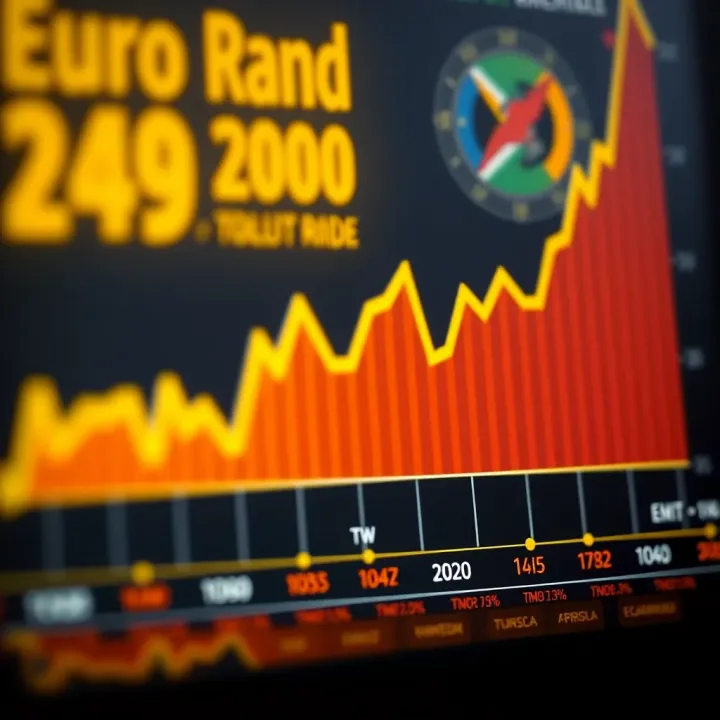
Exchange rates like EUR/ZAR reflect a tug-of-war between factors like commodity prices, interest rate differentials, political stability, and global market sentiment.
Understanding the trends means dissecting:
Local economic indicators: Inflation, GDP growth, unemployment rates, and fiscal policy decisions.
Global influences: Eurozone inflation, ECB guidance, US dollar strength, and geopolitical tensions.
Market sentiment: Risk appetite and capital flows can quickly sway the rand, especially in uncertain times.
Recent months have shown how sensitive the EUR/ZAR rate is to shifting expectations. For example, when SARB raised the repo rate despite concerns about slowing growth, the rand initially strengthened, reflecting higher returns for investors. However, ongoing load shedding and political uncertainty have complicated the outlook.
Forecasting this exchange rate also requires understanding technical factors like support and resistance levels, as well as seasonal patterns influenced by trade cycles and investor behaviour near the end of South Africa's financial year.
By grasping these elements, you can better anticipate currency swings and plan foreign exchange strategies for travel, imports, exports or portfolio management. This article will help shed light on the complexity behind the EUR/ZAR exchange, giving you a clearer sense of what shapes currency moves and how to act on them.
Grasping the current state of the euro to rand (EUR/ZAR) exchange rate is essential for anyone involved in South African financial markets, trade, or travel. This rate influences everything from the cost of imported goods and services to the value of international investments. By understanding where the rate stands now and how recent events shape it, traders and investors can better time their decisions, while businesses can plan for pricing and budgeting.
In recent months, the EUR/ZAR rate has shown considerable volatility, reflecting global economic pressures and local developments. For instance, declining eurozone inflation and cautious European Central Bank signals have led to fluctuations in the euro's strength. Meanwhile, South Africa’s economy has faced mixed signals — with certain positive GDP growth numbers overshadowed by persistent unemployment challenges and periodic loadshedding disruptions. These factors combined have caused the rand to weaken somewhat against the euro, climbing from around R18.50 per euro at the start of the year to touching levels near R19.40 in mid-2024.
Consider a Johannesburg-based importer who sources machinery from Germany. A rand weakening versus the euro means the business faces higher costs, potentially squeezing margins unless prices adjust. Conversely, exporters enjoying this trend can see their goods more competitive in Europe due to the favourable exchange rate. These swings highlight how sensitive the EUR/ZAR rate is to intertwined economic and political signals on both sides.
Putting current rates in context requires looking back over a longer period. The EUR/ZAR rate has demonstrated a general upward trend over the past decade, moving from roughly R10 in 2014 to nearly double that ten years later. This shift largely reflects South Africa’s domestic challenges like structural unemployment and political uncertainty, combined with the eurozone's relatively stable economic position.
However, the rate hasn’t moved in a straight line. Periods of rand strength popped up, often coinciding with commodity booms or improved investor sentiment, such as in 2018 when the rand briefly strengthened due to expectations surrounding the new South African president’s reform agenda.
Historical understanding helps traders spot recurring patterns and cautious investors to avoid surprises in their exposure. It’s not just the numerical changes but the reasons behind them that tell a fuller story.
Looking at decade-long data alongside recent market moves provides a fuller picture. It illustrates that EUR/ZAR dynamics are a complex mix of local socio-economic realities and international factors — understanding this mix helps make sense of the current rate and its possible near-term direction.
Understanding the key factors behind the euro to rand exchange rate helps traders, investors, and financial analysts make informed decisions in a currency market influenced by a web of economic, political, and global forces. These factors not only determine short-term fluctuations but also shape long-term trends affecting trade, investment flows, and risk management.
Interest rates heavily impact currency values by influencing capital flows and investor sentiment. When the South African Reserve Bank adjusts rates, it affects the rand's appeal compared to the euro. For instance, if SARB raises interest rates to combat inflation, local bonds offer higher yields, attracting foreign investment and boosting the rand. On the flip side, if the European Central Bank (ECB) tightens monetary policy faster than South Africa, the euro tends to strengthen against the rand.
Inflation also plays a crucial role. Higher inflation in South Africa tends to erode purchasing power, weakening the rand versus the euro. Conversely, if inflation in the Eurozone rises sharply without corresponding rate hikes, the euro might weaken as investors question real returns. Keeping an eye on inflation trends allows market participants to anticipate likely central bank actions that influence the euro-rand rate.
Economic growth signals a country’s health and future prospects. South Africa's GDP growth, though often modest, directly impacts the rand since stronger growth tends to attract investment. For example, a rebound in mining and manufacturing sectors usually underpins rand strength through export earnings.
Unemployment figures provide insight into economic stability and consumer spending power. Persistently high unemployment in South Africa can weigh down the rand as it implies slower economic activity and lower tax revenues. Meanwhile, steady or improving labour markets in the Eurozone may lend support to the euro by signalling economic resilience.
Political events in South Africa can cause sharp swings in the rand’s value. For example, periods marked by policy uncertainty, leadership changes, or unrest often unsettle markets, leading to rand depreciation. Investors prefer predictability; hence, political stability tends to boost confidence and sustain rand demand.
Decisions by the European Union (EU) and the European Central Bank affect the euro’s strength. Policy shifts like stimulus packages or regulatory changes play a part in shaping investor confidence across the Eurozone. For South African traders dealing in euro-rand, keeping track of EU developments is vital since new rules or economic measures can ripple through financial markets and change currency dynamics.
South Africa’s trade links and global investor sentiment both react to international events. Trade disputes, such as those involving the US and China, or crises like sudden commodity price drops, can trigger risk-off moods. The rand, often seen as a risk asset, tends to weaken in times of global uncertainty, while the euro may behave as a safe haven or face its own pressures depending on the crisis source. Market players should monitor geopolitical developments and commodity markets for clues on currency direction.
Currency markets are intertwined with economic realities and geopolitical shifts—staying alert to these factors gives you an edge in anticipating euro to rand movements.
Key factors like interest rates, inflation, GDP growth, political stability, EU policies, and global trade issues form the backbone of understanding the euro to rand exchange rate. By analysing these elements, traders and investors can better navigate the fluctuations and strategise accordingly.
Forecasting the euro to rand exchange rate is a core aspect for traders, investors, and businesses working across these two currencies. Experts use various methods to predict future movements, helping market participants make more informed decisions. Understanding these forecasting techniques provides insight into how exchange rates react to economic shifts and political developments.
Technical analysis involves studying historical price data and market behaviour to forecast future exchange rate trends. Analysts use charts, patterns, and indicators such as moving averages, Relative Strength Index (RSI), and Fibonacci retracements to identify potential turning points or continuation patterns in the EUR/ZAR rate. For example, if the rand weakens consistently over a period and approaches a historical support level on the chart, a technical analyst might predict a bounce or reversal there.
The practical relevance of technical analysis lies in its ability to offer entry and exit points based purely on price action without relying on fundamental news. It suits short-term traders looking for tactical positions during volatile periods, such as around South Africa’s budget announcements or European Central Bank rate decisions.
Fundamental analysis looks at economic data, political factors, and broader market conditions that affect the euro and rand's relative value. Analysts examine indicators like interest rates, inflation, GDP growth, and political stability in South Africa and the Eurozone. For instance, if the South African Reserve Bank (SARB) signals an interest rate hike while the European Central Bank hints at a dovish stance, fundamental analysis would predict the rand strengthening against the euro.
This method helps investors focusing on medium to long-term trends by linking economic realities to currency movements. Businesses engaged in import/export use fundamental forecasts to plan budgets and hedge more effectively, taking into account underlying conditions rather than just price charts.
Despite sophisticated techniques, exchange rate forecasting remains uncertain due to market complexity. Sudden geopolitical events, unexpected economic data, or changes in global risk appetite can upset even well-backed predictions. For example, Eskom’s worsening loadshedding or an EU policy shift on trade tariffs could push the EUR/ZAR rate in volatile, unpredictable ways.
Moreover, forecasting requires constant updates as markets rapidly digest new information. Models that performed well in one economic cycle may fail in another. That said, combining technical and fundamental approaches often yields the best insights, balancing short-term price action with longer-term economic trends.
No forecasting approach offers a crystal ball. But with a mix of methods and cautious interpretation, traders and business leaders can navigate the euro-rand market with greater confidence and preparedness.
To sum up, knowing how experts forecast the euro to rand exchange rate equips market participants to respond to signals, manage risk, and capitalise on opportunities in a fluctuating currency market.
Understanding how the euro to rand exchange rate moves isn’t just academic — it affects everyday decisions, especially for South African businesses and individuals dealing with cross-border transactions. Fluctuations in this rate can influence costs, pricing, profits, and personal finances. Knowing what these changes mean helps in planning and risk management.
Importers and exporters closely watch the euro to rand rate, as it directly impacts their margins. For importers, a weaker rand means paying more for goods priced in euros. This can inflate costs for businesses importing machinery, electronics, or European raw materials. A company importing wine from Stellenbosch's sister regions in Europe, for example, might find its costs jumping unexpectedly when the rand weakens, forcing a review of pricing or sourcing decisions.
Conversely, exporters benefit from a weaker rand because their goods become cheaper for European buyers. However, strong learning and monitoring systems are necessary to predict these trends and adjust operations accordingly. Investors with assets in euros or South African shares exposed to European markets also need to gauge these shifts to balance returns against currency risks.
To protect against unwanted currency swings, businesses often turn to hedging. Forward contracts are popular — they lock in an exchange rate today for a transaction happening later, providing certainty in budgeting. For instance, a textile exporter anticipating payment in euros in three months can use a forward contract to secure the current rand value, avoiding losses if the rand weakens.
Options provide more flexibility but at a cost: they give the right, not the obligation, to exchange currency at a set rate. Companies might use options to safeguard against sharp, adverse movements without missing out if the rate moves in their favour. Still, both tools require expertise and a clear strategy, because hedging improperly can be more costly than beneficial.
For South Africans planning holidays in Europe, the euro to rand rate affects how far their money will stretch. A stronger rand means cheaper travel, accommodation, and dining when booked or paid in euros, allowing travellers to get more for their money or upgrade experiences without increasing budgets.
On the flip side, when the rand weakens, holidays suddenly cost more, which can catch travellers by surprise if they haven’t budgeted for exchange rate shifts. Booking flights or accommodation early, or using forex forward contracts offered by some banks, can help manage these costs.
Regular remittances to family or business partners in Europe also feel the ripple effects. Sending money when the rand is weak means more rand spent to send the same euro amount, shrinking the actual value received overseas. Some South Africans working abroad who send money back home also watch these shifts closely, as the rand's strength determines the actual income they get in local currency.
Choosing a money transfer service that offers favourable rates and low fees — like those compared on platforms such as MyBroadband — can make a notable difference. Also, timing transfers during favourable exchange rates can save significant sums, but predicting short-term currency movements is tricky and carries risks.
Managing currency exposure is not just for large corporates; individuals who travel or send remittances also benefit from understanding and planning around exchange rate movements. Staying informed and using available hedging options can protect your wallet against unnecessary surprises.
Managing currency risk is essential for traders, investors, and businesses dealing with the euro to rand exchange rate. Fluctuations in the EUR/ZAR pair can quickly impact profit margins, investment returns, and operational costs. By adopting effective strategies, you can protect your financial outcomes against unexpected swings and keep your exposure within acceptable limits.
Forward contracts lock in an exchange rate today for a transaction that will happen in the future. For example, a South African importer expecting to pay €100,000 in three months can agree on a fixed rand amount now. This removes the guesswork about currency changes and provides budget certainty. While the contract protects against rand depreciation, it also means you can't benefit if the rand strengthens against the euro.
Options offer more flexibility compared to forwards. Buying a call option on euros gives the right, but not the obligation, to buy euros at a specified price before a certain date. This means if the euro weakens, you can let the option expire and purchase euros at the cheaper spot rate. However, options carry a premium cost upfront, so it's important to weigh this against the potential risk and reward.
Both tools suit different profiles: forward contracts tend to suit businesses with fixed obligations and little room for flexibility, while options appeal to those wanting to keep upside potential. A local business exporting wine to Europe, for instance, might use forwards to hedge predictable payments, but keep options for occasional large deals where market movements can be favourable.
Relying solely on one currency can increase your vulnerability to sharp moves in that rate. Diversifying currency exposure means spreading risk by operating or investing in multiple currencies rather than just euros or rands.
For traders or investors, this might mean holding assets in US dollars, pounds, or even emerging market currencies alongside euros. This approach can help offset losses if the rand weakens sharply against one currency but holds steady or improves against another. It also offers opportunities to capitalise on different economic cycles.
Companies can diversify by sourcing inputs or selling goods in a range of markets to reduce dependence on a single currency. A South African clothing retailer expanding to markets beyond the Eurozone, like East Africa or the UK, avoids the full impact of EUR/ZAR swings. Also, keeping bank accounts or lines of credit in multiple currencies affords more flexibility during periods of market stress.
Effectively managing currency risk is about balancing protection and opportunity. By using forward contracts, options, and diversifying your currency mix, you can reduce exposure to sudden EUR/ZAR moves while remaining adaptable to market shifts.
Understanding these strategies is key for anyone engaging with euro to rand transactions — whether it’s a trader executing a deal or a business planning for the next quarter’s budget.
📊 Explore future trends of the South African Rand 🇿🇦 against the US Dollar 💵 with expert insights on economics, geopolitics, and market moves.
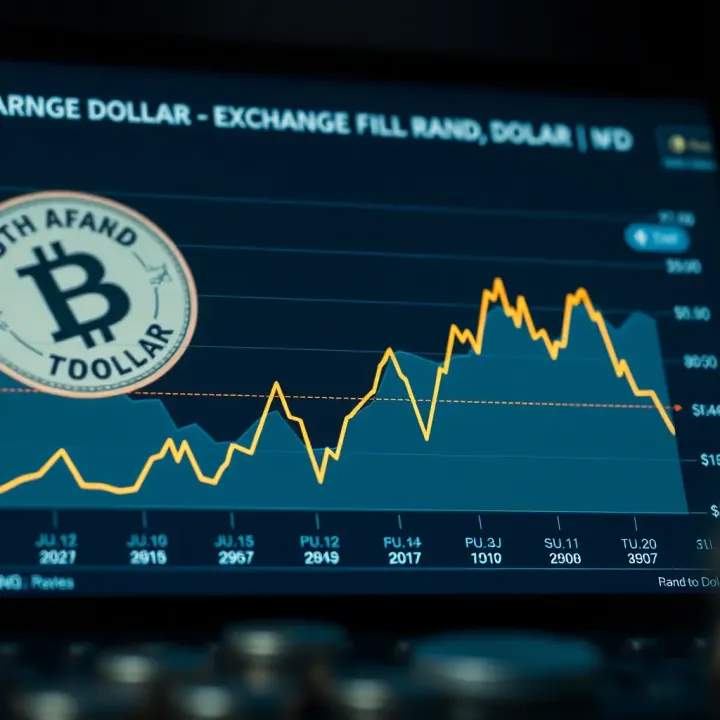
📉 Explore key factors shaping the Rand-Dollar exchange rate, from economic trends to market shifts, to help businesses and investors in South Africa stay informed.

Explore the Rand to INR exchange rate forecast 📉 with insights on economic trends, geopolitical shifts 🌍, and tips to manage currency risks effectively 💹.

Explore detailed Rand to Rupee exchange rate forecasts 📉📈, understand key economic factors 🇿🇦💹🇮🇳, and stay ahead with market trend insights 🌍.
Based on 14 reviews