

Understanding P2P Trading in South Africa
🔍 Explore P2P trading in South Africa: learn how to trade safely, discover trusted platforms & understand local regulations to make informed decisions.
Edited By
Charlotte Reynolds
Foreign exchange (FX) trading involves buying and selling currencies in the global market. For South African investors, understanding how FX markets operate is vital to navigating potential profits and risks effectively.
FX markets run 24 hours a day during weekdays, which means trades can happen anytime, making flexibility key. The market is hugely liquid, with trillions of Rand exchanged daily worldwide. Major currency pairs—like USD/ZAR, EUR/USD, and GBP/ZAR—are commonly traded, reflecting countries with strong economic ties to South Africa.

South African investors should know that FX trading isn't limited to speculation; it’s also essential for businesses that deal internationally, helping them manage currency exposure. Local traders often use platforms offered by banks like FNB, Absa, or brokerages regulated under the Financial Sector Conduct Authority (FSCA).
Trading in FX involves leverage, allowing you to control a large position with a relatively small amount of money. While this can boost gains, it equally magnifies losses—meaning risk management strategies are a must.
"Start with a solid grasp of market basics and regulations to avoid common pitfalls that catch many new FX traders off guard."
Key factors to consider include understanding:
Exchange rates and how they fluctuate due to economic indicators, geopolitical events, and central bank decisions
How the Reserve Bank’s policies impact the Rand’s value against other currencies
Trading strategies, such as day trading, swing trading, or position trading, tailored to your risk appetite and capital
The dynamic nature of FX markets requires South African investors to stay informed through reliable financial news sources and data platforms. Investing time in learning about spreads, order types, and the role of market makers will build a foundation for smarter trading.
In short, FX trading is accessible to South Africans with internet access and enough capital, but success depends on understanding the market nuances and local regulatory environment. This article will help you get a clear picture of what’s involved before you commit your Rand.
For anyone stepping into FX trading, understanding the foreign exchange market itself is the first step. This market isn’t just about swapping one currency for another—it plays a vital role in the entire global economy. For South African investors, grasping how this market operates allows smarter decision-making and better risk management.
Foreign exchange (FX) trading involves buying one currency while simultaneously selling another. It’s the largest financial market worldwide, with trillions of rands moving daily. Unlike share trading on the JSE, FX operates 24 hours a day across different time zones. This continuous operation means you can respond swiftly to economic news or market shifts, which is key for active traders.
Currencies are traded in pairs: for example, ZAR/USD or EUR/GBP. The first currency mentioned is the base, and the second is the quote currency. If the ZAR/USD pair moves from 15 to 15.5, it means one rand now buys more dollars, so the rand has strengthened. Understanding these pairs lets traders gauge how global events affect currency strength gaps and spot trading opportunities.
The FX market’s role extends beyond speculation—it facilitates international trade and investments. When a South African company imports machinery from Germany, it needs euros, so it trades rands for euros on the FX market. These flows keep the wheels of commerce turning. Plus, governments and central banks use the FX market to stabilize their currencies and influence economic policies.
Central banks and monetary authorities are big players in the FX market. The South African Reserve Bank (SARB) might intervene by buying or selling rands to keep inflation in check or to smooth out erratic currency moves. Their actions impact liquidity and prices, which every trader should keep an eye on.
Commercial banks and financial institutions facilitate the majority of currency trades. Large banks execute trades on behalf of clients like corporations and hedge funds. They also trade for their own accounts, providing liquidity to the market. For example, if you trade ZAR/USD via a broker linked to a big bank, that bank is probably the counterparty.
Retail traders and investors, including individual South Africans, have grown in number thanks to online platforms like IG or Plus500. While they represent a small slice of daily volume, retail traders’ access to leverage and instant execution makes their presence significant. However, traders must be careful around high volatility and risks involved.
Lastly, corporates and multinationals use the FX market to hedge currency risks. For instance, a Cape Town-based exporter selling to the EU expects payment in euros. To protect themselves from rand depreciation, they lock in exchange rates through FX contracts. This practical use of the market is vital to business planning and managing foreign currency exposure.
Understanding who moves the market helps you anticipate price swings and avoid surprises. Having this knowledge shapes a grounded approach—whether you're trading short-term or hedging longer exposures.
In short, knowing the structure and players of the FX market helps South African investors appreciate how global and local factors interact. This foundational awareness is the backbone of any effective trading or investment strategy.
Understanding the core concepts and mechanics behind FX trading is vital for anyone looking to venture into this market. These elements form the foundation for making informed decisions, managing risk, and developing effective strategies. Without a clear grasp of how currency pairs work, how prices are set, or what leverage means, traders can easily find themselves out of their depth.
At the heart of FX trading are currency pairs. Every trade involves buying one currency while simultaneously selling another. The first currency in the pair is the base currency, and the second is the quote currency. For example, in the USD/ZAR pair, the US dollar (USD) is the base currency, and the South African rand (ZAR) is the quote currency. The price shown tells you how much one unit of the base currency costs in terms of the quote currency. So, if USD/ZAR is 18.50, it means one US dollar buys 18.50 rand.
Recognising this is important because your profit or loss depends on the movement of this rate. If you expect the rand to weaken against the dollar, you might buy USD/ZAR, aiming to sell the dollars later at a higher rand price.
There are three main categories of currency pairs to know. Major pairs involve the world's most traded currencies, like USD/EUR or USD/GBP, and typically offer better liquidity and tighter spreads. Minor pairs include other major currencies but exclude the US dollar, such as EUR/GBP or AUD/NZD. Exotic pairs involve one major currency paired with a currency from an emerging or smaller economy—think USD/ZAR or USD/TRY. Exotic pairs often come with wider spreads and more volatility, which can mean higher risk but also bigger opportunities.
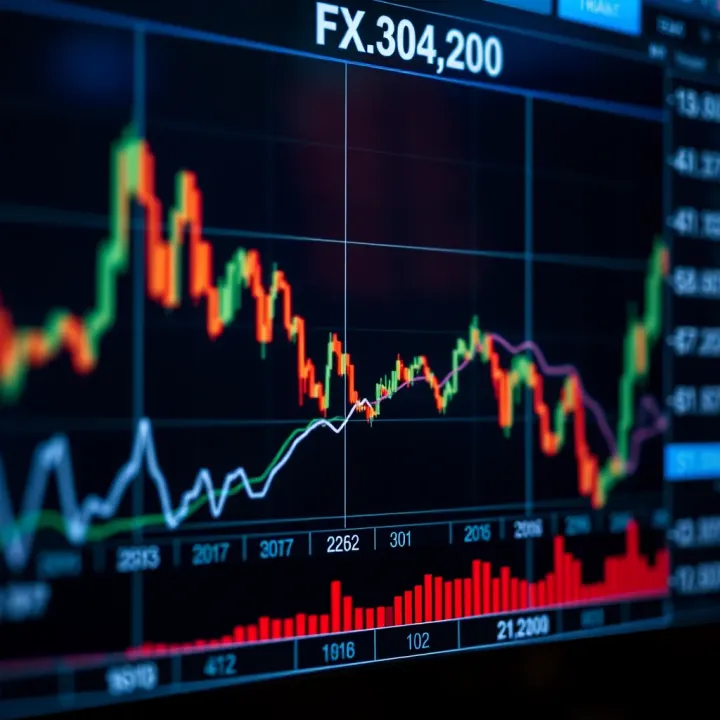
Currency prices fluctuate based on supply and demand. If, for instance, South African exports surge, demand for the rand tends to increase as foreign buyers need ZAR to pay local suppliers. This increased demand pushes the rand’s value up relative to other currencies.
Similarly, if there’s political uncertainty in South Africa, traders might sell off the rand to avoid risk, leading to a weaker currency. These basic supply and demand shifts happen constantly, driven by a mix of economic activity, market sentiment, and external events.
Economic indicators and news releases also have a strong influence. Reports on inflation, employment, or interest rates from key players like the US Federal Reserve or the South African Reserve Bank can cause sudden price swings. For example, if SARB unexpectedly raises interest rates, the rand often strengthens because higher yields attract investors. Savvy traders monitor these reports closely since knowing when and how they might impact currency prices helps in timing trades effectively.
Staying updated on economic news is key to anticipating price moves and avoiding nasty surprises.
Leverage lets traders control a larger amount of currency with a relatively small deposit, known as margin. This can amplify gains, but of course, it also magnifies losses. For instance, with 10:1 leverage, R1,000 in your trading account allows you to control R10,000 worth of currency. It’s a double-edged sword.
Understanding margin calls is crucial. If the market moves against your position and your account balance falls below a broker’s required minimum margin, you’ll get a margin call — a demand to add more funds or close positions. If ignored, the broker may close trades automatically to limit losses. This can wipe out your investment quickly, especially in volatile markets like FX.
So, while leverage can boost potential profits, it demands solid risk management and awareness. Never trade with more leverage than you’re comfortable risking, and use stop-loss orders to keep losses manageable.
Grasping these concepts sets a strong foundation for trading FX confidently and safely in South Africa’s market environment.
Understanding practical approaches to FX trading helps investors apply theory to real market situations. This section focuses on how traders can use specific strategies and analytical tools to make informed decisions. For South African investors, these approaches offer tangible steps to navigate a market influenced by global events and local factors like changes in Rand volatility and economic policies.
Day trading and scalping involve opening and closing positions within short time frames, often minutes or hours. Day traders watch the market closely, capitalising on small price changes. Scalping is a quicker version of this, where the trader seeks to make many tiny profits throughout the trading day. For instance, a day trader might catch a short-term Rand-dollar fluctuation after a South African Reserve Bank interest rate announcement. While both strategies require constant monitoring and quick reflexes, they can be suited for those with the time and risk appetite.
Swing trading holds positions for a few days or weeks, aiming to benefit from short- to medium-term price movements. This method suits those wanting more flexibility; it’s less intense than day trading but still active enough to react to market shifts. For example, a swing trader might capitalise on political developments in the EU impacting the Euro-ZAR pair over several days. This strategy also allows using both fundamental and technical analysis without the pressure to constantly stare at charts.
Position trading takes a longer-term view, holding trades for weeks or months based on broad economic trends. Position traders focus on major shifts like currency cycles or inflation trends. A South African investor using this strategy might hold a USDZAR position anticipating recovery in US markets or changes in local economic fundamentals. This approach demands patience and a solid understanding of macroeconomic factors, often reducing the stress seen in shorter-term trading.
Fundamental analysis basics look at economic data and events to predict currency moves. South African traders watch inflation numbers, GDP figures, and SARB statements closely. For instance, a stronger-than-expected GDP report can boost the Rand, signalling a good time to buy. Fundamental analysis ties currency value to real-world economic health, helping traders understand why prices move.
Technical analysis techniques use price charts and indicators to catch trends and reversals. Common tools include support and resistance levels, moving averages, and RSI (Relative Strength Index). A trader might spot a recurring pattern in the USDZAR chart, suggesting a likely bounce or breakdown. Technical analysis complements fundamental insights, offering timely entry and exit points.
Sentiment analysis and tools gauge the mood of the market, often through reports like the Commitments of Traders (COT) or trader positioning data. In South Africa, monitoring local forums or broker sentiment reports can give clues on market consensus. For example, extreme bullish sentiment on the Rand might warn of a possible correction. Sentiment analysis helps avoid crowd mistakes and supports contrarian decisions.
Practical FX trading combines strategy with timely market understanding. South African investors who blend these approaches improve their chances of steady, informed trading success.
Understanding the risks and challenges in foreign exchange (FX) trading is vital for any investor stepping into this fast-moving market. The FX market’s constant fluctuations can catch even experienced traders off guard, especially here in South Africa where factors like Eskom loadshedding and Rand volatility add extra layers of uncertainty. Being aware of these risks helps you prepare and protect your capital effectively.
Volatility in the FX market refers to how much currency prices swing over a period. High volatility means sharp price changes, which can lead to big profits but also significant losses. For example, during unexpected political events or global economic shifts, such as changes in US interest rates or South African Reserve Bank (SARB) announcements, currency pairs like USD/ZAR can jump or drop wildly within minutes.
This volatility affects trades because it can trigger stop-loss orders prematurely or cause slippage—where the trade executes at a worse price than anticipated. Traders not prepared for such swings might find their accounts drained quickly, especially if using high leverage.
Managing unexpected market moves means having safeguards in place. This includes setting realistic stop-loss levels that reflect market conditions rather than sticking to fixed percentages. Also, keeping an eye on economic calendars for key events and avoiding trades just before major announcements helps reduce sudden shocks. Using demo accounts to test reactions to volatile market conditions can build your confidence without risking real money.
Stop-loss and take-profit orders are essential tools for controlling risk. A stop-loss order automatically closes a trade when a currency moves against you by a set amount, limiting your potential loss. Conversely, a take-profit order locks in gains once the price hits a favourable level. For instance, if you buy EUR/ZAR at 18.50, you might set a stop-loss at 18.30 to limit loss and a take-profit at 18.80 to secure profits without needing constant monitoring.
Diversification and trade sizing are other important tactics. Avoid putting too much of your total capital into one trade or currency pair. For example, if you have R100,000 to trade, limiting any single trade to 2-5% of that amount will protect you from outsized losses. Spreading trades across different pairs with varying behaviours, like pairing USD with GBP and ZAR, can reduce overall risk.
Avoiding emotional decisions is crucial. Fear or greed can make traders hold losing positions too long or jump into risky trades impulsively. Keeping a trading journal helps track performance objectively and encourages sticking to your strategy, not whims. Remember, the FX market rewards discipline more than luck.
Managing risk isn't about avoiding losses altogether but handling them thoughtfully so you stay in the game longer and trade smarter.
Navigating FX trading demands respect for its risks. Practising solid risk management, anticipating volatility, and maintaining emotional control will give you a better shot at success in a market that often feels like a rollercoaster.
Regulation and safety are vital for anyone venturing into foreign exchange (FX) trading in South Africa. The FX market, while offering numerous opportunities, is also prone to risks, including fraud. A clear understanding of local regulatory frameworks and the importance of safe trading practices can help South African investors protect their capital and trade with confidence.
The Financial Sector Conduct Authority (FSCA) plays a central role in overseeing the FX trading environment in South Africa. The FSCA ensures that financial institutions and brokers comply with laws designed to create a fair, transparent market. Its oversight helps discourage unscrupulous activity, while promoting ethical conduct in financial services. For traders, the FSCA’s regulation means they can expect a level of accountability from brokers operating within South Africa.
Trading with authorised brokers is critical for safety and legal protection. Brokers registered with the FSCA must adhere to certain standards, including maintaining adequate capital reserves and providing clear client agreements. This regulatory backing gives traders recourse should disputes arise or if there are irregularities in how trades are handled. In contrast, unregulated brokers might offer tempting spreads or leverage but put client funds at significant risk without regulatory safeguards.
Unfortunately, scam schemes targeting FX traders are common, with fraudsters employing tactics such as fake brokers, promise of guaranteed profits, or pressure tactics to deposit large sums quickly. A typical scheme might involve a bogus website mimicking a reputable broker, luring investors into wiring money that disappears overnight.
South African traders can avoid falling victim by applying strict due diligence. Check if the broker is FSCA-authorised and confirm their licence status through official registers. Use demo accounts first to test platforms and verify operations before committing real funds. Also, beware of unsolicited offers or too-good-to-be-true returns promised via email or social media. Taking the time to research, read reviews, and ask questions within trusted trading communities can be invaluable steps.
Trading with a regulated broker isn’t just a legal formality—it’s a key shield against fraud and loss.
By focusing on regulation and safety, South African investors can approach FX trading with a stronger sense of security, minimising common pitfalls while working towards their financial goals.
Starting your FX trading journey in South Africa requires a clear understanding of the local trading environment and regulatory landscape. This section helps traders navigate practical steps like opening a trading account, selecting a reliable broker, and accessing useful beginner tools. Knowing what to expect and what’s required can save time, reduce risks, and set you up for a smoother trading experience.
Picking the right broker is essential since it affects your trading costs, platform reliability, and overall security. Look for brokers authorised by the Financial Sector Conduct Authority (FSCA), South Africa’s financial watchdog, to ensure your funds and data are protected. For example, a local broker with FSCA approval must comply with strict rules on transparency and client fund segregation, which adds a layer of safety.
Besides regulation, consider the broker’s fees, spreads, available currency pairs, and ease of deposit or withdrawal using local payment methods like EFT or card payments. Some brokers provide local customer support, which can be a big help if you hit any snags. Don’t just settle for the first broker you find; compare a few to see which one matches your trading style and budget.
Before you can start trading, you’ll need to complete Know Your Customer (KYC) and Regulation of Interception of Communications and Provision of Communication-Related Information Act (RICA) compliance. These processes verify your identity to prevent fraud and money laundering. Typically, you’ll submit a certified copy of your ID and a proof of residence, like a recent utility bill.
While it may feel like a hassle, this step is vital to keeping the FX market above board. It protects both the broker and you, ensuring that only legitimate South African residents can open accounts and that transactions can be monitored properly. Brokers usually handle RICA verification automatically after you upload the correct documents.
Most brokers offer demo accounts that let you practise trading with virtual money before risking real Rand. This is crucial for newcomers to build confidence and get familiar with placing trades, reading charts, and using indicators without financial pressure.
For instance, platforms like MetaTrader 4 or 5, popular with many South African brokers, provide demo versions where you can experiment with different strategies. Taking advantage of these test environments prevents costly beginner mistakes and accelerates your learning curve.
Good brokers often provide localised training material, webinars, and tutorials geared towards South African traders. This can cover how global events affect the rand, or how to spot trends relevant to our economy. Access to local support teams who understand your time zone and trading challenges is invaluable.
Besides broker resources, independent learning tools such as forums and online courses tailored for South African investors help deepen your understanding. Combining these resources with practice trading prepares you better for real market conditions.
Starting FX trading with the right broker, meeting compliance, and making full use of educational tools builds a solid base. This approach reduces risks and helps South African investors trade more confidently.
🔍 Explore P2P trading in South Africa: learn how to trade safely, discover trusted platforms & understand local regulations to make informed decisions.

🤖 Explore robot trading in South Africa: learn how automated trading works, its pros and cons, key strategies, risks, and regulatory tips for investors.
Explore platform trading in South Africa 📈: understand key features, regulations 🇿🇦, pros & cons, and get expert tips for smarter trading decisions.
📊 Ready to start forex trading in South Africa? Learn market basics, key strategies, risk management, and local regulations to trade smartly and confidently today! 🇿🇦
Based on 6 reviews