
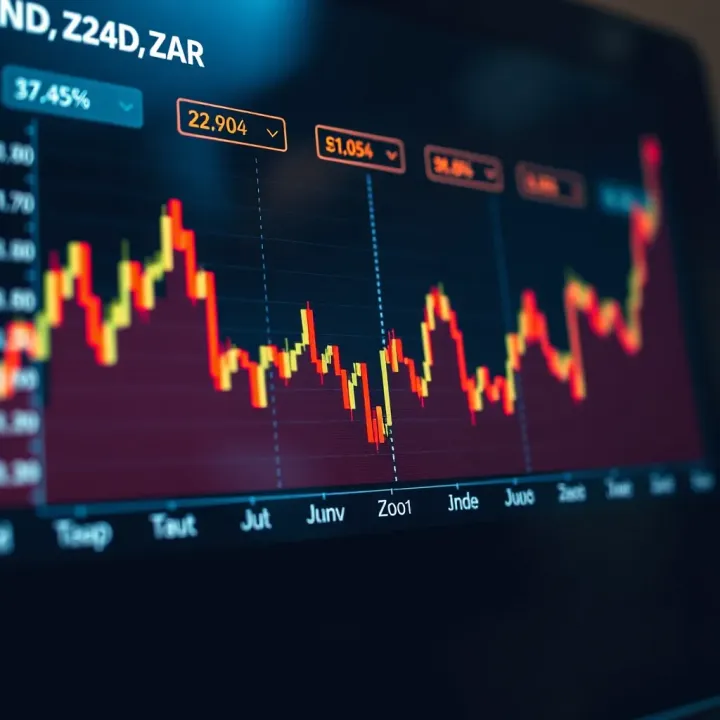
NZD to ZAR Exchange Rate Forecast
Explore key factors and economic trends shaping the NZD/ZAR exchange rate 📊. Get practical forecasting tips for investors and businesses in South Africa.
Edited By
Ethan Walker
Predicting the path of the British Pound (GBP) against the South African Rand (ZAR) isn’t straightforward. Traders and investors need to grasp both global and local economic factors feeding into this currency pair. The GBP/ZAR exchange rate fluctuates on shifts in interest rates, trade balances, political events, and even perceptions of risk within financial markets.
South Africa’s economic landscape introduces its own twists. With ongoing challenges like power cuts from Eskom’s loadshedding, fluctuating commodity prices, and changes in fiscal policy, the rand’s value can swing unexpectedly. Meanwhile, the UK faces its own hurdles—post-Brexit trade adjustments, inflationary pressures, and Bank of England interest rate decisions all play a part.

Understanding these intertwined factors gives traders a better shot at spotting opportunities or risks ahead of time.
Some key drivers to focus on include:
Interest rate moves: The SARB’s repo rate decisions and those of the Bank of England often create short-term pullbacks or rallies in GBP/ZAR.
Commodity prices: As a commodity exporter, South Africa's rand usually strengthens when gold and platinum prices rise.
Trade flows: The UK’s import-export balance with South Africa can nudge demand for either currency.
Political climate: Shifts in government policy, election outcomes, or international relations can unsettle markets.
Recent trends showed the rand broadside against global volatility, with occasional relief rallies when commodity prices firmed up. For traders, keeping an eye on SARB and Bank of England statements is just as crucial as watching geopolitical developments.
In this article, you’ll find a breakdown of recent GBP/ZAR movements, an assessment of expert forecasts, and practical advice for those trading or investing in this pair. The goal is to help you make sense of the drivers behind the numbers, not just chase trends blindly.
Understanding the GBP to ZAR exchange rate is vital for anyone involved in trade, investment, or financial analysis involving the UK and South Africa. This rate reflects the value of the British Pound (GBP) against the South African Rand (ZAR) and affects pricing, profitability, and risk management in cross-border transactions. Knowing how this exchange rate operates and what drives its changes can aid in making smart currency decisions.
Exchange rates like GBP/ZAR are primarily set by supply and demand in the foreign exchange (forex) market. Buyers and sellers of currencies respond to economic data, political events, and market sentiment, causing rates to shift constantly. Banks, corporations, and traders trade billions daily, influencing the GBP/ZAR price. For example, if South African exports to the UK grow sharply, this increases demand for Rand from British importers, potentially strengthening the ZAR versus the Pound.
Besides market forces, central bank policies—such as interest rate adjustments by the Bank of England or South African Reserve Bank—also impact the rate by influencing capital flows and investor appetite.
The Pound remains a major global currency, often seen as a safe haven due to the UK’s stable financial system. It benefits from London's status as a global financial centre. On the other hand, the Rand, while less prominent internationally, plays a key role in emerging market portfolios and commodity trading. South Africa is a leading exporter of gold, platinum, and other minerals, so global commodity prices often shape the Rand’s value.
These roles mean that GBP/ZAR moves not only reflect local economic conditions but also broader shifts in global trade, investment, and risk perception.
GBP/ZAR is known for comparatively high volatility among major currency pairs. Factors like political uncertainty in South Africa or unexpected developments in the UK can cause sharp swings within days. However, its trading volumes are much lower than GBP/USD or EUR/USD pairs, which means even moderate transactions can influence prices.
This volatility creates both opportunities and risks for traders and businesses. For instance, importers locking in exchange rates too early might miss favourable moves, but waiting too long exposes them to potential losses.
In the last twelve months, GBP/ZAR has fluctuated notably between roughly R19 and R22 per Pound. This range reflects various influences: episodes of political instability in South Africa, the Bank of England’s interest rate hikes aimed at curbing inflation, and global concerns like the Ukraine conflict.
Such shifts highlight how the Rand's sensitivity to domestic factors combines with Pound dynamics to create a range-bound yet volatile pair.
Events like the South African local government elections or UK parliamentary decisions over economic policies have moved the GBP/ZAR. For example, talks of reform in South Africa’s energy sector briefly lifted Rand sentiment, strengthening it against the Pound. Conversely, Brexit-related trade uncertainties have intermittently depressed Sterling.
These examples make plain how traders must monitor not only broad economic indicators but also political headlines from both countries.
Compared to GBP/USD or EUR/GBP, the GBP/ZAR pair typically shows higher volatility and wider spreads. This is partly due to South Africa’s emerging market status and lower liquidity in Rand trades. However, during global risk-off periods, the Rand tends to weaken more sharply than major currencies.
Investors often use GBP/ZAR as a proxy for risk sentiment towards South Africa and similar markets, making its movements a bellwether for regional stability.
Keeping an eye on the GBP to ZAR exchange rate not only informs currency trades but also offers insight into the economic and political vibes affecting two quite different yet interconnected countries.

Understanding the shifts in the GBP to ZAR exchange rate means looking beyond simple supply and demand. Several key factors push and pull these currencies in different ways, shaping the market for traders and investors focused on the Pound-Rand pairing.
Interest rates and inflation directly impact the appeal of each currency. For instance, when the Bank of England raises interest rates, it often attracts capital inflow seeking higher returns, strengthening the Pound. Conversely, if South Africa’s Reserve Bank hesitates to hike rates despite rising inflation, the Rand might weaken as investors look elsewhere. Inflation erodes purchasing power, so stable inflation rates usually support healthier exchange rate conditions.
Employment data and GDP growth provide snapshots of economic vitality. Strong employment numbers in the UK indicate a robust economy, making the Pound attractive to foreign investors. Meanwhile, sluggish South African GDP growth or rising unemployment can weigh on the Rand’s value. For example, if South Africa’s GDP growth slows due to power cuts from loadshedding, that uncertainty might deter investment and impact the exchange rate negatively.
Trade balance and current account figures illustrate money flow between countries. South Africa’s heavy reliance on exports like minerals means commodity prices significantly influence its trade surplus or deficit. A widening trade deficit weakens the Rand, whereas the UK’s trade balance shifts with its import and export performance post-Brexit, givingGBP fluctuations room to move.
Brexit-related changes have reshaped the UK’s trade landscape, injecting volatility into GBP movements. Negotiations over trade agreements and regulatory alignments continue to create uncertainty. If a new deal favours UK exporters, the Pound might gain ground; however, any setbacks usually cause dips against the Rand.
South African political climate has a direct effect on investor confidence. Events like cabinet reshuffles or uncertainty over policy direction can trigger Rand weakness. For instance, concerns over regulatory unpredictability or state-owned enterprises’ performance have weighed on the currency in the past.
Government policies and international relations matter too. Trade deals, fiscal policy decisions, or diplomatic tensions can shift currency valuations. Should South Africa strike favourable trade agreements with China or the UK, it could boost the Rand. Similarly, UK policy changes around taxation or public spending can influence Sterling movements.
Global commodity prices are crucial for South Africa as a commodity exporter. A rise in gold or platinum prices usually supports the Rand. If the global economy slows and commodity demand drops, the Rand typically takes a hit. The Pound is less directly influenced but can respond to related shifts in global trade.
US dollar trends act as a backdrop since both GBP and ZAR frequently move in relation to the greenback. When the US dollar strengthens, emerging market currencies like the Rand often weaken as investors shift to safer assets. Thus, a strong dollar can cause the GBP/ZAR rate to rise by pushing the Rand down.
Market risk sentiment and geopolitical events sway the exchange rate by affecting appetite for risk. Periods of global uncertainty tend to drive investors toward safe-haven assets like the Pound, while also hitting riskier currencies like the Rand. South African currency often feels the squeeze during global political unrest or sudden shocks.
Traders and investors who grasp these factors can better anticipate GBP/ZAR movements, making more informed decisions in a market sensitive to both local developments and global shifts.
This comprehensive view on economic, political, and external factors provides the groundwork for understanding the complex forces behind the GBP to ZAR exchange rate.
Understanding expert forecasts for the GBP to ZAR exchange rate helps traders and investors plan with more confidence. These forecasts take into account numerous factors like interest rates, political shifts, and global commodity prices to predict how one currency might perform against the other in both the short and long term. For example, South African exporters selling to the UK could benefit by knowing if the rand is likely to weaken or strengthen, helping them decide when to convert their earnings.
Forecasts for the next quarter often focus on upcoming economic data releases, central bank decisions, and political developments in both countries. These quarterly outlooks guide currency traders keen to adjust their positions according to expected changes. For instance, if the Bank of England signals an interest rate hike, it might push the pound up temporarily against the rand, which traders need to factor into their strategies.
Expected market volatility in the short term usually corresponds with scheduled events like budget announcements or geopolitical developments. Volatility affects trading costs and timing, especially for forex day traders and businesses managing currency risk. A case in point: during uncertain times around South African elections, the GBP/ZAR pair may see sharper swings, prompting exporters to use hedging tools or adjust payment schedules.
Impact of seasonal factors also plays a role, as certain periods, like the South African festive season or UK financial year-end, influence currency demand and flows. Seasonal demand for imports or tourism can cause noticeable but often temporary fluctuations in the GBP to ZAR rate, an aspect travellers and importers should keep in mind.
Projections over the next year and beyond are generally anchored on broader economic trends rather than short-term news. For example, continued recovery from COVID-19 disruptions or sustained interest rate differentials between South Africa and the UK shape these forecasts. Long-term investors and businesses can use these projections to plan capital expenditure or assess investment opportunities.
Structural economic trends such as South Africa's commodity export performance, inflation management, and the UK's post-Brexit trade policies profoundly influence the pound-rand rate. For example, if South Africa manages to stabilise its economy with stronger GDP growth and political stability, the rand could strengthen against the pound over time.
Potential risks and uncertainties always cloud long-term forecasts. These include unexpected political changes, commodity price shocks, or global economic slowdowns. Traders and investors must weigh these risks in their decision-making, perhaps keeping some flexibility to adapt to shifts in market sentiment or regulatory changes.
Expert forecasts are not guarantees but tools to better understand the currency market’s direction. Using them alongside solid risk management strategies offers the best chance to navigate the GBP/ZAR exchange rate effectively.
Keep an eye on central bank announcements both from the Bank of England and the South African Reserve Bank.
Monitor developments in key commodities like gold and platinum, which influence the rand.
Consider geopolitical events that affect market risk appetite, as these can trigger rapid currency moves.
Having a clear picture of expert forecasts helps you anticipate exchange rate movements rather than just react when they happen, positioning you smarter in this dynamic forex environment.
Understanding the practical fallout from GBP to ZAR forecasts is key for anyone dealing with sterling-rand transactions. Whether you're a business managing import-export cash flows or an individual planning travel expenses, these predictions help you navigate financial risks and spot opportunities. Forecasts influence decisions on when to trade, how to protect against losses, and how to structure agreements.
Importers and exporters often face the headache of exchanging currencies amid fluctuating rates. Hedging means setting up financial measures to lock in favourable exchange rates, reducing uncertainty. For example, a Johannesburg-based electronics importer buying gadgets from the UK can use forward contracts to buy GBP at a fixed rate months ahead. This shields them from rand weakness, which otherwise would push up costs unexpectedly.
Hedging tools like options and futures let businesses protect their margins amid exchange rate swings. The key is balancing costs—the premiums paid—and benefits, ensuring hedging expenses don't outweigh the currency risk.
When you pay suppliers or expect payments from overseas, timing matters a lot. In the case of a South African exporter shipping goods to the UK, receiving payments when the rand weakens against the pound means more rands per pound earned, boosting revenue. Conversely, importers might delay payments during a stronger rand to reduce ZAR amounts spent.
Careful monitoring of forecasts and economic indicators can help identify windows when the rand is likely to strengthen or weaken. This way, importers schedule payments and exporters chase receipts to get better exchange outcomes.
Contracts involving GBP-ZAR transactions can include currency clauses to share or shift exchange rate risk between parties. For instance, a supplier agreement might specify that if the rand falls by more than 5% against the pound, payment terms adjust accordingly. This prevents either side from bearing sharp currency shocks alone.
Such clauses bring fairness and predictability but require clear terms and good communication. Parties must understand triggers, methods of adjustment, and documentation needed. This reduces disputes and smooths cash flow planning.
For the everyday traveller or someone sending money abroad, timing your currency conversion can save you a decent chunk. Typically, the rand tends to weaken during times of local political uncertainty or when commodities drop sharply. If you can hold off converting until the rand rebounds, you get more pounds per rand spent.
Watching trends around big events—such as UK fiscal announcements or South African economic data releases—can highlight better conversion moments. That said, no one can time the market perfectly, so a balanced approach with some flexibility is wise.
Local bureaux de change and banks offer convenience but watch their margins. Smaller bureaux might give better rates than banks, which tend to add fees or less competitive spreads. Still, banks provide a trusted environment and the chance to transact in person with clear receipts.
For travellers, it’s also about access. Some airports and malls feature multiple bureaux, giving options. Comparing mid-market rates on apps before heading out helps avoid poor deals on the spot.
Digital platforms simplify currency exchange, often offering better rates and lower fees than traditional outlets. Services like local branches of global providers or purely online companies enable you to lock in rates, set alerts, and send money internationally at a click.
Still, ensure you pick reputable operators authorised by South African regulators like the Financial Sector Conduct Authority (FSCA). Secure platforms with transparent fees are a must to avoid unpleasant surprises.
For anyone dealing with GBP-ZAR transactions, smart timing, risk management, and informed negotiations can make a tangible difference to the bottom line.
Keeping a close eye on the GBP to ZAR exchange rate is essential for traders, investors, and analysts who want to make informed decisions. Relying on accurate, up-to-date information can help you spot trends early and adjust your strategies accordingly. Various resources provide real-time data and insights into the Pound-Rand pairing, from financial news websites to official government reports.
Financial news websites such as BusinessTech and Moneyweb offer continual updates on currency movements, often complemented with expert commentary and analysis. These sites typically pull exchange rates from established sources, ensuring you get reliable figures. For instance, during volatile periods following political events or SARB Rate decisions, these platforms help you grasp the bigger picture behind sudden moves.
Forex trading platforms are indispensable tools for those actively trading or hedging exposure to GBP/ZAR. Platforms like IG Markets and Plus500 provide live quotes, advanced charting tools, and economic calendars that signal upcoming data releases or central bank meetings. Using them, you can track short-term fluctuations and execute trades swiftly based on your assessment, which is particularly useful in South Africa’s context where unexpected news can aggressively shift the rand.
Mobile apps tailored to South African users add convenience by delivering alerts and updates straight to your phone. Apps like FNB’s banking app or Spot by Standard Bank often feature currency converters and allow you to monitor rates on the go. This immediacy is handy for travellers or businesses needing to act fast on payments or conversions without being tied to a desktop.
The South African Reserve Bank (SARB) releases regular reports and statements that influence the rand’s value. Their Monetary Policy Committee meetings, held every two months, are particularly watched for interest rate decisions and inflation outlooks. Traders who monitor SARB announcements can anticipate moves in the rand, which in turn impacts the GBP/ZAR rate.
Similarly, the Bank of England (BoE) provides updates on interest rates, quantitative easing programmes, and economic outlooks impacting the Pound. Given that GBP/ZAR reflects the interplay between the British and South African economies, shifts in UK policy or economic health have a direct effect on this currency pair. BoE press releases and meeting minutes give early warnings about possible currency swings.
Official statements from government bodies, whether from Treasury in Pretoria or the UK’s Chancellor of the Exchequer, also shape currency perceptions. Policy announcements, budget speeches, or trade agreements fall under this category. For example, a surprise fiscal policy change in the UK or a South African trade initiative can quickly alter sentiment, making it crucial to follow these communications alongside market data.
Staying up to date with both market-based platforms and official government resources ensures a rounded view of the GBP/ZAR exchange rate, helping you respond effectively to both gradual trends and sudden shocks.
Explore key factors and economic trends shaping the NZD/ZAR exchange rate 📊. Get practical forecasting tips for investors and businesses in South Africa.

📉 Explore NZD to ZAR forecasts with insights into economic trends, market shifts, and geopolitics shaping the New Zealand Dollar to South African Rand exchange.

Explore the Rand to INR exchange rate forecast 📉 with insights on economic trends, geopolitical shifts 🌍, and tips to manage currency risks effectively 💹.
🔍 Explore key trends affecting the Pound to Rand exchange rate, including economic factors and geopolitics, to better plan your trades, trips, and investments 💷💰
Based on 6 reviews