
Understanding Margin in Forex Trading
Learn how margin in forex trading affects your capital and risk in South Africa 🇿🇦. Get practical tips on margin calls, trading smart, and protecting your R.
Edited By
Liam Foster
The Asian session in forex trading covers the hours when major Asian financial centres, like Tokyo, Singapore, and Hong Kong, are active. Typically, this session runs from 11 pm to 8 am South African Standard Time (SAST). Understanding this period is key for traders because market activity and volatility behave differently compared to the European or US sessions.
During the Asian hours, trading volumes tend to be lower than during the London or New York sessions, but certain currency pairs show distinct activity patterns. The Japanese yen (JPY), Australian dollar (AUD), New Zealand dollar (NZD), and often the US dollar (USD) lead moves in this session. For example, AUD/USD and NZD/USD might see more pronounced swings due to economic data releases in Australia and New Zealand.
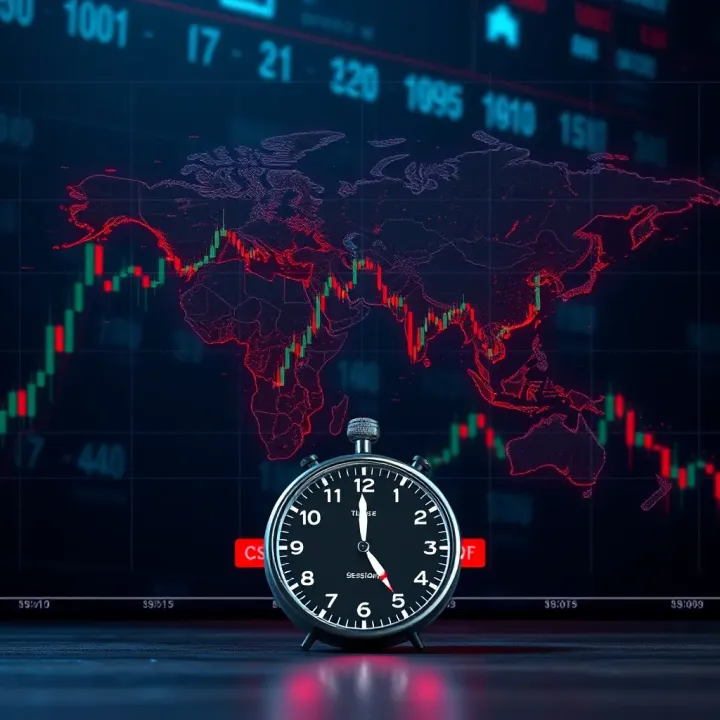
The Asian session often provides a quieter backdrop, offering breakouts or consolidations that set the tone for the following European trading hours.
Lower liquidity overall, which means spreads on some pairs might widen slightly.
Price moves can be less volatile, but sharp movements do occur during news from Japan or Australia.
Market reactions often precede larger moves the next day, making it possible to catch early signals.
Focus on Asia-Pacific currencies. Pairs like USD/JPY, AUD/USD, and NZD/USD are most active.
Monitor scheduled economic reports from Japan, Australia, and China. These can generate sudden volatility.
Expect low volume on majors like EUR/USD unless major global events happen.
For South African traders, the Asian session falls overnight. This timing means you’ll often watch the markets either late at night or early morning. Using automated trading or alerts could help manage this.
In sum, knowing the specific timing and typical behaviour of the Asian session helps you plan trades better, picking moments when volatility suits your strategy.
Understanding the different forex trading sessions is fundamental for traders aiming to make sense of the market's rhythm and volatility. Since the forex market operates around the clock, recognising when each session opens and closes guides you on the best times to trade specific currency pairs. For instance, a trader focusing on the rand-dollar (ZAR/USD) might find more predictable movement during certain sessions due to market overlaps or regional activity.
Why forex operates 24 hours
Unlike stock markets tied to single locations, forex trading spans across multiple time zones, which keeps it running 24 hours on business days. When one financial centre closes, another opens, enabling continuous trading from Sunday evening through Friday evening SAST. This allows traders worldwide to react promptly to news, economic data, or geopolitical events as they unfold. For example, a political announcement in Asia during their market hours can immediately influence price movements, even when other markets are closed.
Main trading sessions worldwide
The forex day is generally divided into three main sessions: Asian, European (primarily London), and North American (mainly New York). Each session has its own characteristics, with active currencies and distinct volatility profiles. The Asian session, starting with Tokyo, tends to see action in JPY and regional currencies, while the London session covers major European currencies like the euro and pound. New York’s session influences USD-related pairs heavily.
Market activity changes by session
Trading activity fluctuates with these sessions because financial centres have differing market participants, business hours, and focus. Volume spikes during local business hours and quietens between sessions. South African traders, for instance, might observe less movement during the Asian session but stronger volatility as London opens, impacting EUR/ZAR and GBP/ZAR pairs.
How overlapping sessions affect volatility
Overlaps between sessions bring more players to the market simultaneously, often boosting liquidity and price swings. The London-New York overlap is well-known for its spike in volatility, offering trading opportunities. Similarly, while the Asian session overlaps less with others, overlaps with the early European session can create interesting price action. These periods demand close attention since volatility can increase suddenly, impacting stop losses and trade execution.
Recognising the distinct traits of each trading session helps you tailor your strategy and time your trades better, especially when factoring in South African Standard Time (SAST). This knowledge improves decision-making and risk management, avoiding unexpected market behaviour during low-activity periods.
In summary, knowing the forex market’s 24-hour nature, understanding the key trading sessions, and being aware of how market overlaps affect volatility all combine to enhance your trading edge and readiness across different market phases.
Understanding the Asian trading session is key for forex traders aiming to optimise their strategies and grasp market dynamics during this period. The Asian session often delivers distinct trading patterns influenced by its unique time zone, active currencies, and central financial hubs. By zeroing in on these details, traders can better anticipate liquidity flows, volatility levels, and price behaviour.
The Asian session generally runs from 9:00 am to 6:00 pm local time in key markets. For example, Tokyo, the principal financial centre, starts trading around 9:00 am Japan Standard Time (JST) and wraps up by 6:00 pm JST. Other centres like Hong Kong and Singapore operate on similar schedules, opening slightly earlier but overlapping considerably with Tokyo's hours.

This timetable matters because price movements and trade volumes tend to peak during these local working hours. A forex trader in South Africa who understands these timings can align their trading schedule to catch the most active moments of the session, avoiding quieter, less predictable periods.
Converting these times to South African Standard Time (SAST) offers practical insights for local traders. Tokyo opens around 2:00 am SAST and closes at 11:00 am SAST, while Hong Kong and Singapore markets trade roughly from 3:00 am to noon SAST. Knowing this helps traders manage their routines and avoid having to stay up all night unnecessarily.
For instance, a South African trader might prepare for increased market activity between early morning and late morning local time, coinciding with the Asian session’s highest liquidity.
Tokyo stands out as the primary market during the Asian session. The city’s financial institutions, government bond trading, and Tokyo Stock Exchange form the backbone of Asian forex activity. Given Japan’s influence on currency pairs like USD/JPY and JPY/EUR, Tokyo’s session often sees substantial movement in these pairs.
Besides Tokyo, Hong Kong and Singapore play vital roles as regional financial centres. Hong Kong acts as a gateway between Mainland China and global markets, while Singapore’s status as a stable financial hub attracts large volumes of currency trades related to commodities and regional currencies. Together, these centres contribute to a diversified but coherent Asian trading window.
This spread of centres enhances market liquidity during the session but usually results in lower volatility compared to London or New York. Still, the liquidity provided by these hubs is enough to allow smooth entry and exit points for trading strategies typically suited for range-bound or scalping trades.
Liquidity during the Asian session may dip outside Tokyo's core hours but remains sufficient for many trading styles, especially for pairs involving JPY, SGD, HKD, and commodity currencies.
Understanding which markets dominate this timeframe and how their opening and closing hours interact helps traders anticipate price trends and potential shifts in the liquidity pool, influencing execution strategies and risk management.
In short, knowing these details about the Asian session allows forex traders, especially those in South Africa and surrounding time zones, to better time their trades and select currency pairs suited for the session’s unique rhythm and liquidity.
Understanding the currencies and market behaviour during the Asian forex session is essential for traders aiming to time their trades effectively and manage risk. This session carries distinct characteristics, often differing in pace and volatility from the London and New York sessions, which means your approach to trading needs to account for these unique patterns.
The Japanese yen (JPY) dominates activity during the Asian session, given Tokyo's position as a major forex hub. Pairs like USD/JPY, EUR/JPY, and AUD/JPY typically see increased liquidity and volume. Because Tokyo’s market leads the session, traders often watch movements in USD/JPY as an early indicator of regional sentiment. For example, a strong Bank of Japan (BoJ) statement can trigger swings in these pairs. Given the yen's safe-haven status, it also reacts noticeably to geopolitical tensions emerging during Asian hours, offering tactical opportunities.
Commodity-linked currencies such as the Australian dollar (AUD) and New Zealand dollar (NZD) also attract attention as Asian players digest raw material prices and trade flows—especially from China and Australia, two critical economies. AUD/USD and NZD/USD pairs generally experience moderate movement early in the session. For example, data releases relating to Chinese manufacturing or Australian commodity exports often influence these currencies. Commodity price shifts during Asia’s open hours can signal trends for these pairs well before European markets kick in.
Other Asian currencies, including the Singapore dollar (SGD), Hong Kong dollar (HKD), and South Korean won (KRW), tend to show mixed activity depending on regional economic news. While typically less liquid than JPY pairs, they offer niche opportunities, especially when central banks in Asia announce policy changes or when trade news breaks. For instance, SGD often reacts sharply to Monetary Authority of Singapore’s policy signals, providing trading windows unique to the Asian session.
The Asian session is generally quieter than subsequent London and New York sessions, with narrower price ranges and fewer dramatic moves. This lower volatility reflects smaller trading volumes, particularly in Western currency pairs. Traders should expect more choppy or sideways price action during these hours. Such conditions can frustrate trend-following traders but present clearer setups for range or breakout strategies.
Despite subdued volatility, the Asian session can lay the groundwork for trends or breakouts later in the day. It often acts as a consolidation phase where price levels are tested before major moves occur during European or US hours. For example, a prolonged range in EUR/JPY during Tokyo hours might precede a sharp breakout on the London open, signalling an opportunity to position early based on Asian session behaviour.
Because of these characteristics, traders often adapt their strategies to suit the Asian session. Range trading becomes a popular choice, capitalising on clearly defined support and resistance levels in relatively tight price channels. Scalpers may also find opportunities due to the session's predictability and slower pace, provided spreads remain competitive. Importantly, keeping an eye on Asian economic releases or central bank announcements can give fresh directional clues, helping traders navigate the less volatile environment with more confidence.
While the Asian session may lack the dramatic swings seen later in the day, its unique currency focus and trading conditions offer valuable opportunities — especially for those trading JPY pairs or commodity currencies with an eye on Asian economic developments.
Adapting your trading strategies for the Asian session is key given its distinctive pace and market behaviour. This session often shows lower volatility and narrower price ranges compared to the London or New York sessions. Traders who overlook these nuances might miss opportunities or face losses due to mismatched expectations. Understanding which methods work best during this quieter period can improve risk management and boost returns.
Range trading fits well during the Asian session since prices often move within relatively tight bands. This method involves identifying support and resistance levels and trading within that channel. For example, if the USD/JPY pair bounces consistently between 110.50 and 111.00 during Tokyo hours, a trader could buy near the support level and sell near resistance. Since breakouts are less common during this session, waiting for prices to test these boundaries rather than chasing trends tends to be more effective.
Scalping opportunities also become attractive when volatility is subdued. Scalping means making small profits from frequent trades using short time frames, often only a few minutes. The Asian session’s slow, steady movements let scalpers exploit minor price fluctuations with tight stop-loss settings. A tactical scalper might, for instance, focus on crossing moving averages within a 5-minute chart of AUD/USD, capitalising on micro momentum shifts caused by minor economic announcements or liquidity flows from Asian banks.
Importance of Tokyo market data can’t be overstated when trading during this session. Japan’s economic releases, such as machinery orders or industrial production, often steer key yen pairs. For example, a better-than-expected Bank of Japan tankan survey could spark yen strength, creating quick price shifts even in low-volatility conditions. Traders who watch Tokyo’s calendar and react swiftly to these releases can harness moves that otherwise seem rare in this session.
Impact of Asian central bank announcements extends beyond Japan. The Reserve Bank of Australia or the Monetary Authority of Singapore releases may influence regional currencies and commodity pairs like AUD/ZAR or SGD/USD. Traders need to keep tabs on these announcements and consider adjusting their positions ahead of, or immediately after, depending on the data. For instance, an unexpected interest rate change by the Reserve Bank of Australia can boost the Australian dollar, triggering breakouts even during this generally muted session.
A keen eye on regional news combined with tailored strategies for lower volatility can significantly improve trading outcomes during the Asian session.
Taking these factors into account, South African traders can better align their approaches with the session’s rhythm, reducing unnecessary risks while seizing the right opportunities.
Trading the Asian session carries particular considerations for South African forex traders, mostly due to time zone differences and unique market characteristics. Understanding these factors helps traders optimise their schedules and strategies, ensuring they don't miss out on trading opportunities when Asia’s key markets like Tokyo and Singapore are active. Besides, this knowledge influences how you choose brokers and tools best suited to your trading style during these hours.
South Africa operates on South African Standard Time (SAST), which is typically seven hours behind Tokyo time. The Asian session usually runs from 1 am to 10 am SAST. This means local traders often find themselves active during the early morning hours. For many, this necessitates adjusting their daily routine, either by waking early or setting alerts and automated trades to capture significant movements.
Aligning your trading activities with these hours allows you to tap into the liquidity and price action unique to Asia. For example, a swing trader might monitor the session for trend developments in JPY pairs early in the day, while a scalper could look for short bursts of volatility just after Tokyo opens. Understanding this alignment improves timing and decision making, reducing the risk of acting outside of core market activity.
Opportunities often arise during overlaps between the Asian and other sessions, especially the London session which begins mid-morning SAST. During these overlaps, market volatility tends to increase, offering stronger price moves and wider spreads. For South African traders, this period—from roughly 9 am to 10 am SAST—can provide high-impact trading windows, particularly on currency pairs like USD/JPY or EUR/JPY where Asian market news meets European flow.
Spreads and execution speeds matter a lot when trading the Asian session. Since volatility here is generally lower compared to London or New York, paying high spreads can quickly eat into profits. It’s wise to select brokers that offer tight spreads and reliable execution during these hours. Some brokers even tailor their offerings to provide lower spreads for Asian session trading, which benefits scalpers and range traders who depend on small price movements.
Execution speed is equally important. Delays can cause slippage, especially on news releases from Japan or Singapore. Traders should consider platforms that maintain fast order processing during Asian market hours to capitalise on expected price action without frustration.
Access to relevant Asian market news and analysis is another crucial factor. Staying updated with economic data releases, central bank statements, and geopolitical developments requires a broker or platform that integrates news feeds with trading tools. For example, announcements from the Bank of Japan can swiftly affect JPY pairs. South African traders using platforms with live Asian market news can react promptly, avoiding guesswork and making well-informed decisions.
In short, for South African traders, success during the Asian forex session revolves around properly managing local time differences, focusing on session overlaps, choosing cost-effective brokers, and having quick access to Asian market intel. These practical steps go a long way towards turning quieter session hours into effective trading opportunities.
Learn how margin in forex trading affects your capital and risk in South Africa 🇿🇦. Get practical tips on margin calls, trading smart, and protecting your R.

📉 Understand forex trading deviation: its impact on pricing, risk management, and strategies—essential reading for South African investors navigating the market confidently.

Learn how pip calculators work in Forex trading 🇿🇦. Understand pip values, manage risk, and boost your trading strategy with practical tips for South African investors 📊💰.
🤖 Explore how forex trading robots work, their benefits and risks, plus tips on picking reliable tools for safer, smarter trading in South Africa's forex scene.
Based on 6 reviews