
Understanding Synthetic Indices Explained
Explore synthetic indices in finance 📊: understand their types, benefits, risks, and regulations, focusing on insights for South African traders 🇿🇦.
Edited By
Sophie Campbell
Derivative leverage lets investors control much larger financial positions than their actual capital would allow. In simple terms, it means using financial contracts like futures, options, and swaps to amplify the potential return — and risk — of an investment. For South African traders and investors, understanding this tool is a must, especially given the fast-moving and occasionally volatile nature of our markets.
Leverage in derivatives doesn’t require you to pay the full value upfront. Instead, you put down a fraction, called the margin, which acts as a performance guarantee. For instance, if a futures contract on a JSE Top 40 share index costs R100,000, you might only need to post R10,000 as margin, effectively controlling R100,000 with a tenth of the capital.
Using leverage can multiply gains, but losses can mount just as quickly, sometimes exceeding your initial investment.
Futures contracts are agreements to buy or sell an asset at a set price on a future date. You commit a small margin instead of the full price, but the contract’s full value swings with market prices.
Options give the right — not the obligation — to buy or sell assets. You pay a premium upfront for this right, often much less than the underlying asset’s full price, creating leverage.
Swaps involve exchanging cash flows between parties and can be used to gain leveraged exposure to interest rates or currencies without the need for full capital upfront.
Hedge funds and institutional investors use derivatives to amplify returns or hedge exposures in volatile local sectors like mining shares or rand currency movements.
Individual traders might use options on shares listed on the JSE as a more affordable way to speculate or protect existing holdings against跌s.
Margin calls: If the market moves against your position, you may need to add more funds quickly to maintain the contract.
Volatility: Leverage can turn small price swings into big losses.
Complexity: Understanding contract specifications and regulatory requirements (like FICA and POPIA compliance in SA) is crucial.
Being familiar with how derivative leverage works is becoming increasingly important, especially as South African investors seek smarter ways to navigate a challenging economic climate and manage limited capital efficiently.
Derivative leverage lets investors control a much larger position than the capital they put down. Instead of buying the underlying asset outright, you enter into contracts whose value is tied to that asset, often paying only a fraction upfront. This magnifies your exposure, allowing for bigger potential gains — but also greater risks.
Leverage plays a big role in trading and investing, especially for those with limited capital aiming to make the most of market moves. In South Africa, derivatives' leverage is widely used in markets like equities, commodities, and foreign exchange, adding flexibility but calling for sharp risk awareness.
Derivatives are contracts whose value depends on an underlying asset, like a share, commodity, currency, or bond. For example, a futures contract obliges you to buy or sell an asset at a set price and date in the future. These contracts don't require you to own the asset itself, which makes entering the market cheaper and faster.
The practical side is that derivatives provide ways to hedge risk or speculate without needing to own the asset. For instance, a company importing goods from the US might use currency derivatives to lock in exchange rates and shield against rand-dollar volatility.
Leverage means using borrowed capital or contract terms to increase your market exposure beyond your initial investment. Say you want exposure to R100,000 worth of shares, but with leverage, you might only need to invest R10,000 upfront. The rest is effectively borrowed or accounted for in the derivative's terms.
This amplification can multiply profits if prices move in your favour. But the flip side is the risk of magnified losses, sometimes exceeding your initial capital. That’s why managing leverage carefully is vital.
Futures are standardised contracts traded on exchanges, requiring you to buy or sell an asset at a future date and price. The margin (deposit) needed is a small percentage of the total contract value — often 5–10%. This margin defines the leverage.
For example, on the Johannesburg Stock Exchange (JSE), a futures contract on a commodity like gold might require a margin of R20,000 to control a R200,000 position. If gold prices rise, your returns are based on the full R200,000 exposure, not just the margin.
Options give you the right, but not the obligation, to buy (call option) or sell (put option) an asset at a specific price before expiry. Because you pay a premium upfront, usually much smaller than the asset’s value, options provide inherent leverage.
Investors in South Africa often use options to speculate or hedge. For instance, buying a call option on a share allows control of the underlying stock price movement at a fraction of the cost. But if the market doesn’t move as expected, you can lose 100% of the premium.
Swaps are private agreements between parties to exchange cash flows or other financial instruments. Interest rate swaps or currency swaps can provide leverage by allowing parties to gain exposure to certain financial variables without directly owning the assets.
Besides swaps, instruments like contracts for difference (CFDs) or leveraged exchange-traded notes offer tailored leverage options to investors. These often trade over-the-counter or on regulated platforms, and their use requires thorough understanding, especially of accompanying risks.
Derivative leverage can boost your market reach but demands solid risk controls and a clear grasp of contract terms to avoid unexpected losses.
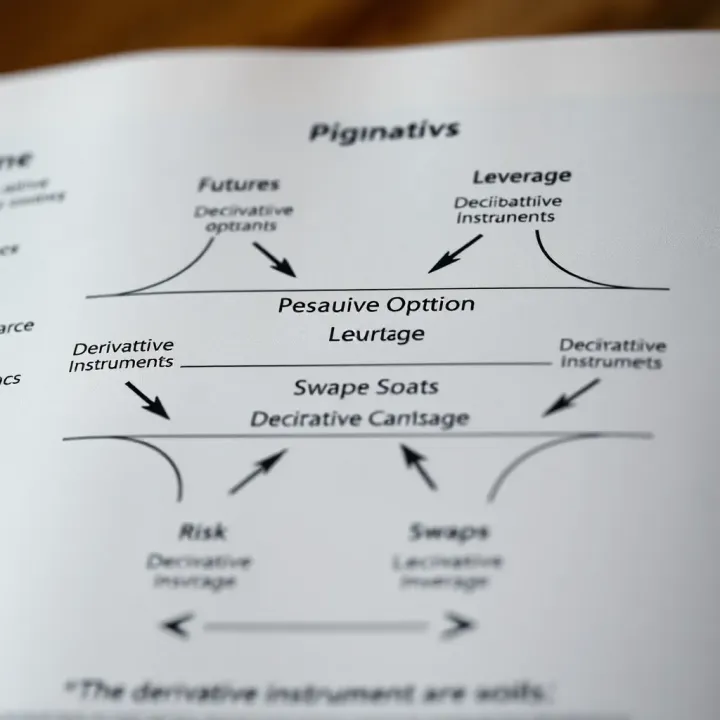
Understanding how leverage operates in real-world scenarios is vital for traders and investors who want to make the most of derivative instruments. Leverage allows you to control larger positions than your initial capital might otherwise permit, but it calls for close attention to margin requirements and careful calculation of your exposure. Practical know-how here aids in managing potential rewards and the risks that come with magnified positions.
Margin is the amount of capital a trader must put up to open a leveraged position. Think of it as a deposit or security bond to cover potential losses. For example, if you want to trade futures on the JSE with a margin requirement of 10%, you’d only need to provide R10,000 to control an asset worth R100,000. This relatively small capital outlay compared to the total exposure is the core of leverage. It’s important to remember that the margin is just the starting point – ongoing adjustments may be required based on market movements.
Margin requirements vary between different derivatives and markets. Options tend to require smaller up-front payments but have their own risks from premium loss. Knowing your margin obligations helps you understand how much capital will actually be tied up and the leverage ratio you’re working with.
Consider a futures contract on a commodity priced at R200,000 with a margin of 15%. The initial cash needed would be R30,000, giving a leverage ratio of about 6.7 times (R200,000 ÷ R30,000). A price move of just 5% on the commodity translates to a R10,000 gain or loss on the underlying, which equates to a 33% change relative to your margin.
With options, if you buy a call option for R5,000 controlling assets worth R50,000, the leverage is 10 times. But if the underlying asset doesn’t move favourably, the entire premium of R5,000 could be lost. You get significant exposure with limited capital upfront, but the risk is that the premium vanishes if the market doesn’t move as expected.
Leverage can dramatically increase your returns when markets move in your favour. Using derivatives lets you gain from price changes much larger than your initial cash outlay. For instance, a successful leveraged trade on a commodity or share can multiply your R10,000 investment several times over with relatively small price moves.
This feature attracts many investors looking to boost their capital growth quickly. The key is that gains are not just proportional to market moves, but intensified by the leverage ratio. This is why some traders focus on leveraged derivatives to capture opportunities in volatile markets or sectors.
Keep in mind that while leverage can grow your profits quickly, it also multiplies risks—and losses can be just as steep if the market swings against you.
Just as leverage ramps up profits, it also sharpens losses. A small adverse price movement may wipe out your margin, forcing you to inject more funds or close positions at a loss. For example, a 5% drop in the underlying when you’re leveraged 6 times means a 30% loss on your initial capital, a heavy blow.
Managing this risk is crucial. Traders must monitor their margin closely and use tools like stop-loss orders to limit how much they lose. Forgetting this leads to rapid account erosion and costly margin calls. So, while leverage offers a tempting shortcut to exposure, it demands disciplined risk management to survive the market’s ups and downs.
Derivative leverage finds practical use among South African investors and traders beyond just increasing potential profits. It serves important roles in hedging and speculative trading, both of which are critical in a market environment marked by currency fluctuations, commodity price swings, and economic uncertainty.
Protecting investments from price volatility is a primary reason derivatives are popular. For example, a South African gold mining company might use futures contracts to lock in a selling price for gold. This safeguards them from sharp price drops while allowing continued operation without the stress of daily price swings. The leverage here means they can secure large contract values with limited upfront investment.
Similarly, agricultural producers in regions like Limpopo may use derivatives to hedge against unstable crop prices due to weather conditions or export market changes. This approach helps manage cash flow and reduces the risk of financial losses during poor harvests or international demand drops.
Using derivatives to manage currency risk is vital in South Africa’s open economy, where the rand often faces volatility against the US dollar and euro. Companies importing machinery or exporting goods use currency options or forwards to fix exchange rates. For instance, a Cape Town-based importer of German equipment might enter a currency swap to avoid paying more if the rand weakens by the time payment is due. This limits the risk tied to volatile forex markets without needing full upfront capital for the entire foreign currency exposure.
Gaining large exposure with limited capital appeals mainly to traders who want to control significant asset amounts without tying up too much money. For example, an equity trader at a Johannesburg stockbroker might use options on the JSE Top 40 Index to speculate on market movements. With options, the trader pays a fraction of the underlying value as a premium yet participates in price movements multiplied several times.
This leverage can amplify gains but also magnify losses, requiring traders to be disciplined and have clear exit strategies.
Common strategies involving leveraged derivatives include buying call or put options to bet on price rises or falls, or entering into futures contracts to speculate on commodities like platinum or maize. Another approach is spread trading, where investors simultaneously hold offsetting positions to cap risk while benefiting from market volatility.
Leveraged derivatives offer an efficient way to manage financial exposure, but traders and investors must fully understand the risks and use appropriate risk controls.
In summary, South African markets provide a fertile ground for derivative leverage use, balancing risk protection and speculative opportunities tailored to local economic factors and currency dynamics.
Leveraging derivatives offers the potential for outsized gains but comes with significant risks that can quickly erode capital if left unmanaged. This section focuses on the main risk factors involved in using derivative leverage, as well as practical approaches that traders and investors can apply to shield themselves from severe losses.
Derivative markets often feature sharp and unpredictable price movements that amplify risk for leveraged positions. For example, a futures contract on the JSE Top 40 index might swing 3% in a day, but if you control five times the exposure with leverage, that translates into a 15% move on your invested capital. Such swings can wipe out margins rapidly, forcing you to either add funds or close positions at a loss.
In South Africa, local political events, changes in commodity prices, or sudden shifts in the rand value can trigger unexpected volatility. An unhedged currency option position, for instance, might become worthless overnight due to these moves, highlighting how leverage magnifies downside as much as upside.
Another key challenge lies with counterparty risk — the chance that the other party to the derivative contract fails to meet their obligations. This risk is especially pertinent in over-the-counter (OTC) derivatives like swaps or bespoke option deals common among institutional players.
If a counterparty defaults, you may be left with an open exposure without protection, which can lead to substantial losses. In South Africa, the Financial Sector Conduct Authority (FSCA) monitors market participants, but private contracts still carry this inherent risk. Using exchange-traded derivatives where clearinghouses act as intermediaries can mitigate this problem by guaranteeing contract performance.
Establishing stop-loss orders is a practical way to manage risk in leveraged derivatives. A stop loss automatically closes your position when the price hits a specified point, capping potential losses before they become unmanageable.
For instance, if you hold a R50,000 long position in maize futures with leverage, you might set a stop loss at a 5% price decline to prevent losing more than R2,500. This discipline helps keep emotions in check during volatile markets and can preserve capital for future trades.
Properly sizing your positions and diversifying exposure are vital to controlling leverage risk. Rather than allocating a large portion of capital to one derivative, spreading investments across several instruments limits the impact of any single adverse move.
For example, combining positions in currency options, interest rate swaps, and commodity futures reduces the chance that all will move against you simultaneously. Also, keeping individual positions at a comfortable size relative to your total capital avoids severe drawdowns and allows easier management amidst market stress.
Effective risk management isn’t just about avoiding losses but about surviving to trade another day. In leveraged derivative markets, disciplined controls and awareness of market factors keep your strategy sustainable and your nerves intact.
Overall, understanding these risks and actively managing them with appropriate tools is critical for any South African investor or trader using derivatives with leverage. Knowing where the pitfalls lie and how to put protective measures in place makes all the difference between opportunity and disaster.
Understanding the regulatory environment and practical accessibility of leveraged derivatives in South Africa is vital for traders and investors. The country's financial market operates under a framework designed to protect participants while allowing efficient access to derivative products. This ensures that those who use leverage can do so within set rules, reducing the chance of unexpected legal issues or excessive losses.
The Financial Sector Conduct Authority (FSCA) oversees the regulation of derivative markets in South Africa. Its primary role includes ensuring market integrity, transparency, and fair treatment of investors involved in derivative trading. The FSCA monitors intermediaries, brokers, and exchanges to verify adherence to legal requirements. This oversight helps prevent market abuse and reduces risks linked to complex leveraged products.
For instance, in the case of derivatives traded on the Johannesburg Stock Exchange (JSE), the FSCA collaborates closely with the exchange to enforce compliance standards. These safeguards lessen the chance of counterparty defaults, helping maintain trust in the system.
Compliance with South African market rules involves meeting standards set by both the FSCA and trading platforms like the JSE. Rules cover margin requirements, reporting duties, and position limits. These ensure traders maintain adequate collateral when dealing with leveraged derivatives, limiting the risk that losses escalate beyond their means.
A practical example is the mandatory margin calls in futures contracts. If the market moves against a position, the trader must top up their margin promptly. Failure to comply can result in forced liquidation to protect other market participants, illustrating how these rules act as safeguards.
South Africa hosts several platforms where investors access leveraged derivatives, primarily through the JSE’s Derivatives Market. Traders usually rely on authorised brokers or financial institutions acting as intermediaries. These intermediaries offer access, guidance, and transaction execution while ensuring compliance with regulatory requirements.
Platforms like the JSE provide a structured environment with standardised contracts, transparency in pricing, and central clearing systems. This setup lowers counterparty risk and makes participation viable for local investors, from large institutions to retail traders using online brokerages.
Regulations require that intermediaries assess whether leveraged derivatives suit the investor’s risk profile before permitting trades. This suitability test protects investors from entering complex product contracts without understanding the inherent risks, especially given leverage magnifies both gains and losses.
Disclosure requirements mean investors must receive clear information on costs, risks, and contract terms before trading. For example, brokers must explain how margin calls work and the potential for total loss of invested capital on certain derivative positions. This transparency helps investors make informed decisions rather than jumping into leveraged trading blindly.
South Africa’s focus on robust regulation and disclosure provides a safety net for derivative traders, ensuring market access goes hand in hand with investor protection.
By understanding these regulatory and practical considerations, investors can better navigate the local leveraged derivatives market with confidence and caution.
Explore synthetic indices in finance 📊: understand their types, benefits, risks, and regulations, focusing on insights for South African traders 🇿🇦.

Explore the Five E's 🔍 in depth, their role in business, education, and personal growth. Discover practical tips to boost effectiveness and outcomes!
Explore the 5%ers🧩, their African American roots, core beliefs📜, and influence in society🌍, offering South African readers clarity and deeper insight.
Explore synthetics trading in South Africa 🇿🇦 – learn how synthetic assets work, benefits, risks, platforms, regulation, and practical tips for traders.
Based on 6 reviews