
Telegram Forex Signals: What You Need to Know
Discover how Telegram forex signals can enhance your trading in South Africa 🇿🇦. Learn to spot reliable sources, manage risks, and trade smarter 🔐💹.
Edited By
Jack Wilson
Forex signals WhatsApp groups have gained traction among traders in South Africa and worldwide. These groups share trade alerts, market updates, and analysis through WhatsApp, offering convenience and immediacy.
At their core, forex signals are suggestions on when to enter or exit currency trades based on technical or fundamental analysis. Traders often join these groups to get timely tips without spending hours studying charts or news.
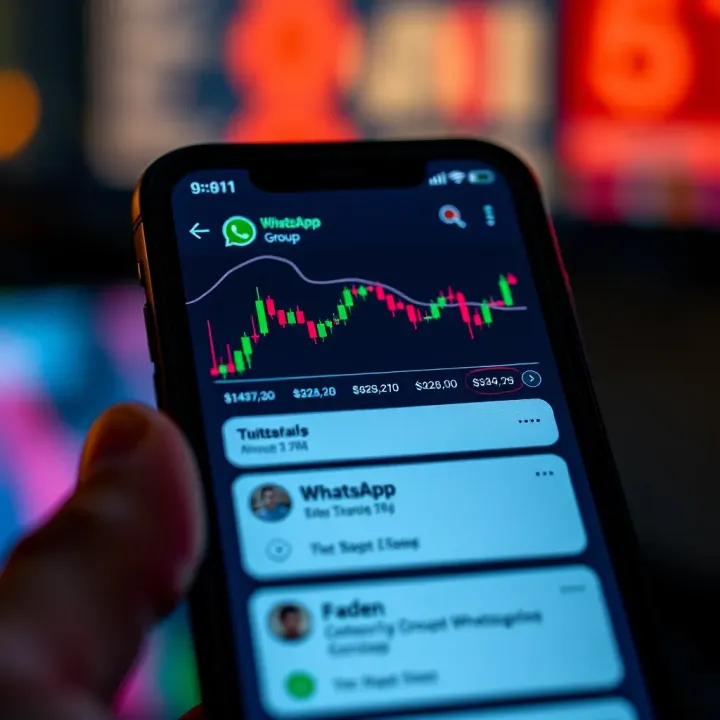
The appeal lies in the quick delivery of signals directly on a mobile device. Imagine sitting at a café in Cape Town, and a signal pops up advising to buy USD/ZAR at a certain price with a target profit level and stop-loss limit. This helps traders act fast in the volatile forex market.
That said, it is essential to understand how these groups operate and the risks involved. Not all signals are reliable, and many groups lack transparency about their strategy or success rates.
Remember, signals are only tools — blind following without grasping the reasoning behind trades can lead to losses.
WhatsApp groups vary widely:
Some are run by experienced traders or registered forex educators who explain their analysis.
Others rely on automated signal providers using algorithms.
Unfortunately, scams where signals are promising guaranteed profits are common.
Most groups will share:
Entry price level for a currency pair
Suggested stop-loss to limit potential loss
Target price for profit-taking
Occasional market commentary
For South African traders, signals referencing pairs like USD/ZAR, EUR/ZAR, or GBP/ZAR are most relevant given local currency exposure.
Ultimately, understanding what forex signals WhatsApp groups offer will help you make better investment decisions, and aid in spotting trustworthy services amid the noise.
The following sections will unpack the role of these groups in trading, how to identify legit signals, plus practical tips for staying safe.
Forex signals WhatsApp groups have become a popular tool for traders looking to get real-time trade guidance and market updates. These groups serve as informal hubs where members receive signals—recommendations on when to buy or sell currency pairs—often shared quickly to catch fleeting opportunities. In South Africa, where access to fast, reliable market information can vary, these groups offer a way for both beginners and experienced traders to stay in the loop and act swiftly.
Forex signals are recommendations based on analysis that suggest entry points, exit points, and risk management for particular currency trades. They’re usually generated by experienced traders, trading algorithms, or analysts who interpret market trends, economic events, or chart patterns. For example, a signal might say: “Buy EUR/USD at 1.1000, stop loss at 1.0950, take profit at 1.1100.” Traders receive this as a prompt to act or use it as part of their wider strategy.
Signals offer practical value by cutting through the noise and suggesting clear actions. However, they are not foolproof — markets move unpredictably, so signals should help guide decisions rather than dictate them blindly.
Traders gravitate towards WhatsApp groups because they combine speed and ease of use. Unlike email newsletters or complex trading platforms, WhatsApp delivers signals and market chatter instantly and in a familiar app. This immediacy is especially useful during volatile periods when every second counts.
Plus, WhatsApp groups often foster a sense of community. Members can discuss signals, clarify doubts, and learn from each other’s experiences. For traders spread across Gauteng, the Western Cape, or KwaZulu-Natal, this virtual space can replace a physical trading floor or mentor, making forex trading more accessible and social.
Most groups share a mix of entry and exit points, stop-loss levels, and potential take-profit targets. Some also throw in market news, economic calendar events, or technical analysis screenshots. For example, a group might alert members about an upcoming South African Reserve Bank (SARB) interest rate decision, which could influence the rand’s movement.
Others specialise further, focusing on scalping signals (quick trades with small profits), swing trading, or longer-term positional trades, catering to different trading styles.
Signals can come several times a day, especially during active market hours such as the London or New York sessions. Some groups operate non-stop, posting signals whenever trades seem favourable. Others send fewer messages but with more detailed analysis.
Timing matters: the difference of minutes can affect a trade’s outcome. Therefore, active traders often join more than one group to maximise their chances of timely signals.
Group admins and members usually communicate informally, often mixing technical jargon with everyday language for clarity. Interaction varies — some groups encourage questions and discussion, boosting learning, while others are mostly one-way with just signal broadcasts.
Engagement also depends on group size. Smaller groups tend to be more interactive, whereas larger ones can be overwhelming and harder to follow. That said, many groups feature pinned messages or summaries to help members keep track.
Staying active, asking questions, and comparing signals with personal analysis can make these WhatsApp groups more than just message boards — they become practical learning communities.
Understanding the basics of forex signals WhatsApp groups helps you decide whether they fit into your trading routine or not. They’re fast, often helpful, but still need your judgement and a good eye on risks.
Forex signals play a vital role in shaping trading decisions by suggesting when to enter or exit the market, as well as managing potential risks through stop-loss and take-profit levels. They're particularly useful for traders who don't have the time to analyse charts constantly or who seek a second opinion to confirm their strategies.
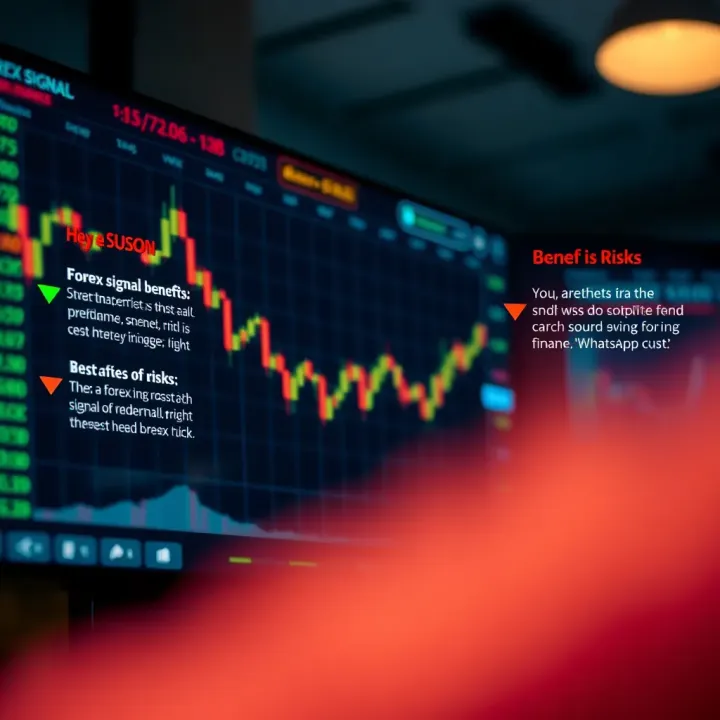
Entry and exit points are the crucial moments when traders decide to open or close a position. Forex signals often provide specific price levels where entering or exiting a trade could be favourable. For example, a signal might suggest buying the EUR/USD pair at 17.2500 because technical indicators show upward momentum starting there. Acting on this advice could catch a profitable trend early.
Exit points are just as important. A signal may recommend closing a position once the price hits 17.2800 to lock in profits before a reversal. Without clear entry and exit signals, traders might act emotionally or too late, missing opportunities or incurring losses.
Alongside this, stop-loss and take-profit levels help manage downside risk and secure gains automatically. A stop-loss order places a limit on how much you lose on a trade by closing it if the price moves unfavourably—say, closing a pair if it falls below 17.2400 after buying at 17.2500. This helps protect your capital from sudden market swings.
Take-profit levels work the opposite way, closing a trade once the target profit is achieved, such as selling when the price reaches 17.2800. These automatic levels give traders peace of mind, allowing them to step away from screens without risking unchecked losses.
It’s important to understand that signals serve as guidance, not guarantees. Markets are unpredictable, influenced by economic news, geopolitical shifts, and unexpected events. No signal can promise a win on every trade. For example, a signal might indicate a strong upward trend, but sudden Eskom load shedding disrupting markets or breaking news can flip that outlook instantly.
Therefore, relying solely on signals without personal judgement can be risky. Traders should use them as part of a broader toolkit rather than the sole basis for decisions.
This is where the importance of personal analysis comes in. Combining signals with your own study of charts, indicators, and fundamentals can improve your chances. If a signal suggests buying a currency pair, but your analysis shows a key resistance level nearby, it might be wise to wait.
By blending signals with your understanding of market patterns and risk tolerance, you’re better prepared for the inevitable losses and gains. This approach helps avoid blindly following tips and fosters disciplined, confident trading.
Forex signals can be valuable tools—but they’re best used alongside your own research and not as a stand-alone solution.
In short, signals provide useful suggestions on when and where to trade, but the ultimate success depends on your judgement and management of risks in the volatile forex environment in South Africa and beyond.
Joining Forex signals WhatsApp groups can offer several advantages, especially when you’re looking for timely information and community support in the fast-moving currency market. These groups often act as informal hubs where traders share updates, tips, and strategies that can sharpen your trading edge. However, it’s not just about getting signals — the real value lies in accessing live market insights and tapping into a network of shared knowledge.
One of the main pulls for many traders is the timely nature of the updates shared in these groups. Unlike newsletters or blogs that may come out hours or days after a market move, WhatsApp groups can deliver alerts as events unfold. For instance, if the South African Reserve Bank announces an unexpected change in the repo rate, signals often circulate within minutes to suggest how this might affect the ZAR/USD or ZAR/EUR pairs.
This speed is crucial when forex markets can shift in seconds. Being in these groups means you’re less likely to miss sudden opportunities or threats — like an emerging trend or unexpected volatility — that could affect your positions.
Beyond just sending signals, many of these WhatsApp groups feature input from seasoned traders who explain the reasoning behind their trades. Having access to this kind of insight lets you see the bigger picture rather than just what the signal recommends. For example, a trader might highlight how technical indicators line up with recent economic data from the US or Europe, providing context that raw signals alone lack.
Such commentary can help you avoid acting on signals blindly and encourage you to think critically about market moves. It’s especially valuable for newcomers honing their trading instincts or for more experienced traders looking to benchmark their views.
Joining these groups gives you direct access to a community where traders bounce ideas off each other. This peer discussion often includes asking questions about specific signals, sharing experiences of trades that worked or failed, and even debating market trends. For instance, a trader in Johannesburg might share an observation about how local news affects the rand, providing insights that international groups might miss.
This kind of interaction can be a real boost for learning, especially when trading is usually a solitary activity. It helps build confidence, reduces the feeling of isolation, and spreads best practices among members.
These groups often host a range of traders from day traders to swing traders and those using fundamental or technical approaches. Exposure to this variety broadens your understanding of trading styles. For example, while one member might focus on short-term scalping using moving averages, another could prefer longer-term plays based on commodity price shifts impacting emerging markets.
Seeing these different methods in action lets you experiment with approaches you might not have considered, helping you develop a customised trading plan that fits your risk appetite and time availability.
Joining a Forex signals WhatsApp group can be a smart addition to your trading toolkit, offering real-time data and community wisdom—but always combine signals with your own judgement and market research to stay in control.
Forex signals WhatsApp groups can offer valuable insights, but they also come with risks that you should be aware of. Understanding these risks helps safeguard your investments and avoid common pitfalls.
Identifying suspicious groups is crucial. Many groups claim to deliver profitable signals but often lack transparency, such as verified track records or clear communication about who runs them. If a group refuses to share past performance openly or pressures you to join quickly, it's a red flag. For example, some groups might boast of unrealistic returns like "double your money in a week" without showing consistent evidence.
Common scam tactics include promising guaranteed profits, using fake testimonials, or offering "exclusive" signals only available through paid subscriptions. Often, these scams leverage social proof by piling on fake reviews and sometimes even impersonate legitimate traders. Traders might find themselves locked into recurring payments, with signals that never materialise into actual profits. In South Africa, scammers sometimes use WhatsApp groups to lure in novice traders desperate to avoid the pain of loadshedding's economic effects, exploiting their eagerness.
The risk of blindly following signals without personal analysis or risk management often leads to substantial losses. Signals are typically suggestions based on technical analysis or market sentiment—not a crystal ball. Relying entirely on signals can dull your trading instincts and make you vulnerable when the market behaves unpredictably. For instance, a signal might recommend buying a currency pair without considering current events like a SARB announcement or a sudden change in geopolitical tensions.
Managing losses and expectations is vital. Even the best signals won’t win every trade. Experienced traders accept losses as part of the process, using them to refine strategies. Setting realistic expectations prevents frustration; you won’t become a millionaire overnight from signals alone. Instead, view these groups as one tool among many. Use stop-loss orders and never invest more than you can afford to lose. This balance helps protect your capital and reduces emotional trading decisions.
Always remember: Forex signals can guide, but they shouldn’t control your trades. Protect yourself by staying alert to scams and keeping your trading smart and informed.
Selecting a trustworthy Forex signals WhatsApp group is vital to avoid scams and improve your trading outcomes. With many groups available, weighing factors like track record, transparency, community feedback, and cost can save you time and money. Understanding these elements helps you avoid unreliable sources that promise big profits but rarely deliver.
Performance verification plays a key role in deciding if a signals group is credible. Legitimate groups often share verified trading results, sometimes linking to third-party platforms or screenshots of actual trades. For example, a group might show its win rate or overall profitability over a three-month period. If this data is missing, inconsistent, or impossible to validate, treat the group with caution. Remember, even solid past performance doesn't guarantee future success, but transparency in results builds trust.
Clear communication and terms also tell you a lot about a group’s reliability. Before joining, check if they clearly explain their trading strategy, frequency of signals, costs, and refund policies. Ambiguous language or vague promises should raise red flags. Reliable admins usually provide a pinned message or welcome note detailing expectations. Clear communication helps manage your trading choices and prevents surprises, such as unexpected charges or flood of messages at odd hours.
When assessing potential groups, seek sources of reliable reviews beyond the group's own testimonials. Independent Forex forums, trading communities on platforms like Reddit or trading-focused boards on MyBroadband can offer unbiased opinions. These user experiences reveal patterns, such as whether signals tend to be profitable or if the group suffers from frequent scams. Be wary of overly positive reviews that sound generic, as these may be fake.
Look at community engagement indicators inside the group itself. Active, respectful discussions and members sharing their results or challenges reflect a healthy environment. If members openly ask questions and receive prompt, honest replies from admins or experienced traders, that’s a good sign. Conversely, groups where critiques are deleted or questions ignored often conceal problems.
Choosing between free vs paid groups depends on your experience and commitment. Free groups offer low-risk exposure but often share generic or basic signals, sometimes relying heavily on advertising or upselling paid services. Paid groups usually provide more detailed signals with clearer methodologies but require careful vetting to ensure value. For instance, a paid group charging R500 per month should justify that cost with consistent, actionable trade ideas and support.
Assessing value for money means looking beyond price. Gauge how detailed and timely the signals are, whether the group offers helpful explanations or market context, and if they provide ongoing support or education. Some groups include webinars, chat support, or personalised advice that might justify a higher fee. Always balance your budget with the quality of info, remembering that no signal service can guarantee profits—so never invest more than you can afford to lose.
Choosing a reliable Forex signals WhatsApp group requires careful examination of their track record, openness, reputation, and cost versus benefit. Your trading success partly hinges on the quality and trustworthiness of the signals you follow, so choose wisely.
Using forex signals effectively requires more than just following instructions. To get the best from signals shared in WhatsApp groups, you need to blend them with your own analysis and realistic trading habits. Signals can provide helpful market ideas, but they should never replace your judgement or risk controls.
Confirming signals with charts and indicators adds a layer of confidence to your trades. For instance, if a WhatsApp group sends a buy signal for the EUR/USD, you should check the current chart patterns and technical indicators like moving averages or the Relative Strength Index (RSI). If these tools show bullish momentum or no major resistance nearby, the signal is worth considering. If the charts tell a different story, it’s wise to hold back or wait for clearer cues.
Balancing signals with risk management is key to protecting your capital. Even trusted signals can’t predict the market perfectly. That’s why you should always apply stop-loss orders to limit possible losses. For example, if a signal suggests entering a buy trade on USD/ZAR at 18.50 with a take-profit at 18.80, set a stop-loss at a sensible level below recent support, such as 18.40. Managing your position size according to your total risk appetite also prevents a single trade from causing big damage.
Understanding market volatility helps you react to signal outcomes properly. Forex markets frequently shift due to economic news or global events, meaning even sound signals can't guarantee profits every time. If a signal loses value quickly because of sudden rand movement during Eskom announcements, don't blame the signal provider but rather accept that volatility is part of the game.
Accepting losses as part of trading balances your emotional approach. Losses happen, even to experienced traders. Instead of chasing perfect signals, see each loss as learning and focus on consistency rather than quick wins. For example, you might lose on a GBP/USD signal due to unexpected inflation data, yet recover and gain through disciplined risk control and careful signal vetting in future trades.
Using forex signals wisely means combining their advice with your own smarts, managing risks carefully, and staying calm through market ups and downs. This approach helps you avoid common traps and grow as a trader in South Africa’s often unpredictable market.
In the world of Forex signals WhatsApp groups, scammers often take advantage of eager traders looking for quick gains. Being cautious and protecting yourself from misleading information is essential to avoid losing money or falling into fraud. Knowing what warning signs to watch out for and following secure trading habits can save you from costly mistakes.
If a group or signal provider claims you will definitely make money or guarantees sky-high returns with little to no risk, treat this as a major warning sign. Forex trading inherently carries risk due to market volatility, and no legitimate trader or group can promise consistent profits. For example, if a WhatsApp group advertises a "100% win rate" on every trade or claims you can "double your money in a week", it is most likely a scam. Such promises exploit the hope many traders have for easy money but ignore the complex nature of forex markets.
Another common scam method involves pressure tactics where group admins or promoters insist you pay upfront immediately or miss out on exclusive signals. They may say things like "limited spots available" or "act now before prices increase", pushing you to rush a decision without time to verify them properly. In South Africa, where many traders juggle limited budgets, falling for these pushy sales pitches can lead to wasted funds. Legitimate signal providers usually offer trial periods or transparent payment terms, allowing traders to assess value without feeling pressured.
Before joining any Forex signals WhatsApp group, take time to check the credibility of the source. Look for reviews or feedback from current or past members, ideally on independent forums or social media platforms. Reliable groups are often transparent about their performance records and provide proof of past signals’ results. Avoid joining groups promoted solely through aggressive advertising or from unknown individuals. Doing a simple background check can prevent you from getting involved in fraudulent schemes.
When dealing with trading groups or platforms, be cautious about sharing personal details or banking information. Scammers can misuse these details for identity theft or unauthorised transactions. Use secure payment methods and avoid sharing your ID or bank details via WhatsApp unless you're certain the group is trustworthy. Also, consider setting up a separate account for trading deposits to limit exposure in case of scams. Safeguarding your data is as important as managing your trades.
Keep in mind, the best defence against forex scams is informed skepticism. Always question offers that seem too good to be true and prioritise security when joining signal groups.
Following these steps helps South African traders navigate Forex WhatsApp groups safely, making sure trading remains a calculated risk rather than a gamble of trust.
Discover how Telegram forex signals can enhance your trading in South Africa 🇿🇦. Learn to spot reliable sources, manage risks, and trade smarter 🔐💹.

Explore the forex market's structure, key players, currency roles, and strategies to navigate risks in South Africa's vibrant trading scene 💱🌍📈
Learn how pip calculators work in Forex trading 🇿🇦. Understand pip values, manage risk, and boost your trading strategy with practical tips for South African investors 📊💰.
🤖 Explore how forex trading robots work, their benefits and risks, plus tips on picking reliable tools for safer, smarter trading in South Africa's forex scene.
Based on 14 reviews