
Understanding Synthetics Trading in South Africa
Explore synthetics trading in South Africa 🇿🇦 – learn how synthetic assets work, benefits, risks, platforms, regulation, and practical tips for traders.
Edited By
Sophie Allen
Forex trading, or foreign exchange trading, is the buying and selling of currencies to profit from their price changes. It's the largest financial market globally, operating 24/5, with over $6 trillion exchanged daily. South African traders are increasingly drawn to forex for its liquidity and accessibility, yet navigating this fast-moving market can be a challenge.
One concept that has gained traction among traders is the Fair Value Gap, commonly abbreviated as FVG. It refers to a price imbalance on a chart where the market has moved rapidly, leaving behind a gap between supply and demand zones. This gap often signals potential areas where price might retrace before continuing its trend.
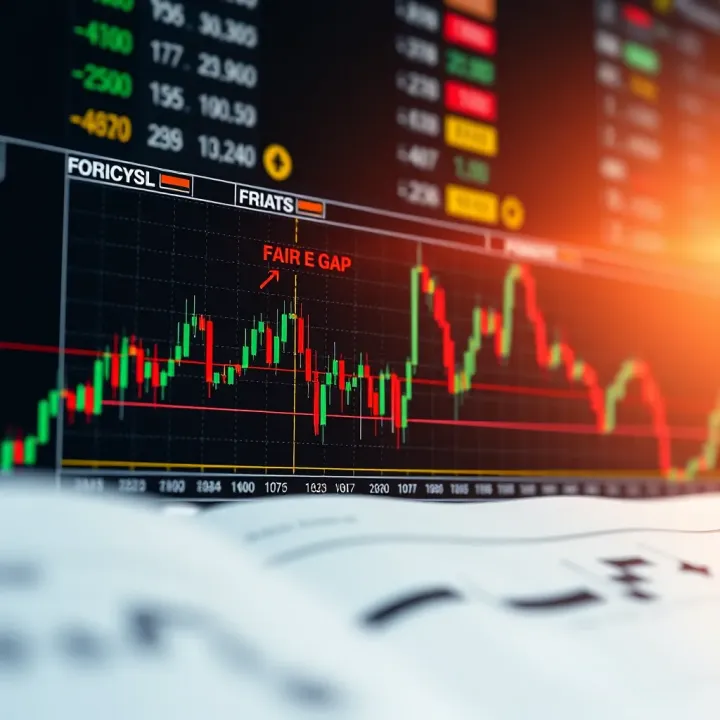
Understanding FVG is useful because it helps traders identify entry and exit points more precisely. For example, if the price suddenly jumps from R15 to R15.50 without much trading in between, that gap can act like a magnet, pulling the price back to “fill” the gap before pushing forward again. This behaviour adds a practical layer to technical analysis that goes beyond just support and resistance lines.
Traders who learn to spot and trade Fair Value Gaps can better time their positions, potentially improving their returns while managing risk more effectively.
South African traders must also consider local realities such as loadshedding, which can disrupt internet access and impact real-time trading. Choosing brokers with robust platforms and good offline tools becomes key here.
In this article, we break down the nuts and bolts of FVG in forex trading, sharing practical examples and tips tailored to Mzansi’s unique environment. Whether you’re new to forex or looking to sharpen your strategy, understanding FVG will add a valuable tool to your trading kit.
You’ll learn:
What exactly constitutes a Fair Value Gap in forex markets
How FVG fits into broader trading strategies
Practical steps to identify and act on FVGs in real-time
Risk management advice considering South Africa’s trading landscape
With this guide, you’ll be better equipped to navigate the ebb and flow of currency markets, even when the going gets tough.
Understanding Fair Value Gaps (FVG) is essential for forex traders aiming to spot inefficiencies and potential price reversals. FVG occurs when price action leaves behind a gap—areas on a chart where no trading occurs, often due to sudden shifts in buy or sell pressure. These gaps highlight imbalances between demand and supply, offering traders clues about likely future price movements.
For instance, imagine the EUR/ZAR pair jumping sharply higher during London trading hours, leaving behind a clear price gap. That gap signals a zone where price might later retrace to "fill" before continuing its trend, giving you a strategic entry point or warning to tighten stops.
Concept of Gaps in Trading
Gaps represent price areas where no trades took place, typically visible as blank spaces on candlestick or bar charts. They arise from rapid market moves caused by unexpected news, economic releases, or sharp shifts in sentiment. Gaps can signal either exhaustion or acceleration in price momentum, making them useful for identifying market imbalances.
For a practical example, during the release of South Africa’s GDP figures, the USD/ZAR might gap down reflecting sudden selling pressure. Traders watch these gaps closely, as prices often revisit such zones to confirm support or resistance.
How Fair Value Gap Differs from Other Gaps
Not all gaps are created equal. Fair Value Gaps specifically refer to price imbalances within a trend, rather than gaps between trading sessions. They usually show up as small pockets where price has moved too fast, leaving a vacuum of untested prices on the chart.
Unlike traditional gaps seen at market open, FVGs often form during intraday trading and can be less obvious. Their value lies in signalling areas where market participants may have missed prices, so price tends to revert briefly to "fill" these gaps. This makes FVGs actionable for setting entries and targets within ongoing trends.
Market Inefficiencies and Price Imbalance
Fair Value Gaps highlight moments when price moves too quickly, creating temporary inefficiencies. These inefficiencies offer traders the chance to capitalise on price corrections when the market attempts to balance itself again.
For example, a sharp rally in GBP/ZAR might leave an FVG, reflecting a spike in buying that skips over some price levels. Traders can anticipate the price to pull back slightly, filling the gap before resuming upwards. This pullback often provides better risk-to-reward setups than chasing the initial run.
Significance for Trend Analysis
Incorporating FVG analysis into trend strategies helps confirm trend strength or warn of possible reversals. Persistent failure to fill a gap might indicate strong momentum, while consistent gap fills suggest the trend is stalling.
Take the case of USD/ZAR entering a strong downtrend but repeatedly filling fair value gaps left behind. That could signal weakening sellers and a possible consolidation phase ahead. Understanding these subtle cues supports smarter timing for entries, exits, and position sizing.
In short, Fair Value Gaps are more than just empty spaces on a chart; they frame moments where price needs to rebalance. Recognising and acting on these gaps can genuinely improve trading precision in the fast-moving forex market.
Forex trading can seem complex at first, but understanding the basics is crucial, especially for South African investors keen to navigate this global market effectively. Familiarity with major currency pairs, trading hours, and trusted platforms helps you make informed decisions and manage risks better. Whether you’re dealing in Rand or other currencies, getting the fundamentals right can improve your chances of success.
South Africa's presence in forex mainly centres around the Rand (ZAR), which, although not as heavily traded as the US dollar or euro, still plays an important role. The most common pairs involving the Rand are USD/ZAR, EUR/ZAR, and GBP/ZAR. These pairs tend to show more volatility compared to something like USD/EUR, giving traders opportunities but also requiring careful attention to local economic factors.
Pick USD/ZAR, for example; its movement often reflects changes in South Africa’s interest rates, political developments, or global commodity prices—vital for both short-term traders and longer-term investors looking to hedge exposure.
Forex trading happens 24 hours across different centres worldwide, not just in one place. The main trading hubs are London, New York, Tokyo, and Sydney. For South African traders, this means markets open about 9 am till 5 pm SAST during London’s session, overlapping with New York afternoon hours. This overlap is when liquidity peaks, offering the tightest spreads and best trade execution.
Timing trades around these sessions can affect costs and opportunities significantly. For example, if you prefer trading USD/ZAR, catching the London session when markets react to European and South African data releases often makes more sense than trading late at night when activity is thin.
South African traders must choose platforms that comply with FICA (Financial Intelligence Centre Act). This compliance means brokers verify your identity and financial details, helping prevent fraud and money laundering. Leading platforms like IG, ThinkMarkets, and Plus500 have local licenses and comply fully with FICA rules. These platforms also integrate with local payment methods, making deposits and withdrawals smoother.
Equally important is selecting a broker offering solid local support. Imagine facing a technical glitch or needing clarity on a regulation; having someone responsive within your time zone, speaking your language, and familiar with South African regulations is invaluable. Brokers with South African offices or representatives tend to offer quicker resolutions.
Look out for brokers registered with the Financial Sector Conduct Authority (FSCA). Not only does this add credibility, but it often means the broker follows local trading norms, which helps avoid unpleasant surprises. Accessible client support, transparent fees, and easy account management tailor the experience closer to your needs.
Choosing the right platform and broker pairs up with understanding the market itself—the safer and smoother your trading environment, the better your focus on strategy and results.
Applying Fair Value Gap (FVG) principles in forex trading strategies helps traders pinpoint imbalances between supply and demand that often precede price corrections or continuations. Spotting these gaps on price charts reveals areas where buyers or sellers might step back in, giving traders concrete hints on where to enter or exit the market. Understanding how to incorporate FVG into your strategy can sharpen your timing and improve risk control, especially when you consider local market rhythms like South Africa’s trading hours or rand volatility.
Candlestick charts remain the favourite for spotting FVGs because their clear open, close, high and low points allow traders to see exactly where price gaps occur. While FVGs appear on all timeframes, shorter charts (like 15 minutes or 1 hour) help scalpers and day traders catch quick moves, whereas daily or 4-hour charts suit swing traders who need bigger-picture context. It's crucial to align your chosen timeframe with your trading style and the timing of the gap.
For example, if you’re monitoring the USD/ZAR pair for a swing trade, daily charts will show significant FVGs that reflect major market imbalances during the trading day. Conversely, a day trader on a lower timeframe chart could spot a mini-FVG during peak market hours, maybe shortly after the London market opens.
Most professional charting platforms, such as MetaTrader 4, TradingView, and NinjaTrader, allow you to manually identify gaps by observing candle patterns. However, some tools offer built-in gap or imbalance indicators that highlight FVGs automatically, saving time and reducing errors.
Besides automated indicators, tools like Fibonacci retracements or volume profile overlays can confirm whether an identified gap accompanies a strong volume shift or a retracement zone, improving confidence in trade setups. Using these tools in combination helps you validate the significance of an FVG before acting.
A common strategy is to enter trades when the price retraces into a previously identified FVG area. For instance, if the EUR/USD shows an upward FVG on a 4-hour chart, a trader might wait for price to pull back into the gap zone before buying, hoping the imbalance will fill and the trend resumes.
This approach mirrors waiting to buy at a “discount” zone created by the gap. Conversely, if a FVG appears during a sharp downtrend on the GBP/ZAR hourly chart, entering a short position as price touches the gap can exploit the expected continuation.
Stops usually sit slightly beyond the edge of the FVG to avoid getting stopped out by normal market noise but close enough to limit losses if the setup fails. For example, placing a stop loss 5 to 10 pips beyond the gap’s boundary on a lower timeframe is common.
Profit targets often align with the next technical level, such as recent highs/lows, pivot points, or the opposite side of the gap. This disciplined approach helps lock in gains without chasing price excessively. Always remember that gaps don’t guarantee moves but indicate probable zones; combining stops and targets with risk management principles is essential.
In short, using FVGs in your trade planning can optimise entry timing and enhance exit discipline, but it requires careful chart analysis, combination with indicators, and strict risk controls to truly work, particularly in the volatile South African forex market where the rand’s swings add an extra layer of complexity.
Trading with Fair Value Gaps (FVG) can offer profitable chances, but it’s not without risks. Managing those risks is vital to avoid costly mistakes and preserve your capital. When you're dealing with FVG in forex markets, especially in volatile environments like the South African rand (ZAR), small missteps can quickly balloon into large losses. This section covers the common pitfalls traders face and tailored controls for South African investors.
Misreading the market is a common trap that many novice traders slip into. For example, an FVG on a chart might appear as a clear trading opportunity, but without confirming factors like volume or trend strength, entering a trade could be premature. Say you spot a gap forming while the broader trend shows signs of reversal—jumping in without caution might lead you into a losing position.
The risk is compounded when traders rely solely on FVG without considering price action nuances or macroeconomic events impacting currencies. Always use multiple indicators alongside FVG to validate your entry.
Using excessive leverage to capitalise on FVG gaps can be tempting, especially when the potential for quick gains is high. However, overleveraging amplifies losses just as much as profits. In forex, it’s common to see leverage ratios of 1:100 or higher, but without tight risk management, a few pips against you can wipe out your account.
For instance, South African traders using local brokers with high leverage need to be mindful of position sizes relative to account balance. It’s safer to start with conservative leverage and increase gradually as you gain experience.
The rand is known for its sharp swings, influenced by commodity prices, political developments, and Eskom’s loadshedding schedules. When trading FVG strategies against the ZAR, it's important to expect wider price spreads and sudden moves.
A practical step is to widen your stop-loss levels compared to stable currencies or use lower leverage during volatile periods. Also, closely monitor Eskom’s load management stages as unexpected power disruptions can cause jittery markets, affecting forex liquidity and price action.
South Africa’s economy is impacted by several unique factors—ranging from mining output to government policy shifts and global trade relationships. These can trigger unexpected currency gaps that don’t always align with technical FVG signals.
Stay informed on scheduled economic announcements like SARB interest rate decisions and labour strikes, as these events can distort normal price behaviour. Incorporate fundamental analysis alongside FVG setups to better judge when to trade or stay on the sidelines.
Effective risk management in FVG trading isn’t just about rules and stops—it’s about adapting your strategy to the local market character while keeping a disciplined approach to your trades.
By recognising these pitfalls and applying risk controls tailored to South Africa’s currency and economic landscape, traders can safeguard their funds and improve their chances of success with FVG strategies.
Access to the right tools and resources can make a real difference when trading with Fair Value Gap (FVG) strategies in the forex market. These aids help traders spot gaps accurately, confirm signals, and manage trades more confidently. For South African traders, pairing quality charting software with local educational support networks provides a strong foundation for applying FVG concepts practically.
Charting platforms serve as the trader’s workspace for identifying Fair Value Gaps. Free options like TradingView offer solid charting capabilities and a range of indicators, including those that help highlight price gaps. These platforms appeal to beginners or those trading on smaller budgets. However, paid software such as MetaTrader 5 (MT5) or specialised tools like Ninjatrader provide more advanced features, including automated gap detection, customised alerts, and deeper historical data access. This can be particularly handy if you want to spot FVGs across different timeframes efficiently.
Integrating charting software directly with your trading account smooths the execution process — you can analyse price action and place trades without switching platforms constantly. Many brokers in South Africa, such as EasyEquities or FXTM, offer MT5 or TradingView integration. This direct link helps react swiftly to market moves around Fair Value Gaps, reducing delays that could eat into potential profits. It also means your trade management tools — stop losses, take profits — sync effortlessly with your analysis.
Engaging with online communities gives traders access to shared experiences, live tips, and different perspectives on FVG application. Popular platforms, like MyBroadband Forex Forum or specialised Facebook groups, let you discuss tricky chart setups, share screenshots, and learn from others’ successes and mishaps. This social element enriches your understanding and keeps you updated on evolving market conditions and local regulatory changes affecting forex trading.
Hands-on learning remains crucial especially for complex concepts like FVG trading. Local workshops and webinars offered by training providers such as SAFX or Forex Traders SA focus on bridging theory and practice. These courses often cover how to use charting tools effectively and tailor risk management to the South African market, considering factors like rand volatility and regulatory requirements. Attending such sessions can accelerate your ability to trade FVGs confidently and adapt strategies amid local economic shifts.
Using the right tools combined with a strong support network helps you not only spot Fair Value Gaps but also act on them wisely, which is key to making consistent gains in forex trading.
By focusing on appropriate software and tapping into local educational channels, you build a well-rounded approach to navigating FVG forex trading in the South African context.
Explore synthetics trading in South Africa 🇿🇦 – learn how synthetic assets work, benefits, risks, platforms, regulation, and practical tips for traders.
Discover how Telegram forex signals can enhance your trading in South Africa 🇿🇦. Learn to spot reliable sources, manage risks, and trade smarter 🔐💹.

Explore Ripple and XRP 🌍, how they innovate cross-border payments 💸, tackle regulations ⚖️, and shape South Africa's crypto landscape 🇿🇦 today.

Explore the forex market's structure, key players, currency roles, and strategies to navigate risks in South Africa's vibrant trading scene 💱🌍📈
Based on 9 reviews