

Understanding the Forex Market: Key Concepts and Dynamics
Explore the forex market's structure, key players, currency roles, and strategies to navigate risks in South Africa's vibrant trading scene 💱🌍📈
Edited By
Amelia Brooks
Volatility in financial markets refers to the speed and size of price swings over a given period. When markets are volatile, prices can jump or plunge sharply in a short space of time, creating both risk and opportunity. In South Africa, this happens often enough — thanks to factors like local political developments, Eskom’s loadshedding schedules, and shifting commodity prices that impact the rand.
High volatility isn’t inherently bad, but it does shake up the usual investment landscape. For traders, it can mean bigger profits if timed well, but for long-term investors, it often tests patience and resilience. Either way, understanding what causes these wild market movements is key to managing your exposure.

Here is a snapshot of the main drivers behind high volatility:
Economic shocks: Sudden events like a change in SARB’s repo rate or unexpected inflation figures often rattle markets.
Political uncertainty: Elections, strikes, or policy changes can spook investors, especially in emerging markets like Mzansi.
External factors: Global events such as shifts in commodity prices, US interest rate moves, or geopolitical tensions influence local markets.
Market sentiment: Herd mentality can accelerate price moves, turning cautious selling into a stampede.
South Africa’s financial markets, including the JSE and the forex and bond markets, reflect these dynamics vividly. For example, after the announcement of SA’s three-year wage deal, the market showed noticeable relief, calming some volatility. Conversely, unpredictable power cuts can prompt sharp investor concerns, causing quick sell-offs or sudden bounces.
Volatility demands respect, not fear. Knowing the root causes helps you navigate the ups and downs rather than being tossed about by them.
To navigate such conditions, investors often diversify across asset classes or use hedging strategies. Keeping a close eye on economic indicators and political news goes a long way in anticipating volatility spikes.
In the sections ahead, we’ll explore the detailed impact of high volatility on various investments, along with practical risk management tools suited to South Africa’s unique market environment.
Understanding what drives high volatility is key for anyone active in South African markets. Price swings don’t happen in a vacuum; they're often sparked by specific triggers and underlying forces. Recognising these can help you make smarter moves and manage risks better.
Economic data such as GDP growth, inflation, or unemployment stats often cause sharp market reactions. For example, when Stats SA releases higher-than-expected inflation numbers, investors might dump bonds or stocks fearing higher interest rates. This can cause sudden price swings and increased volatility.
Such releases offer clues about national economic health and monetary policy trends. Traders watch these closely to anticipate market direction, especially as outcomes in South Africa may differ from global trends due to local factors like load shedding or commodity reliance.
Elections, policy changes, or geopolitical tensions introduce uncertainty. Remember the jitters around South Africa's 2019 general elections? Investors tend to pull back or reposition amid fears of policy shifts, leading to volatile trading days.
Uncertainty about governance, regulation or economic reform often unsettles markets, making prices more unpredictable. Political decisions affecting sectors like mining or agriculture can spur bursts of volatility, reflecting altered outlooks.
Markets are emotional places. When fear takes hold, investors rush to sell, sometimes overreacting to negative news. Conversely, greed may push prices beyond reasonable valuations during bullish runs, creating bubbles prone to bursts.
In Johannesburg’s stock exchange, we’ve seen panic selling during global crises, triggering rapid declines. Being aware of these emotional tides can help you avoid costly mistakes.
Speculators and leveraged players amplify price swings. When investors borrow to buy assets (leverage), small price changes can lead to big gains or losses, causing rapid market moves.
South African derivatives markets allow traders to take leveraged positions; this can spike volatility, especially if many unwind positions simultaneously. Speculative trades based on short-term news often disrupt normal price patterns.
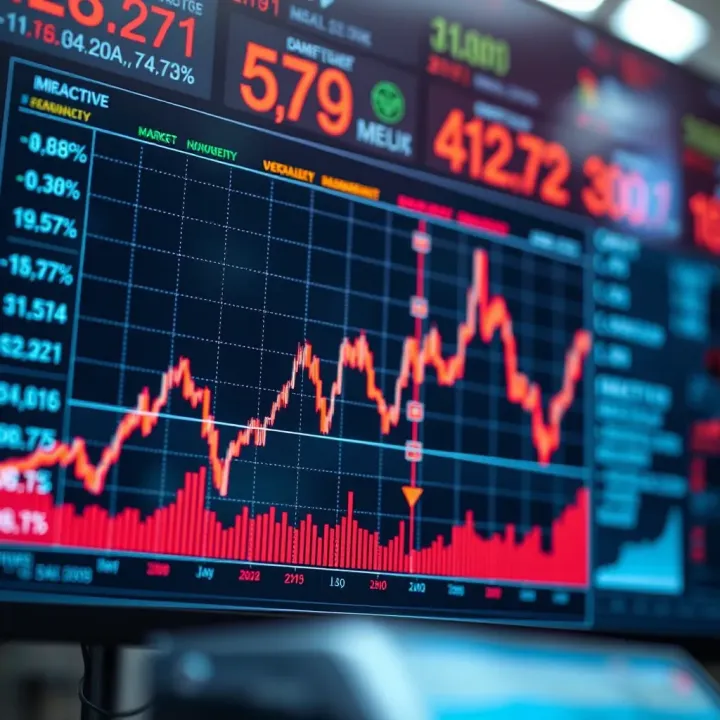
South Africa’s economy is tied to commodities like platinum, gold, and coal. Volatility in these prices impacts local markets heavily. Sudden changes—like a plunge in platinum prices due to lower global demand—can unsettle shares of mining companies.
Since commodities form a significant chunk of exports, their price swings can ripple through currencies and stock markets, compounding local volatility.
Global events—such as trade tensions, pandemics or political unrest—often trigger risk-off moves worldwide. Accordingly, the rand tends to weaken in times of international stress, pushing up inflation and stoking market uncertainty.
For instance, the rand’s plunge in March 2020 amid the early Covid-19 shock reflected a flight to perceived safety currencies. Currency volatility affects import costs and corporate earnings, further stirring price fluctuations.
High volatility often reflects a mix of local and global factors. By tracking these triggers carefully, investors and traders can better navigate swings and position themselves wisely on the JSE and currency markets.
Market volatility shakes both investors and the broader economy in ways that deserve close attention. For investors, volatility means risks and opportunities often happen side by side. At the economic level, swings in market confidence and currency values can ripple out to affect investments and growth prospects.
Volatility can drastically change portfolio returns, sometimes overnight. For example, a sudden spike in volatility during Eskom load shedding announcements often leads to sharp share price swings on the JSE, particularly in sectors like retail and industrials. Investors holding diverse assets might see their portfolios weather these swings better, while those heavily weighted in one sector risk sharper losses.
Yet, volatility isn’t just a threat. Traders who keep a close eye on patterns can exploit price swings for short-term gains. In forex markets, the South African rand often fluctuates significantly during global crises or shifting commodity prices, creating both risk and potential profit for currency traders.
Volatility complicates the process of valuing assets accurately. Price swings driven by sudden news—like political uncertainty or an unexpected SARB interest rate announcement—can distort an asset’s true worth. For example, property funds might face valuation challenges during a volatile month, as investor sentiment impacts trading volumes and prices.
Timing becomes equally tricky. Deciding when to buy or sell amid volatile markets can make or break returns. Retail investors in South Africa often struggle to time the market during the matric results season or festive spending periods, where consumer stocks might see erratic behaviour unrelated to fundamentals.
High volatility tends to shake business confidence. Companies might delay expanding or hiring during unstable markets, fearing unpredictable costs or weak demand. For instance, uncertainty around government policies and load shedding schedules can cause manufacturing firms to hold back on capital investments, impacting job creation.
This nervousness trickles down to investment flows. South Africa’s stock market, though resilient, often sees foreign investors pull back at times of heightened volatility, affecting liquidity and capital availability for local businesses.
Currency markets are highly sensitive to volatility. The rand, as a relatively volatile emerging market currency, often reacts sharply to domestic economic events or shifts in global risk appetite. Sharp falls in the rand can increase import costs, fuelling inflation and squeezing household budgets.
Conversely, volatile currency conditions can disrupt exporters who face unpredictable foreign exchange earnings. This uncertainty can deter exports or force businesses into costly hedging strategies, ultimately affecting South Africa’s trade balance and economic health.
In short, volatility is a double-edged sword — it demands careful navigation by investors and has far-reaching effects on the health of the South African economy.
Tracking volatility is crucial for traders, investors, and analysts because it helps gauge market uncertainty and guides risk management decisions. Reliable measures let you understand when price swings are normal market movements or when they signal elevated risk. This insight aids in timing entries, exits, and hedging strategies, especially in South African markets prone to sudden shocks like currency volatility caused by rand fluctuations.
Understanding the VIX and Local Equivalents
The VIX, often called the ‘fear gauge’, measures expected volatility of the S&P 500 over 30 days derived from options prices. While it reflects the US market, its movements influence global markets, including South Africa’s JSE. Local equivalents—such as the South African Volatility Index (SAVI)—offer direct insights into expected fluctuations of JSE stocks. SAVI helps investors spot shifts in market sentiment early, enabling decisions aligned with risk appetite, especially during periods of political uncertainty or earnings season.
Volatility in Currency and Commodity Markets
South African investors should also watch volatility in the rand and commodities like gold and platinum. Currency swings impact importers, exporters, and multinational investments, making FX volatility indexes valuable tools. Similarly, commodity markets, which are vital to South Africa’s economy, have their own volatility measures—reflecting price instability due to demand-supply imbalances or geopolitical issues. Being alert to these indexes helps investors prepare for ripple effects across multiple sectors.
Moving Averages and Bollinger Bands
Moving averages simplify price trends by averaging price data over set periods. Short-term averages help spot momentum changes, while longer periods smooth out noise. Bollinger Bands go a step further, adding bands at standard deviations above and below a moving average to highlight high or low volatility phases. When a stock on the JSE trades outside these bands, it signals unusual price action, which can be a clue for buy or sell decisions.
Average True Range and Other Indicators
The Average True Range (ATR) measures the degree of price movement over time, providing a direct read on volatility without direction bias. ATR helps traders gauge whether a security is experiencing more or less volatility than usual, useful for setting stop-loss levels to avoid being stopped out prematurely during typical price swings. Other tools like the Relative Strength Index (RSI) or MACD complement volatility measures by showing overbought or oversold conditions, enhancing overall market reading.
Monitoring both broad indexes and specific technical tools allows you to navigate volatility with greater confidence. Combining these with local market knowledge makes for a sharper investment approach tailored to South Africa’s dynamic environment.
Navigating high volatility in markets requires clear strategies that balance risk and reward. For investors and traders alike, understanding how to manage sharp price swings can be the difference between steady returns and heavy losses. This section covers key approaches to reduce exposure to sudden drops while also spotting chances to profit amid the chaos.
Spreading investments across different asset classes and sectors usually cushions your portfolio when volatility spikes. For instance, if the JSE All Share Index dips due to political unrest or economic concerns, bonds or international assets might hold steady or even rise, balancing losses in local equities. A practical approach involves allocating funds not only within shares but also into government bonds, cash, and some exposure to global markets through ETFs or unit trusts. This mix helps smooth returns over time and avoids putting all your eggs in one basket.
Asset allocation isn’t a set-and-forget thing; it needs tweaking as conditions change. During Eskom-induced uncertainties or global trade tensions, shifting the balance towards defensive sectors or less volatile commodities can make your investments more resilient.
Using stop-loss orders is a straightforward way to limit potential damage when prices drop suddenly. You set a predetermined price at which your shares or other assets automatically sell, preventing deep losses. For example, if you hold shares in a mining company and expect commodity prices might fall sharply, a stop-loss can help protect the gains you’ve made or cap your downside.
Hedging goes a step further by taking offsetting positions to reduce risk. In South Africa, investors sometimes use derivatives like futures or options on the FTSE/JSE Top 40 Index to hedge exposure. This means that if the index crashes, profits from the derivative position can offset losses on your shares. Hedging requires careful cost-benefit analysis, as these instruments have fees and risks of their own.
Effective risk management isn’t about avoiding volatility but preparing for it so your portfolio weathers sudden shocks more confidently.
Active traders can exploit high volatility by focusing on short-term price moves rather than long-term trends. Day trading or swing trading takes advantage of intraday or weekly swings. In the local context, for example, a trader might capitalise on sharp movements in Rand pairs during periods of political uncertainty or news from SARB affecting interest rates.
However, this demands strict discipline, quick decisions, and good timing to avoid losing capital. Keeping an eye on charts, using volume and momentum indicators, and staying informed about economic releases are crucial elements for success here.
Derivatives like options and futures allow investors to profit from expected increases in volatility without directly owning the underlying asset. For example, buying a call option on a resource stock might pay off if instability in global commodity prices sends prices higher suddenly.
In South Africa, the derivatives market offers tools on equities, indices, and currency. Using these products smartly can create opportunities to enhance returns or protect existing holdings against adverse moves. But be mindful: derivatives are complex, and losses can mount quickly if positions go against you.
Solid knowledge of these instruments and a well-planned strategy often separate successful volatility players from those who incur losses.
By combining these strategies, investors and traders can better manage the unpredictability of volatile times and sometimes even turn it to their advantage. The key lies in preparation, discipline, and continuous learning suited to South Africa’s unique market environment.
Explore the forex market's structure, key players, currency roles, and strategies to navigate risks in South Africa's vibrant trading scene 💱🌍📈
🤖 Explore how forex trading robots work, their benefits and risks, plus tips on picking reliable tools for safer, smarter trading in South Africa's forex scene.

Explore synthetic indices in finance 📊: understand their types, benefits, risks, and regulations, focusing on insights for South African traders 🇿🇦.

Explore the Five E's 🔍 in depth, their role in business, education, and personal growth. Discover practical tips to boost effectiveness and outcomes!
Based on 6 reviews