

Understanding the Derivative of eᵡ
Understand the derivative of e^x 📈, why it’s unique in calculus, and see practical SA examples showing its impact in finance, science and everyday problems.
Edited By
Sophie Bennett
Derivative products are financial contracts whose value changes based on an underlying asset like shares, commodities, interest rates, or even indices. In simple terms, they're tools that allow investors and traders to speculate on or protect against future price movements without owning the actual asset.
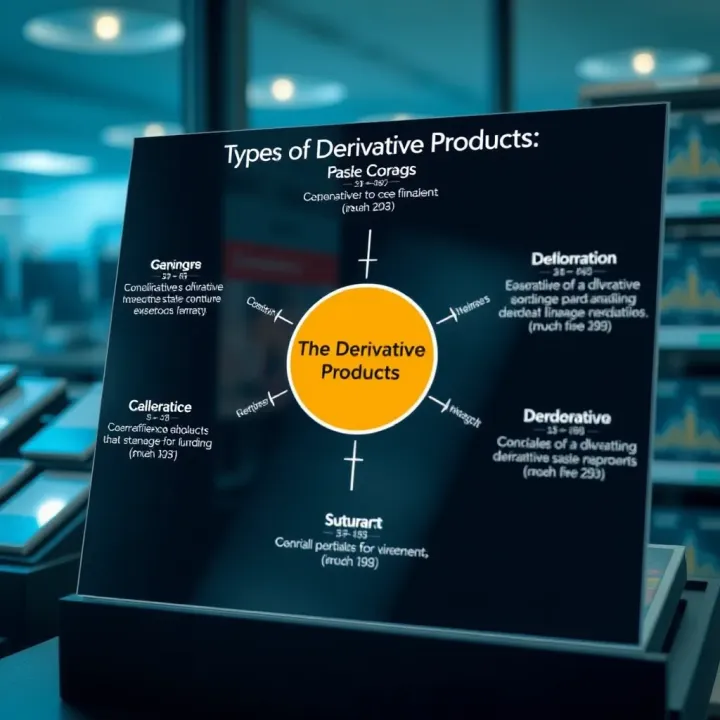
Futures: Agreements to buy or sell an asset at a set price and date. For example, a local farmer might use maize futures on the JSE to lock in a price ahead of harvest, reducing exposure to price drops.
Options: Contracts granting the right but not the obligation to buy or sell at a specific price within a time frame. An investor anticipating rand volatility might buy currency options to hedge their portfolio.
Swaps: Agreements to exchange cash flows or assets, often interest rates or currencies. South African companies with foreign debt often use interest rate swaps to manage repayment risks.
Derivatives derive their value from the underlying asset’s price, interest rates, or indices. Their prices fluctuate depending on market movements and, sometimes, time decay (especially options). This indirect exposure means traders can gain from rising or falling markets without large upfront capital.
Derivatives serve two main purposes:
Hedging: Protecting against price risks. For instance, Eskom-dependent industries might hedge fuel price changes via swaps to stabilise costs during loadshedding seasons.
Speculation: Seeking profit from price moves. Traders might use equity options to bet on company shares moving up or down, aiming to generate returns without buying shares outright.
Derivatives can heighten both opportunity and risk—understanding their mechanisms is key before diving in.
While derivatives offer flexibility, risks include:
Leverage magnifies gains and losses, sometimes leading to significant exposure beyond initial investment.
Counterparty risk arises if the other party defaults, more relevant in over-the-counter derivatives common in South Africa.
Market risk includes sudden swings influenced by local and global factors—like currency shifts linked to SARB policy changes.
Recognising these risks helps traders and investors make informed choices.
In short, derivatives offer dynamic ways to manage and seize financial opportunities, but they require clear understanding and respect for the risks involved—especially in the South African context where economic and regulatory factors add layers of complexity.
Understanding the basics of derivative products is crucial for anyone involved in trading or investment in South Africa's financial markets. These instruments serve as a bridge between risk management and speculation, offering tools to protect against market fluctuations or to capitalise on price movements. Recognising how derivatives function underpins sound decision-making, particularly given the inherent risks and potential benefits they present.
Derivatives are financial contracts whose value depends on an underlying asset, index, or rate. Instead of owning the asset outright, you enter an agreement based on its future value. For example, a company that imports goods from the US might use derivatives to lock in the exchange rate, avoiding surprises from currency swings.
This allows participants to manage risk without directly buying or selling the asset itself. The practical relevance here is clear: derivatives help transfer or distribute risk, making them vital tools for businesses and investors dealing with uncertainties.
The ‘underlying asset’ is what the derivative contract is based on. It could be anything from commodities like gold or maize, shares in companies, interest rates, or even market indexes like the JSE Top 40. The movement in the price of the underlying asset directly influences the derivative’s value.
For instance, a farmer expecting a maize harvest might use derivatives linked to maize prices to secure a selling price ahead of time. Understanding the nature of the underlying asset is essential because it determines the risks and opportunities associated with the derivative product.
Forwards and futures are agreements to buy or sell an asset at a predetermined price on a specific future date. The key difference lies in where they’re traded — forwards are usually customised OTC (over-the-counter) contracts, common among corporates, while futures are standardised and traded on exchanges like the Johannesburg Stock Exchange (JSE).
For example, a mining company might enter into futures contracts to lock in the price of platinum, protecting against price drops. These instruments provide certainty about future costs or revenues but carry the risk if market prices move unfavourably.
Options give the holder the right, but not the obligation, to buy or sell an asset at a set price before a certain date. This flexibility makes them appealing not only for hedging but also for speculative strategies. For instance, an investor expecting a rise in the rand/dollar exchange rate might buy a call option to benefit from positive movements without committing fully.
Options require premiums upfront, adding a cost consideration, but they limit losses to that premium while offering upside potential.
Swaps are contracts where two parties exchange cash flows or financial instruments. The most common types are interest rate swaps and currency swaps. For example, a South African business with a variable interest rate loan might swap payments with a party that prefers variable over fixed, thus managing interest rate risk more effectively.
Swaps are vital in corporate finance for managing exposures that might not be addressed through simple buying or selling of assets. They require trust and often involve complex arrangements, usually arranged OTC.
Derivatives offer practical ways to grasp and control financial risks, but their variety and complexity mean it’s essential to understand each type’s workings before trading or investing.
Understanding how derivatives operate in real-market conditions is key for traders, investors, and financial analysts. This section covers the mechanics behind pricing and valuation, as well as where and how derivatives are traded. These practical details help to reveal the opportunities and risks embedded in derivative instruments.
Derivative prices hinge on several variables tied to their underlying assets. For example, an option on a JSE equity will reflect the share price movements, dividend expectations, interest rates, and market demand. Economic data releases or company news can cause sudden price swings, directly affecting derivatives. Additionally, supply and demand dynamics for the derivative itself shape its price, especially in less liquid markets.
Jacob, a local trader, once noticed the price of a futures contract shifting sharply after unexpected changes in the South African Reserve Bank's repo rate. This shows how interest rate movements influence the cost of carry and, hence, derivative pricing.
Volatility, or the degree of price variation in the underlying asset, heavily impacts derivative values. Higher volatility generally inflates option premiums because of the increased chance of profitable swings. The 'time to expiry' also matters — derivatives lose value as they approach maturity, known as time decay, especially options. Traders commonly watch these factors closely; for instance, a volatility spike before a company’s results announcement can make options more expensive.
If a petrol company’s share price usually shows low daily swings but gears up before seasonal demand peaks, the increased volatility might push option prices up, allowing speculators to benefit.
Derivatives can be traded either over-the-counter (OTC) or via organised exchanges. OTC trades happen directly between parties, often customised to specific needs, but with increased counterparty risk. Exchange-traded derivatives, meanwhile, run through regulated platforms that offer transparency and standardised contracts, reducing some risks.
A corporate wanting to hedge its rand-dollar exposure might prefer OTC swaps tailored precisely to its cash flows. Conversely, a retail investor buying an index option is likelier to do so through the Johannesburg Stock Exchange (JSE), valuing liquidity and standardisation.
In South Africa, the Johannesburg Stock Exchange (JSE) serves as the primary market for derivatives like futures and options. The platform offers access to a variety of instruments linked to equities, interest rates, and commodities. Several local brokers, such as Sasfin Securities and PSG Wealth, provide access and guidance tailored to individual and institutional clients.
These brokers not only facilitate trades but also help investors navigate contracts, margins, and settlement processes, which can be tricky without experience. For example, during Eskom loadshedding, reliance on electronic platforms may be affected, so brokers sometimes advise clients on backup plans like prepaid data or alternative trading hours.
Knowing where and how derivatives trade empowers you to make more informed decisions and manage risks effectively, especially amid South Africa's unique market dynamics.
Derivative products serve practical roles that go far beyond just trading for profit. They offer tools to manage financial risks and to capitalise on market movements effectively. In South African markets, their use is especially important given the volatility in currency and interest rates, tied to global shifts and local economic factors.
Hedging currency risk is vital for South African companies dealing with imports, exports, or foreign investments. The rand can be unpredictable, so derivatives like currency forwards or options help lock in exchange rates, preventing sudden cost increases. For instance, a manufacturer importing parts from Europe might use a forward contract to fix the rand-euro rate today, shielding their budget from swings that could add thousands to costs.
This stabilises cash flow and removes uncertainty from financial planning. It’s a straightforward way to guard against the rand weakening before paying foreign suppliers.
Interest rate derivatives, such as swaps or futures, assist in managing exposure to changing borrowing costs. Imagine a business with a variable-rate loan: if the South African Reserve Bank hikes rates, repayments spike unpredictably. Using an interest rate swap, the firm might swap its floating interest payments for fixed ones, fixing its costs amid rate fluctuations.
This kind of hedging is crucial in South Africa, where rate cycles often reflect inflation pressures and global economic shocks. It helps companies budget accurately and avoid surprise hikes in interest expenses.
Speculators use derivatives to bet on the direction of asset prices—whether commodity prices, currencies, or indices. These instruments allow traders to amplify gains with smaller capital outlay due to leverage. For example, a trader expecting the gold price to rise might buy gold futures contracts on the JSE’s commodity derivatives market, aiming to sell at a profit if the price moves as anticipated.
Such strategies carry greater risk but can yield quick profits for those who accurately predict market trends.
Arbitrage involves spotting price differences between markets or products and profiting from those gaps. Derivatives are handy for arbitrage because traders can quickly enter or exit positions without owning the underlying asset. For example, if a stock’s option price in Johannesburg diverges from theoretical values based on the stock’s actual price, an arbitrage trader can buy the underpriced and sell the overpriced instrument simultaneously, locking in risk-free profits.
This activity promotes market efficiency as it narrows price discrepancies and improves liquidity.
Derivatives play distinct roles, from helping businesses manage financial exposure to offering traders tools for profit and enhancing market efficiency. Understanding these uses is key for anyone engaging with South African financial markets.
Derivative products offer ways to manage risk or speculate, but they come with significant challenges that traders and investors must grasp before jumping in. Understanding these risks helps avoid costly mistakes and allows for better-informed decisions when navigating financial markets.
Potential for losses: The value of derivatives depends heavily on underlying markets, making them volatile and sometimes unpredictable. Even a small shift in interest rates, currencies, or commodity prices can lead to outsized losses. Take, for example, a South African company using currency forwards to hedge rand-dollar exposure. If the rand moves sharply against projections, the company might face hefty losses or margin calls — especially under the strain of loadshedding affecting business operations and cashflow.
Beyond market swings, leverage in derivatives amplifies outcomes. This means profits and losses can quickly multiply beyond the initial investment, exposing traders to risks beyond their capital outlay. Many local investors who dabbled in futures contracts during volatile periods often discovered this the hard way.
Counterparty default concerns: When dealing with over-the-counter (OTC) derivatives, the risk isn’t just market movements but also whether the other party honours their side of the deal. If a counterparty fails — due to insolvency or other issues — the investor may struggle to recover funds. This is especially pressing in South Africa, where some smaller financial institutions or brokers might be more exposed to economic shocks.
Clearinghouses in exchange-traded derivatives help reduce this risk by acting as intermediaries, guaranteeing contract performance. Still, for bespoke OTC deals common in corporate hedging, assessing the counterparty's creditworthiness remains vital. Corporates and investors should routinely review credit limits and use collateral arrangements to protect themselves.
South African regulations impacting derivatives: The South African financial market is governed by several regulations designed to promote transparency and reduce systemic risks. The Financial Sector Conduct Authority (FSCA) and the South African Reserve Bank (SARB) oversee derivative trading to ensure stability.
For instance, under the Financial Markets Act, OTC derivative traders must register and meet capital adequacy requirements. These rules aim to curb excessive speculation and prevent defaults that could ripple through the market. For traders and investors, staying updated on changes is critical to avoid penalties and align with best practices.
Understanding disclosure and reporting requirements: Transparency remains a key pillar in derivative markets. Market participants are obliged to disclose trades, positions, and exposures regularly. This openness helps regulators monitor systemic risk and detect potential market abuse.
Local brokers and institutional investors often submit data through clearing platforms monitored by the JSE or other exchanges. Failure to report correctly can lead to fines or trading restrictions. On the practical side, firms need efficient systems to track and report derivative activities accurately, especially during busy trading periods or economic uncertainty.
The thing is, while derivatives provide powerful tools, they demand respect for their complexities — particularly around risks and regulation. Overlooking these can lead to losses, legal trouble, or worse.
By appreciating these risks and compliance demands, investors and traders can harness derivative products responsibly within South Africa's dynamic financial environment.
South African businesses often turn to derivatives as essential tools to manage financial risks tied to their operations. For example, importers and exporters use currency derivatives, like forwards or options, to shield themselves against unpredictable fluctuations in the rand-dollar exchange rate. This helps prevent unexpected costs or drops in revenue due to currency moves. Similarly, companies with large debts or investments linked to interest rates might use interest rate swaps to lock in borrowing costs or expected returns, avoiding surprises from rate hikes.
Investors in South Africa also engage in derivatives for portfolio protection and diversification. Popular products include equity index futures traded on the Johannesburg Stock Exchange (JSE), which allow investors to hedge against potential broad market declines. Options on stocks or indices provide flexibility to speculate or hedge with limited upfront capital. More sophisticated investors might use swap agreements or structured products to gain exposure to specific sectors or strategies without directly buying the underlying assets. This active use of derivatives adds depth and choice for local investors.
Derivatives contribute significantly to price discovery in South African markets. By reflecting investors’ expectations about future price movements, derivatives help establish transparent pricing signals for the underlying assets. For instance, futures contracts on commodities like gold or platinum can indicate market sentiment well ahead of actual physical trade. This process aids producers, consumers, and traders in making more informed decisions, which benefits the entire supply chain and economy.
On the flip side, derivatives can raise concerns about systemic risk if not managed properly. Large exposure or concentration of positions among certain market players, combined with counterparty defaults, could magnify financial stress. The collapse of a major trader owing big on derivatives might ripple through financial institutions connected to that party. This has prompted regulators like the Financial Sector Conduct Authority (FSCA) in South Africa to impose stringent disclosure and risk management standards to prevent systemic crises. Still, market participants need to remain vigilant as derivatives can both mitigate and amplify market shocks depending on how they are used.
Derivatives are double-edged swords in South Africa's financial markets: while they provide important tools for risk management and price discovery, they require careful oversight to avoid contributing to market instability.
Overall, derivatives play a vital role in enhancing the sophistication and resilience of South African financial markets. They equip businesses and investors alike with instruments to handle uncertainties inherent in exchange rates, interest rates, and asset prices. Meanwhile, active regulatory oversight ensures these markets remain fair, transparent, and stable for all participants.
Understand the derivative of e^x 📈, why it’s unique in calculus, and see practical SA examples showing its impact in finance, science and everyday problems.
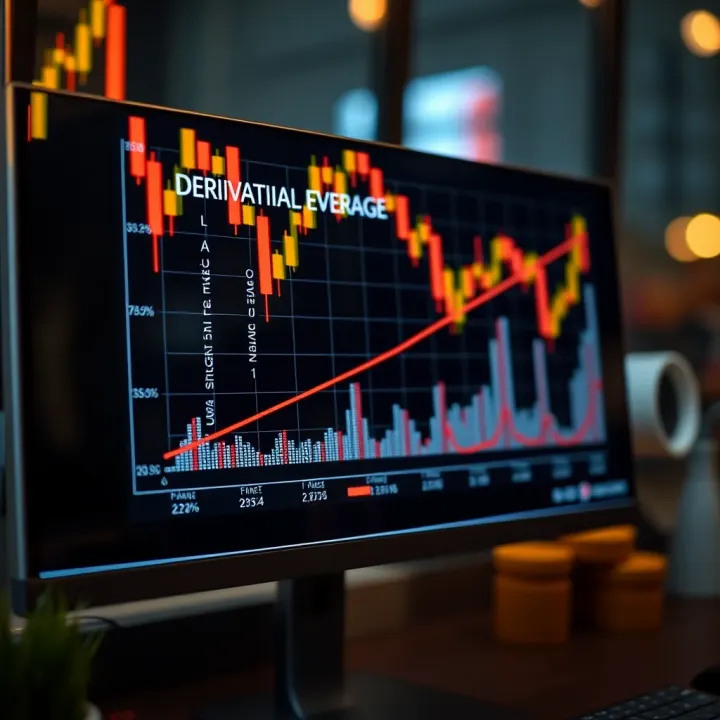
📈 Explore how derivative leverage lets South African investors control large positions with small capital, covering futures, options, risk management, and market regulations.
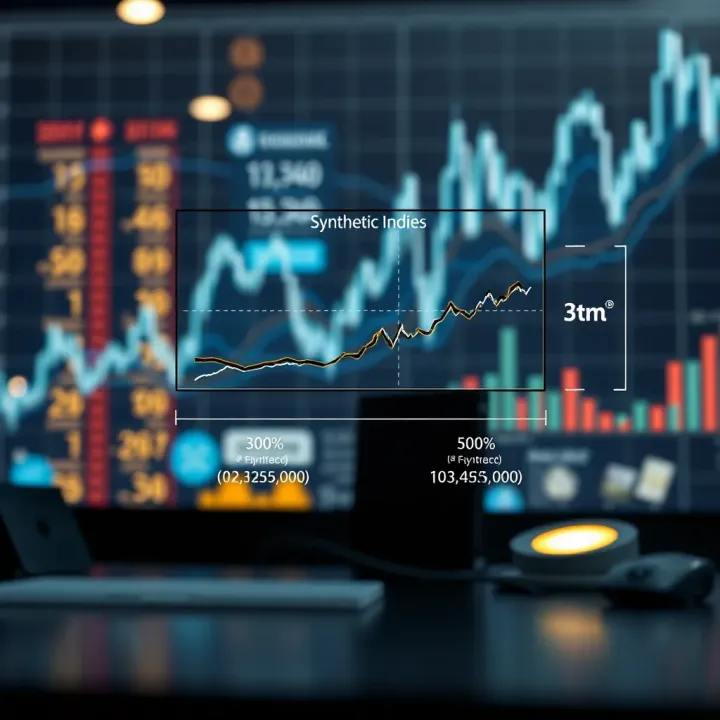
Explore synthetic indices in finance 📊: understand their types, benefits, risks, and regulations, focusing on insights for South African traders 🇿🇦.

Explore how HFM streamlines financial consolidation, aids compliance with South African standards, and supports dynamic corporate finance operations in local businesses 📊🇿🇦
Based on 11 reviews