
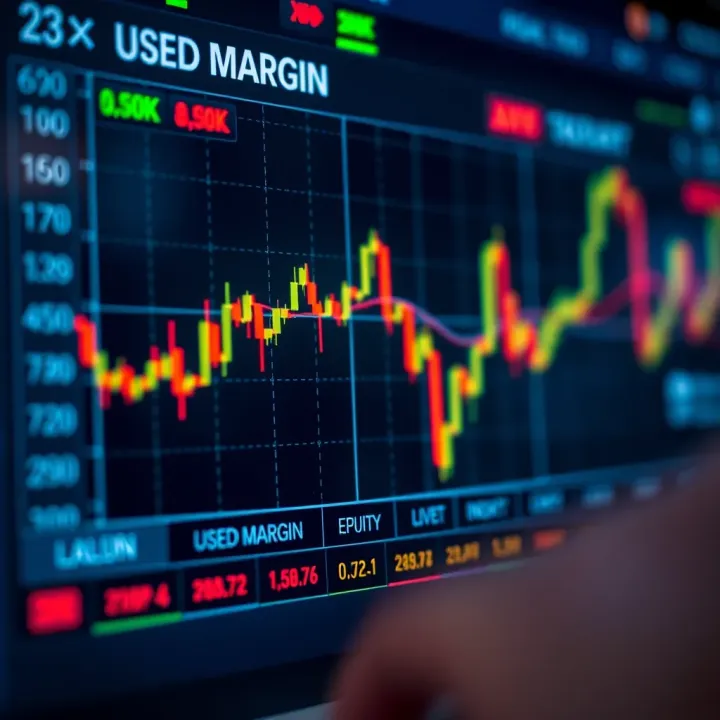
Understanding Margin Level in Forex Trading
📉 Understand margin level in forex trading: learn its calculation, impact on your trades, and manage your risk effectively to protect capital in South African markets 🇿🇦
Edited By
Charlotte Hughes
Margin is a key concept every forex trader needs to grasp before diving in. In simple terms, margin lets you control a bigger position in the market than the actual money sitting in your trading account. Think of it like a deposit or good faith payment you put down to open and maintain trades with your broker.
Using margin means borrowing funds from your broker, allowing you to amplify your buying power. For example, if you have R10,000 in your account and your broker offers 50:1 leverage, you could potentially open a position worth R500,000. This kind of power can boost profits but also magnify losses, so understanding the risks involved is critical.
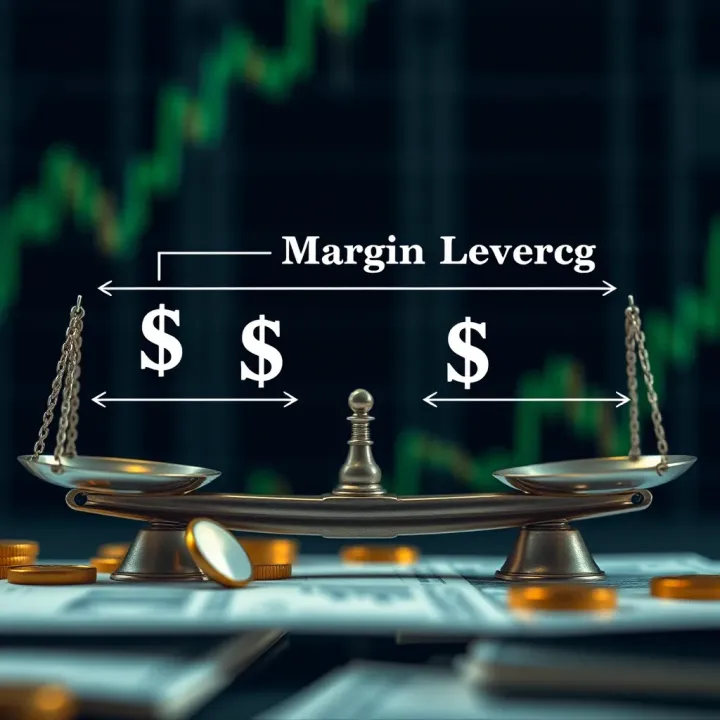
For South African traders, margin rules can vary depending on your broker and the regulatory environment. It’s essential to check with brokers authorised by the Financial Sector Conduct Authority (FSCA), ensuring you’re trading in a safe and regulated space.
Using margin isn't free money; it works like a double-edged sword, requiring tight risk management to avoid blowing your trading account.
Margin is expressed as a percentage of the full trade size. If the margin requirement is 2%, you must have 2% of the total value of your trade available as margin. Let’s say you want to buy USD/ZAR worth R100,000 — at 2% margin, you’ll need R2,000 as margin.
Your available margin determines the number of open positions you can hold. If your positions move against you and your equity drops below the required margin, the broker might issue a margin call, asking you to deposit more funds or close trades to limit losses.
Margin trading allows you to access higher exposure without having to put down the full amount. This flexibility lets you diversify or seize opportunites without tying up capital excessively.
However, margin isn't just a tool for 'betting big'. It demands discipline. Neglecting margin calls or risking too large a portion of your capital can wipe out your account quickly.
Always monitor your margin level closely to avoid unexpected margin calls.
Use stop-loss orders to limit downside risks.
Avoid maxing out your leverage; many successful South African traders prefer lower leverage ratios like 5:1 or 10:1.
Choose brokers with transparent margin policies and no hidden fees.
Understanding margin is the first step to trading forex wisely. It equips you with the sense of responsibility and practical know-how to make informed decisions rather than chasing quick wins or falling into common pitfalls.
Margin in forex trading refers to the amount of money a trader needs to set aside from their account to open and maintain a position. Think of it as a deposit or good faith payment that backs your trade. It doesn’t represent the full value of the trade but acts as collateral while the broker extends credit for the rest. This system allows you to control larger positions than what your actual cash balance would allow.
For example, if you want to trade R100,000 worth of a currency pair but your broker requires a 1% margin, you only need R1,000 in your account. This means your available funds serve as a safety net for the broker while you access greater market exposure. Understanding margin is crucial because it determines how much capital you must have before initiating trades and keeps your account protected against losses.
Margin lets you magnify your buying power, which is particularly important in forex where price movements tend to be small but frequent. By using margin, South African traders can open positions worth much more than their actual account balance. This increased position size means potential profits grow — but so do potential losses, so margin use carries inherent risks.
Consider a trader with R10,000 in their account. Without margin, they can only trade up to R10,000 of currency. With 1:100 leverage (implying a 1% margin requirement), they could control R1,000,000 worth of currency. This opens opportunities to benefit from small price changes but requires careful monitoring to avoid margin calls or stop outs.
Margin is not free money; it’s borrowed capital that amplifies trading power and risk simultaneously.
Effectively managing margin means understanding how much is required per trade and ensuring your account balance can cover those requirements. In South Africa, where market volatility can be heightened due to factors like rand fluctuations or global economic shifts, managing margin well is key to protecting your investment while taking advantage of trade opportunities.
To sum up:
Margin is the initial deposit for controlling a larger trade
It allows traders to amplify their market exposure
Careful margin management is vital to avoid unexpected losses
This foundation sets the stage for grasping how leverage, margin calls, and risk management tie together in forex trading, especially for South African traders navigating both local and global factors.
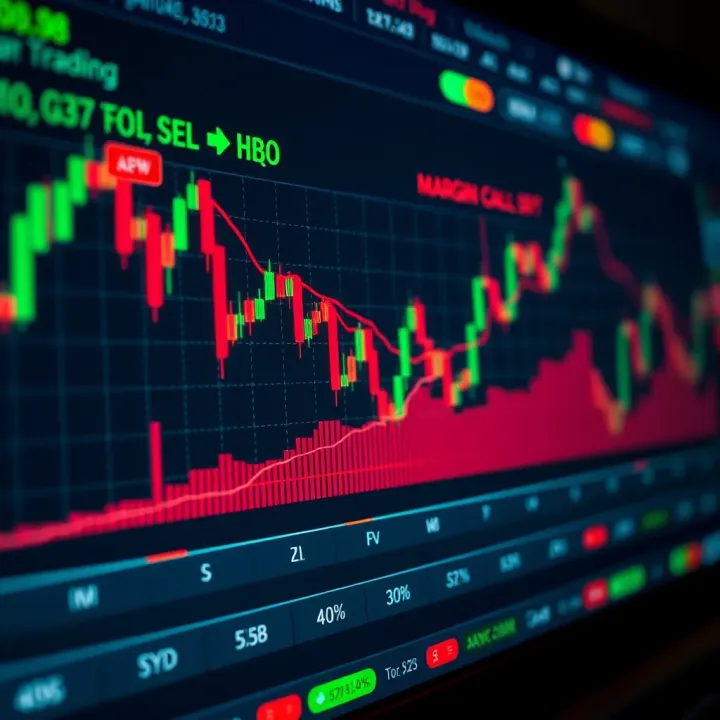
Understanding the link between margin and leverage is fundamental for anyone trading forex. Margin acts as a security deposit that enables you to control a bigger position than your actual capital would allow. Leverage, on the other hand, is the multiplier effect provided by the broker, indicating how many times your trading capital can be expanded. Grasping this relationship helps you manage potential profits and risks effectively.
Leverage is essentially borrowed capital from your broker that magnifies both your potential gains and losses. With leverage, you can enter trades worth several times the amount in your trading account. For example, a leverage ratio of 100:1 means you can open a position of R100,000 with just R1,000 of your own money. While leverage increases the chance to boost profits, it also amplifies losses, so careful use is critical.
Calculating margin requirements involves dividing the trade size by the leverage ratio. For instance, if you want to buy USD/ZAR worth R50,000 and your broker offers 50:1 leverage, the margin needed would be:
[ \textMargin = \fracR50,00050 = R1,000 ]
This R1,000 is the minimum amount you must have in your trading account to open that position. If your margin balance falls below this due to market fluctuations, you risk a margin call or stop out. This calculation highlights why choosing appropriate leverage is important—it controls the amount of margin your trades consume and affects your risk exposure.
South African traders often deal with the rand’s volatility against major currencies like the US dollar and euro. Suppose you have an account with R10,000 and your broker provides 100:1 leverage. You could, in theory, control up to R1,000,000 worth of currency. However, rand volatility means sudden swings could wipe out your margin quickly.
In 2023, as the rand weakened beyond R19 to the dollar during certain periods, traders using high leverage faced huge margin requirements to maintain their positions. Those who didn’t monitor their margin closely ended up with margin calls or forced liquidation.
Using leverage wisely means balancing opportunity with caution, considering the rand’s tendency to move sharply against global currencies.
Many local brokers offer varying leverage options—some capped at 30:1 to comply with international best practices, while others allow higher ratios. South African traders should check broker terms, especially those that align with FSP (Financial Services Provider) regulations, ensuring margin and leverage limits match their risk appetite.
To sum up, margin and leverage are two sides of the same coin. Knowing how much margin you need depending on your leverage lets you size trades properly and avoid unexpected crunches. For traders in Mzansi, this is even more critical given exchange rate volatility and local trading conditions.
Knowing how margin calls and stop outs work is vital for anyone trading forex on margin. These events represent safety mechanisms that brokers use to protect both traders and themselves when account funds fall below the required threshold. For traders, they’re red flags indicating when your position is at risk and that you need to act fast.
A margin call usually happens when the equity in your account drops below the broker’s required maintenance margin. Equity is your account balance plus or minus any unrealised profits or losses from open positions. For example, say you started with R10,000, used leverage to open a R100,000 position, but market movements caused your losses to bring your equity down to R1,000 while your broker requires a maintenance margin of R1,500. Here, the broker might issue a margin call, asking you to top up funds or close positions.
Market volatility, unexpected news, or poor risk management are common triggers. In South Africa, where forex trading is often done through platforms like IG or HotForex, rapid rand fluctuations can also eat into margins quickly during unstable economic times.
When a margin call is triggered, brokers typically notify the trader via email, SMS, or directly through their trading platform. The notification isn’t just a warning but a request for you to add enough funds to restore the required margin level. Some brokers give traders a short window to act; others might automatically start closing losing positions if you don’t respond.
Practically, you might receive a message like, "Your account margin level has dropped to 60%. Please deposit funds or reduce exposure." Failure to respond often prompts the broker to begin closing positions starting with the most unprofitable ones to reduce risk on both sides. This is especially common in South African accounts given currency risks.
If a margin call isn’t addressed, the broker can proceed to a stop out, which means they forcibly close some or all of your open positions. This protects the broker from losing money if your losses exceed your account balance. However, it also locks in losses for you and can wipe out a significant portion of your capital.
For instance, if the Rand weakens sharply against the USD and you have a large leveraged position, a stop out could mean losing more than just your margin deposit. This risk underscores why it’s smart to monitor your positions regularly and use stop loss orders to manage potential downside.
Margin calls and stop outs may feel like setbacks, but they’re part of forex trading’s risk control system. Understanding how they work helps you react quickly and protect your trading capital.
In summary, staying alert to margin calls and acting promptly can prevent a stop out from wiping your account. South African traders should factor in local currency risks and choose brokers with clear margin call policies to avoid nasty surprises.
Trading on margin is like double-edged sword—it can open the door to bigger gains but also expose your capital to amplified losses. Understanding both sides is key to making margin work for you rather than against you. In forex, margin lets you control larger positions with less upfront cash, but this advantage carries risk that needs careful management.
Using margin means you can trade volumes well beyond your own funds. For example, with a 1:100 leverage ratio, R1,000 in your account could control a R100,000 position. If the market moves in your favour, even small percentage changes can translate into sizable returns. This can speed up growth in your trading account compared to trading without leverage.
Consider a South African trader who spots an opportunity in USD/ZAR during a market dip. With margin, they buy a larger position than their available cash. When the rand weakens against the dollar, the trader enjoys a bigger profit than if they’d only used their own funds. Certainly, margin trading can boost profits when the timing and strategy line up.
On the flip side, margin can amplify losses just as easily as gains. Even small adverse moves can significantly eat into your account balance. If the market moves against your position by 1%, a highly leveraged trade could wipe out your initial margin and more. This risk means effective risk management isn’t optional—it’s essential.
Setting appropriate stop loss orders helps limit downside, while monitoring your margin level prevents nasty surprises. For instance, if your margin falls below the broker’s threshold, you may face a margin call or stop out, forcing a position closure and locking in losses. Regularly reviewing and adjusting your risk exposure ensures you stay in control.
Trading on margin turns forex into a high-stakes game—while the rewards can be tempting, so are the risks. You need a clear plan and disciplined approach to avoid getting caught out.
South African traders face unique factors when using margin. Local broker offerings and regulations influence leverage limits; for example, FSCA-regulated brokers may impose maximum leverage restrictions to protect traders. Additionally, the rand’s volatility compared to major currencies means margin can be more sensitive to fluctuations.
Costs also add up, including overnight swap fees and spread variations which can eat into profits over time. Plus, with loadshedding and connectivity issues, real-time trade monitoring might not always be feasible—this raises the stakes for cautious margin use.
South African traders should:
Choose brokers regulated by the FSCA for added security
Use leverage conservatively, especially when trading volatile pairs like USD/ZAR
Factor in local market behaviour and trading hours
Stay up to date with economic news impacting currency markets
Margin can be a useful tool but demands respect and careful use, particularly within South Africa’s dynamic trading environment.
Managing your margin effectively is vital in forex trading to avoid unexpected losses and keep your trading sustainable. Margin allows you to control bigger positions than your cash balance, but it also means you need to be vigilant about how much margin you're using and how you protect your capital. These practical tips will help you trade smarter and manage risk on your account.
Regularly checking your margin level keeps you aware of how much free margin you have left to open new positions or absorb potential losses. Your margin level is usually expressed as a percentage: the higher it is, the safer you are from receiving a margin call. For example, if your account equity is R10,000 and your used margin is R2,000, your margin level is 500%. If your margin level falls under a broker’s threshold, usually around 100%, your open positions are at risk of closure. Especially during volatile times — like sudden Rand fluctuations after Reserve Bank announcements — watching margin levels can save you from getting stopped out prematurely.
A stop loss order limits your losses by closing a trade once it reaches a preset level. Setting sensible stop losses is non-negotiable for managing margin risk. For instance, if you enter a USD/ZAR position at R18.50, you might place a stop loss at R18.30 to cap your loss. This prevents your margin from eroding too much if the market moves against you. It’s a safety net that many traders neglect, often resulting in the dreaded margin call. Different trading strategies require tailored stop loss levels: scalpers might use tight stops, whereas swing traders allow more breathing room. Either way, an appropriate stop loss reflects your risk tolerance and trading horizon.
Leverage magnifies both profits and losses in forex trading — which means you must pick a level that fits your experience and strategy. South African brokers typically offer leverage from 1:10 up to 1:200, but just because high leverage is available doesn’t mean you should use it all. For example, conservative traders might stick to 1:20 to maintain control, while more aggressive traders might use 1:100 but with tighter risk controls. If you’re new, start low and increase leverage only after consistent gains and experience. Also, keep in mind that tighter regulations and your broker’s terms can limit leverage, especially owing to risk controls enforced by the Financial Sector Conduct Authority (FSCA).
Keeping an eye on your margin level, setting clear stop losses, and choosing the right leverage based on your comfort and market conditions will help protect your capital and extend your trading career.
By practising these tips you’ll be better prepared to handle the ups and downs of forex markets — which is especially important given the Rand’s volatility and the global economic shifts often affecting South African traders. Effective margin management is not just about protecting your money, but about giving you the space to make informed trades and grow steadily.
📉 Understand margin level in forex trading: learn its calculation, impact on your trades, and manage your risk effectively to protect capital in South African markets 🇿🇦
Learn how margin in forex trading affects your capital and risk in South Africa 🇿🇦. Get practical tips on margin calls, trading smart, and protecting your R.
💻 Discover what shapes the cost of forex trading robots in South Africa. Learn pricing models, key features, and how to avoid paying too much for ineffective software.
📘 Start forex trading confidently with this practical guide! Learn market basics, strategies, risk management, and find reliable beginner-friendly PDFs and platforms.
Based on 6 reviews